

How Research, Behavior, Technology are Shaping Wealth Management
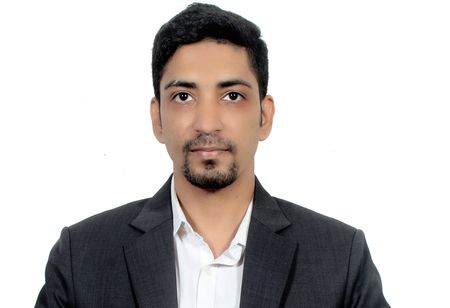
Shubham is a CFA charterholder with over a decade of experience in equity research across leading sell-side and buy-side firms. Drawing on his institutional investing background, he co-founded Growthvine to build a research-driven wealth management platform focused on helping investors make informed, goal-based financial decisions. He regularly shares insights on personal finance, investing, and market trends.
Growthvine Capital was founded with a simple yet powerful belief: wealth management should begin with an investor's goals, not the products being sold. After spending more than a decade in sell-side and buy-side equity research, co-founders Ankit and Shubham recognized a significant gap between how institutional and retail investors approach wealth creation. Inspired by personal experiences and a desire to make research-driven investing more accessible, they built Growthvine to combine disciplined portfolio management with personalised financial guidance. By integrating technology with human expertise, the firm aims to help investors navigate an increasingly complex financial landscape through informed, long-term decision-making. In the insights below, Shubham shares the inspiration behind Growthvine, the philosophy driving its approach, and his perspective on the future of wealth management in India.
Could you take us through your professional journey and what inspired you to start Growthvine?
Both Ankit and I spent over a decade working across sell-side and buy-side equity research, analysing businesses, sectors, market cycles, and portfolio allocation frameworks. That background gave us a very different perspective on investing compared to the traditional wealth management industry, which has historically been driven more by product distribution and sales.
Over the years, we realised that while institutional investors benefit from disciplined portfolio construction, continuous monitoring, and research-backed decision-making, many individual investors often do not have access to the same level of guidance. That observation, combined with our belief that wealth management should be centred around client outcomes rather than product sales, ultimately led to the creation of Growthvine.
Also Read: Swiggy, Zepto Move Karnataka HC Against Gig Workers Welfare Law
Was there a defining moment or personal experience that led to the idea behind the company?
Yes. The idea was rooted in a very personal experience. I saw my parents, who were approaching retirement, being repeatedly sold products that were not necessarily aligned with their financial goals, risk appetite, or liquidity requirements. What stood out was that the conversation was centred around products rather than outcomes.
That experience highlighted a larger industry issue. Many investors trust recommendations because they come from established institutions, without fully understanding whether those products are suitable for their needs. It reinforced our belief that financial planning should begin with understanding the investor's objectives and circumstances, with products acting merely as tools to achieve those goals.
Coming from equity research backgrounds, how has that influenced your approach to wealth management?
Our research background has fundamentally shaped how we approach wealth management. Research teaches you to think in terms of process, risk management, asset allocation, valuation, and long-term outcomes rather than short-term product performance.
Instead of focusing on finding the next best-performing investment, we focus on building portfolios that can remain resilient across different market environments. We apply many of the same analytical frameworks used by institutional investors, including risk-adjusted returns, downside protection, portfolio overlap analysis, and asset allocation discipline.
What gap did you identify in the Indian wealth management industry that existing players were not adequately addressing?
We identified two key gaps. First, wealth management had become increasingly product-centric, where conversations often started with products rather than client goals. Second, portfolios were frequently created once and then left largely unchanged despite evolving market conditions and changing investor needs.
We felt investors needed a more structured and research-driven approach that focused on portfolio management as an ongoing process rather than a one-time transaction.
The objective should be to continuously align investments with changing goals, risk profiles, and market realities.
Growthvine focuses significantly on research-driven portfolio construction. Why is this important for retail investors today?
The investment landscape has become significantly more complex. Investors today have access to hundreds of mutual funds, passive products, international investment opportunities, REITs, InvITs, and other financial instruments.
In such an environment, research-driven portfolio construction becomes critical because successful investing is rarely about identifying a single winning product. Long-term outcomes are often determined by asset allocation, diversification, risk management, and portfolio discipline. Research helps ensure that portfolios are built around these principles rather than short-term market narratives.
Could you explain the concept behind "Vines" and how it differs from traditional wealth management approaches?
"Vines" are curated investment baskets designed around specific goals, risk profiles, and investment mandates. The idea emerged from observing how institutional portfolios are actively managed and continuously reviewed, whereas retail investors are often left to manage individual products on their own.
Each Vine is constructed using a structured research framework that evaluates factors such as rolling returns, downside protection, risk-adjusted performance, fund manager consistency, portfolio overlap, and sector allocations. The focus is on creating complete portfolio solutions rather than recommending standalone products. These portfolios are also reviewed periodically to ensure they remain aligned with their intended objectives.
Also Read: Maruti Partners Startups for AI, Battery Recycling Solutions
What were some of the biggest challenges you faced while building the business in its early years?
One of the biggest challenges was identifying the segment we wanted to serve. The economics of wealth management naturally push many firms towards ultra-high-net-worth clients. However, we believed India's growing middle and upper-middle-income segment remained significantly underserved despite increasingly sophisticated financial needs.
The challenge was building a model that could deliver institutional-grade research and personalised guidance at scale. Balancing quality, technology, and human engagement while remaining accessible to a broader investor base continues to be an important focus area.
Why did you choose to focus on India's middle and upper-middle-income investors rather than exclusively targeting HNIs?
We saw a significant gap in the market. Investors earning between Rs.10 lakh and Rs.50 lakh annually are often entering a stage where financial decisions become increasingly complex, yet access to structured wealth management remains limited.
This segment is dealing with goals such as home ownership, children's education, retirement planning, and wealth creation, but often lacks access to disciplined portfolio management and ongoing advisory support. We believe quality wealth management should not be limited to a small segment of investors.
How do you view the rise of direct investing and DIY investing platforms in India?
The rise of direct investing is a positive development because it has increased awareness around investing, costs, and financial literacy. Investors today are more engaged and informed than ever before.
However, wealth creation involves much more than selecting investments. Asset allocation, risk management, taxation, rebalancing, and behavioural discipline often have a greater impact on outcomes than fund selection alone. For experienced investors, DIY investing can work well, but many investors underestimate the hidden cost of mistakes and emotional decision-making.
Also Read: EBG Group, POSCO International to Boost Daewoo’s India Expansion
What are some of the most common mistakes investors make while managing their portfolios independently?
One common mistake is focusing excessively on recent performance rather than long-term portfolio construction. Investors often chase recent winners, frequently switch strategies, or make decisions based on short-term market movements.
Other challenges include inadequate diversification, poor asset allocation, lack of portfolio reviews, and allowing emotions to influence investment decisions during periods of market volatility. Many investors also underestimate the importance of aligning investments with specific financial goals.
How do you see technology transforming wealth management over the next decade?
Technology will significantly improve accessibility, efficiency, portfolio monitoring, reporting, and client engagement. It will make high-quality financial services available to a much broader segment of investors than ever before.
However, we believe wealth management will remain a hybrid model. Technology can simplify execution and improve decision-making, but investing remains deeply emotional. Human guidance, trust, behavioural coaching, and personalized financial planning will continue to play an important role alongside technology.
What key trends are shaping the future of India's wealth management industry?
Several trends are shaping the industry. Rising financialization of savings, increasing participation in capital markets, greater product innovation, and growing awareness around long-term investing are creating significant opportunities.
We are also seeing a gradual shift from informal advice and product distribution towards organised, research-driven wealth management. Investors are increasingly seeking transparency, accountability, and structured guidance. As the investment universe expands, the ability to simplify complexity will become a key differentiator.
What is your long-term vision for Growthvine and the role you want the company to play in investors' financial journeys?
Our long-term vision is to build a research-driven wealth management platform that combines institutional-quality portfolio management with personalised advisory support. We want Growthvine to become a trusted financial partner that helps investors navigate increasingly complex financial decisions with confidence.
The focus will continue to be on solving real financial problems rather than distributing products. We believe the future of wealth management lies in combining strong research, technology, and human insight to help investors achieve their long-term financial goals in a disciplined and sustainable manner.