

Reimagining Hospitality: Preparing Hospitality Talent for Global Stage
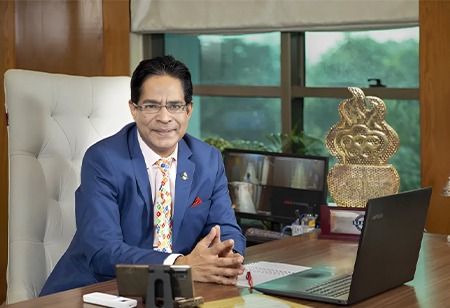
Dr. Suborno Bose is a first-generation entrepreneur, visionary educationist, and globally respected leader in hospitality education and skill development. As Founder-Chairman and Chief Mentor of the International Institute of Hotel Management (IIHM) and Indismart Group Worldwide, Dr. Bose has spent over 25 years transforming hospitality education across India and abroad.
Hotel management education in India is undergoing a significant transformation, aligned with the rapid evolution of the hospitality industry itself. Traditionally rooted in operational excellence and service fundamentals, hotel management programs today are expanding beyond kitchens, front offices, and housekeeping to embrace technology, innovation, entrepreneurship, and global exposure. Key trends shaping hotel management education include the integration of digital tools, artificial intelligence, data analytics, and sustainability into curricula.
Institutions are increasingly focusing on experiential learning, industry partnerships, paid internships, and skill-based certifications to bridge the gap between classroom learning and real-world application. The rise of new-age sectors such as luxury lifestyle brands, wellness tourism, cruise hospitality, aviation services, and food-tech platforms is also expanding career pathways for graduates. In this exclusive interview with CEO Insights, Dr. Suborno Bose, Founder-Chairman and Chief Mentor, International Institute of Hotel Management (IIHM) shares his perspective on how Hotel management education is transitioning into a new era and trends shaping the industry.
As a first-generation entrepreneur, what were the defining moments that shaped your vision for transforming hospitality education in India?
In 1989, there were few high-quality options for hospitality education in Eastern India, which led us to establish a presence in Calcutta. Our first step was launching IAM, our inaugural college. By 1994, we had also started IHM, which has grown to be one of the largest institutions in Asia, not just within India. It was a pivotal moment when I realized that my expertise lies in accounting rather than hotel management. I was able to recognize my potential in the educational sector instead of continuing a career as an accountant.
In 1994, we received an exciting proposal from Robert Gordon University in the UK to partner on a diploma program, the first ever in India. This partnership represented a pivotal moment in the field of hospitality education in India, which had previously only provided diploma courses through the government-run National Council. The launch of degree programs in hospitality and culinary arts offered students global insights and expertise, influencing the future direction of hospitality education.
How can the balance between consistency and personalization be maintained in delivering values-based education at IIHM's international locations?
I believe that personalization and innovation are crucial. This applies to various roles, such as chefs, general managers, heads of revenue management, and housekeeping, as they all need to embrace innovation and personalization. Simultaneously, the whole industry adheres to certain standardized practices. For instance, organizations like Marriott have their own standard operating procedures (SOP), and Taj has its distinct SOP. However, within these SOPs and standardization, there must be a focus on personalization, creativity, innovation, and thinking outside the box regarding our current practices.
AI has become a significant factor now, which wasn’t even present a year ago or even six months ago. Currently, many are integrating AI elements to enhance efficiency, reduce costs, and minimize waste. Progress is being made towards achieving an ideal balance between personalization and uniformity or standardization. I believe this equilibrium is crucial; excessive personalization can compromise consistency since chefs come and go. When a new chef joins, they may introduce different approaches.
Therefore, a certain level of consistency must be maintained. However, it is essential to establish your unique signature; personalization is key. In our industry, the guest holds the highest importance. Delivering an exceptional guest experience should always be our priority, regardless of the personalization efforts we implement. Therefore, achieving an effective balance is essential.
Also Read: Piyush Goyal: Transformations in Navigating International Trade Relationships
What is your strategy for bridging the gap between theoretical classroom learning and practical "on-the-job" requirements?
We have implemented a curriculum that is 70 percent practical because we have observed that, especially after COVID, young students are often not very enthusiastic about attending a 45-minute theoretical class, except for a few essential subjects. For instance, understanding the legal aspects of the hospitality industry is crucial; if you aspire to be a general manager, it is necessary to be aware of the types of licenses required, such as those for fire safety and food safety.
We definitely need to educate them on those aspects. Naturally, basic management should be included. However, for most of the courses such as cooking, culinary arts, food and beverage service, rooms division, housekeeping, revenue management, and marketing we aim to incorporate as much hands-on experience as possible. AI is integrated into all of these areas. Instead of treating AI as a separate subject, we weave it into everything we teach. In all of our courses, AI is an integral component.
I believe it's important to focus more on practical applications and less on theoretical concepts, while still incorporating some necessary theory. By integrating theory into hands-on activities, we keep students engaged and interested in attending the classes.
What kind of leadership do you adhere to at IIHM?
My approach to leadership is quite straightforward. It focuses on students, prioritizes their input, and centers on their needs. Since we work in education, our goal is to shape the futures of young individuals who will lead our country and the world. Our efforts are entirely aimed at ensuring our students reap the benefits.
Our approach is highly focused on students, meaning that every staff member must prioritize students, whom we view as our customers. With a workforce of over 550 across 18 campuses, our organization maintains a predominantly flat hierarchy. Employees are encouraged to make independent decisions. Ultimately, our strategy revolves around putting students first.
How do you see hospitality education evolving over the next decade, especially in this AI era?
In this age of AI, the hospitality industry is set to grow even larger, as evidenced by our current economic status, which is nearing 6percent of India's GDP. According to both our Prime Minister and Minister of Tourism, this figure is projected to reach between 8 and 8.5 percent within the next decade or even sooner. Therefore, it is reasonable to anticipate a significant increase in travel, tourism, aviation, hotels, cafes, food and beverage services, and weddings.
Every aspect of the hospitality sector, including cruise line tourism, is booming, with Indians traveling more than ever before. They are choosing to stay in various types of accommodations. It's not solely focused on high-end five-star or six-star hotels; it also includes homestays. I have a campus located in Shilliguri and Kalimpong, situated in the hills of Darjeeling. There's so many homestays who are doing so well. A lot of people want to stay in homestays and their economy is booming in those places due to the homestays. So the entire travel arch of the Indians is now at its peak.
I believe this bodes positively for the hospitality sector for the next decade and even the next half-century, as people are dining out more. Despite the rise of e-commerce and food delivery services like Swiggy and Zomato, the trend of eating out remains strong. Young individuals continue to prefer dining out.
Also Read: Anand Mahindra: Living the Philosophy ‘Purpose with Profit’
People are embracing a more adventurous spirit, engaging in travel and hotel stays. As a result, the industry is experiencing significant growth driven by a shift in people's attitudes post-COVID, as they realize that another pandemic could arise and life is uncertain. This has led to a focus on enjoying life rather than solely saving and earning money.
What future opportunities are you looking forward to investing your time in?
Our roadmap for the future is quite straightforward: we aim to provide quality education. Over the past two to three years, we have made significant progress in two cities. We have established our campuses in locations such as Shilliguri, Kalimpong, Shillong, Coorg, and Udaipur, as well as Akucheman city, which are not part of the metro areas. The response we are receiving has been very positive. Additionally, we are in the process of opening more campuses in other key cities, including Lucknow, and we are also planning to launch a campus in Vizag in Andhra Pradesh.
We are currently in the process of expanding. We now have 18 campuses, including international locations in Singapore and Bangkok, which are performing quite well. However, it's the campuses in India that are excelling the most. I believe that tier two and tier three cities hold more promise for hospitality than metropolitan areas. These students possess an insatiable desire to succeed both in India and on a global scale. Their mindset, humility, and hospitality seem to surpass that of urban youth.
Also Read: 5 Management Consulting Firms in India Driving Business Growth
What is your advice to future leaders in this industry?
I can only convey that India is currently witnessing substantial economic development, despite the prevailing geopolitical challenges. We should all seize the opportunities presented by this flourishing economy, regardless of the sector we are involved in, whether it be hospitality, manufacturing, agriculture, IT, or healthcare.
The growth is evident in every area. There's no necessity to seek opportunities abroad or work in other countries. There is immense potential for Indians within India, and we ought to concentrate on our own nation. That’s my perspective on what all leaders should prioritize: to focus on our country.