

Response Of The Healthcare Industry In Covid Times
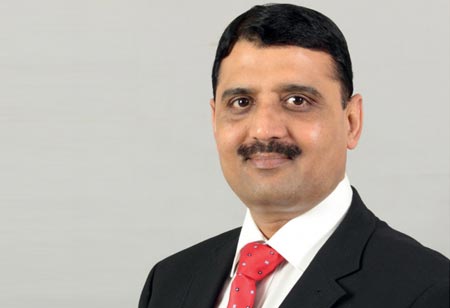
Hemraj Singh Parmar, CEO, BR Life, 0
Global economy has been deeply affected by the ongoing Coronavirus crisis. Coronavirus affected patients require robust medical treatment; but ironically, most of the hospitals have scaled-down their operations due to the ongoing lockdown and consequent restrictions on elective surgeries to reduce chances of infection. When, if at all the lockdown will be lifted, remains uncertain, thereby increasing challenges for healthcare providers.
Today, most of the private hospitals in India are running at less than 50 percent of their bed occupancies. This has had serious impact on their financial viability. Depressed revenues mean inadequate working capital to run hospital operations. Most hospitals are struggling with cash flows to pay salaries to their employees, clearing payments to vendors, suppliers and other business partners. Cost containment measures have therefore become unavoidable. These include scaling-down of unrequired activities and departments. Some hospitals have taken a decision to convert doctors on ‘fee for service’ models, taking voluntary salary cuts and, in extreme cases, even laying-off employees. Although central & state governments have issued advisories to all industries against taking actions that would adversely impact the livelihood of their employees, the employers have been forced to take steps to remain financially viable and therefore take unavoidable actions to cut costs wherever feasible.
Invocation of the NDMA has also forced some of the state governments to take-over few of the private hospitals to test and treat Covid patients. Currently, there are only more than 5000 reported cases of Coronavirus patients in the country, one of the lowest infection rates globally. This has been possible because of enforcement of early lockdown by the central government. But the number could go up dramatically if adequate precautionary measures are not taken across the country. Enforcement of lockdown is one such effective measure; there are many more. Unfortunately, awareness about community health is very low in the country, as is about personal hygiene and sanitation. India still has not reached community spread level of the debilitating disease, which has already claimed thousands of lives across the globe. But any religious or public congregations need to be avoided at all costs to contain further spread of the disease.
It is the prime responsibility of every hospital in the country to support central and state governments in containment of the disease. Many private hospitals have even had large scale infections of their staff because of inadequacy of PPE & other protective gear and also for
not following the laid down Covid protocols. Many state governments are therefore establishing exclusive Covid hospitals to treat Covid patients. Private players are helping the state governments in this capacity building exercise, a kind of PPP initiative. It is the responsibility of central and state governments to help private providers with financial support and incentives to remain viable while extending this help in this hour of need.
Coronavirus will have long term impact on the global economy in general, but healthcare industry in particular. Depressed business conditions could force some of the providers to either partially scale down or completely close their businesses. If the lockdown continues for long, it will have serious consequences for the affected patients or for those requiring urgent surgeries or medical treatments. It will also affect the livelihood of employees.
So, what will change after the disease is conquered?
For one, our outlook towards the disease management will undergo a drastic change. Humanity has endured plague, SARS, Ebola and several other debilitating epidemics down the ages. But what has emerged is that we do not probably yet have a synergized global response to such pandemics. Otherwise, we should have been able to contain the disease early in Italy, US and Spain as soon as we got to know the scale of the problem. WHO too failed to play a proactive role in early control of the spread, with disastrous consequences to global health and economies, hence the understandable global outrage against them. We could have saved many lives by early, proactive and unified global response.
Working from Home will now have a Different Meaning!
We should harness technology to productive use. Simple things such as telemedicine have found favour with clinicians to extend healthcare delivery, while maintaining ‘social distancing’. IoT and AI, if harnessed better in future, could have major impact on screening large scale population, tracking the infection, prioritizing the use and allocation of resources, and designing targeted responses, in case of a fast spreading pandemic such as Coronavirus.
Indian response so far has won worldwide acclaim, but we should not become complacent and ensure Coronavirus-free India soon and work united as a nation to combat this unprecedented epidemic. Critical shortage of PPEs, drugs, medical devices have further exacerbated the situation, something we need to plan for any future pandemics. Severe shortfalls in doctors and trained nurses, technicians and allied healthcare staff is another challenge that we need to overcome in the coming decades to manage pandemics more efficiently in future.
Only strong global leadership could ensure victory over the disease with a proactive & synergistic response driven by the WHO with active support from rest of the countries to manage such deadly epidemics in future.
Coronavirus will have long term impact on the global economy in general, but healthcare industry in particular. Depressed business conditions could force some of the providers to either partially scale down or completely close their businesses. If the lockdown continues for long, it will have serious consequences for the affected patients or for those requiring urgent surgeries or medical treatments. It will also affect the livelihood of employees.
If the lockdown continues for long, it will have serious consequences for the affected patients or for those requiring urgent surgeries or medical treatments
So, what will change after the disease is conquered?
For one, our outlook towards the disease management will undergo a drastic change. Humanity has endured plague, SARS, Ebola and several other debilitating epidemics down the ages. But what has emerged is that we do not probably yet have a synergized global response to such pandemics. Otherwise, we should have been able to contain the disease early in Italy, US and Spain as soon as we got to know the scale of the problem. WHO too failed to play a proactive role in early control of the spread, with disastrous consequences to global health and economies, hence the understandable global outrage against them. We could have saved many lives by early, proactive and unified global response.
Working from Home will now have a Different Meaning!
We should harness technology to productive use. Simple things such as telemedicine have found favour with clinicians to extend healthcare delivery, while maintaining ‘social distancing’. IoT and AI, if harnessed better in future, could have major impact on screening large scale population, tracking the infection, prioritizing the use and allocation of resources, and designing targeted responses, in case of a fast spreading pandemic such as Coronavirus.
Indian response so far has won worldwide acclaim, but we should not become complacent and ensure Coronavirus-free India soon and work united as a nation to combat this unprecedented epidemic. Critical shortage of PPEs, drugs, medical devices have further exacerbated the situation, something we need to plan for any future pandemics. Severe shortfalls in doctors and trained nurses, technicians and allied healthcare staff is another challenge that we need to overcome in the coming decades to manage pandemics more efficiently in future.
Only strong global leadership could ensure victory over the disease with a proactive & synergistic response driven by the WHO with active support from rest of the countries to manage such deadly epidemics in future.