

The Race to Q-Day: Why Organizations Must Prepare for Quantum Disruption
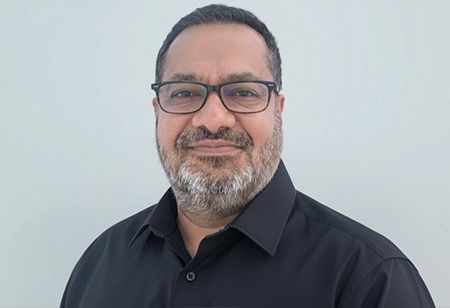
Srinivas Shekar, CEO & Co-Founder of Pantherun Technologies, has a 25-year career that encompasses engineering to executive management positions in embedded product design across various sectors such as Industrial Controls, Automotive Electronics, and Consumer Electronics.
A quiet but profound shift is underway in the world of cybersecurity; one that could redefine how digital trust is built and broken. Known as Q-Day, this anticipated milestone marks the point at which quantum computers become powerful enough to crack the encryption standards that safeguard everything from financial transactions and healthcare records to national security communications. While no one can predict the exact arrival of Q-Day, one reality is becoming increasingly clear: waiting for certainty is not an option.
The urgency is not just about the future capability of quantum machines, but about what is happening in the present. Sensitive data is already being intercepted and stored with the expectation that it will be decrypted later, once quantum technology matures. This evolving threat landscape is forcing organizations to rethink not only their encryption methods but the very foundations of how secure communication is established. Preparing for Q-Day is no longer a theoretical exercise—it is a strategic imperative that demands action today.
In an exclusive interaction with CEO Insights, Srinivas Shekhar, Co-Founder & CEO of Pantherun Technologies, shares his insights on what Q-Day means for organizations, why the risk is more immediate than it appears, and how businesses can begin preparing for a quantum-secure future.
Q. What is Q-Day, and why should organizations be preparing for it now?
A. Somewhere in a research lab or a national quantum program, a machine is edging closer to a milestone the security industry has been dreading for over a decade. Cryptographers call it Q-Day: the moment a quantum computer becomes powerful enough to break the encryption that currently protects nearly everything online, from banking transactions to defense communications to the data flowing between industrial machines. No one can say with certainty when Q-Day will arrive. Estimates range from five years to fifteen, and predictions have moved earlier, not later, as quantum computing research accelerates. What is certain is this: by the time Q-Day arrives, it will already be too late to start preparing.
Also Read: Resilience by Design: AI's Role in the Future of Global Business
Q. What is the "harvest now, decrypt later" problem, and why does it make quantum risk urgent today?
A. The most urgent reason quantum readiness cannot wait has little to do with when quantum computers actually arrive. It has to do with what adversaries are doing right now. Security researchers have documented a strategy known as "harvest now, decrypt later," where nation-state actors and sophisticated threat groups intercept and store encrypted data today, betting that a sufficiently powerful quantum computer will eventually be able to break it open. For most everyday data, this threat is negligible. But for data with a long shelf life, intellectual property, medical records, government communications, infrastructure control systems, and financial records, information encrypted today could still be sensitive and valuable a decade from now, when the encryption protecting it may no longer hold.
This changes the entire calculus of when to act. Organizations often treat quantum risk as a future problem because the threat, quantum decryption, is future-dated. But the vulnerability, data being harvested today, is present-dated. Any data encrypted with algorithms vulnerable to quantum attack, most notably RSA and elliptic-curve cryptography, which underpin the key exchange mechanisms in widely used protocols like TLS and IPSec, is effectively on a countdown clock the moment it's captured, regardless of when that clock actually runs out.
Q. If it's not the cipher itself, where does the real quantum vulnerability lie?
A. Much of the public conversation about quantum threats focuses on the encryption algorithm itself, whether AES-128 or AES-256 will hold up, whether a given cipher is "quantum safe." But this framing misses where the real exposure lies. Symmetric encryption algorithms like AES are relatively resilient to quantum attack; larger key sizes, such as AES-256 or beyond, already provide meaningful protection against the quantum algorithms currently understood to threaten symmetric ciphers.
The far more urgent vulnerability sits in how encryption keys are established in the first place. Nearly every modern security protocol, SSL/TLS, IPSec, MACSec, and their many vertical adaptations, relies on a handshake: a negotiation in which source and destination exchange information in the clear about which key will be used and how it was generated, before any actual data moves. This is precisely the mechanism quantum computers are expected to break first. Shor's algorithm, the quantum algorithm most closely associated with breaking modern cryptography, is specifically effective against the mathematical problems, integer factorization and discrete logarithms, that RSA and elliptic-curve key exchange depend on. In other words, the cipher may survive the quantum era. The handshake that delivers its key almost certainly will not.
This is why quantum readiness cannot simply mean swapping one cipher for another. It requires rethinking the key exchange itself, because that is the layer adversaries, quantum-equipped or otherwise, are most likely to target.
Also Read: Why AI Alone Won't Transform Customer Experience: Lessons from CX Leaders
Q. How is Pantherun Technologies designing out the handshake altogether?
A. This is the problem Indian cybersecurity innovator Pantherun Technologies set out to solve well before quantum urgency became a mainstream concern. Rather than building a more elaborate handshake, Pantherun's patented approach removes the handshake entirely. Source and destination each independently compute a unique, FIPS-compliant encryption key by running a statistical correlation algorithm over the same 65,000 bytes of data they've already exchanged. Because both ends generate an identical key from shared history rather than transmitting it across the network, there is no key exchange for any adversary, classical or quantum, to intercept in the first place. There is also no clear-text metadata revealing which cipher is in use, what key length has been chosen, or how the key was derived, denying an observer even the basic clues needed to target the exchange.
Crucially, this architecture is built to scale key length up as threats evolve. The same AES-based framework that secures data today at 128 or 256 bits can be extended to 384 or 512-bit keys for post-quantum protection, without changing the underlying data format or requiring a redesign of the communication protocol.
That combination, a handshake-free key generation model paired with quantum-resilient key lengths, addresses both halves of the quantum threat at once: the exchange adversaries are harvesting today, and the cipher strength they'll eventually need to break.
Because the technology is available both as Verilog IP for silicon and FPGAs and as a lightweight software library across Windows, Linux, Android, iOS, and RTOS, it can be embedded directly into the edge devices, industrial systems, and cloud infrastructure where sensitive data actually moves, rather than bolted on as a future upgrade.
Also Read: How CHROs Can Build an AI-Ready Workforce
Q. What does it cost organizations to wait on quantum readiness?
A. Organizations that treat quantum readiness as a problem for "later" are making an implicit bet: that none of the data they're transmitting today will still matter by the time Q-Day arrives. For most industries, that bet doesn't hold. Financial institutions, healthcare providers, energy and defense infrastructure, and any organization handling long-lived intellectual property are already generating data that adversaries have every incentive to capture now and unlock later.
Quantum readiness, properly understood, isn't a single migration event scheduled for some future date. It's a shift in how encryption itself is architected, starting with eliminating the handshake that quantum computers are best positioned to exploit, and extending key strength to withstand attacks that don't yet exist but soon will. The organizations that begin that shift now will find themselves quietly protected when Q-Day eventually comes. The ones that wait for certainty about the date will discover, too late, that the data worth protecting was captured years before anyone thought to ask if it was ready.