

Union Budget: Paving the Way for ‘Vikshit Bharat’ Workforce
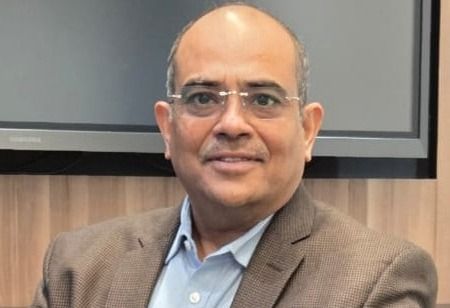
Saurab is a dynamic and results-driven Business Human Resources Leader with a demonstrated track record of fostering organizational growth through strategic manpower planning, budgeting, integration, talent acquisition, automation, and large-scale resource mobilization. He is renowned as a strategic planner and meticulous executor, adept at delivering results within stringent deadlines in highly competitive, global environments.
The Finance Minister while delivering the Union Budget 2026-27 laid the foundation of the New Labour Codes by providing a long awaited regulatory scaffolding. It will bring more clarity on the mandate of Human Resource (HR) as the era of reactive administration is over. As the future belongs to HR leaders who can act as proactive mastermind, strategically aligning their workforce with the nation’s ambitious ‘Vikshit Bharat’ trajectory.
The Budget’s drive on high-growth sectors like semiconductors, through the India Semiconductor Mission (ISM) 2.0 and biopharma, via the Rs.10,000 crore Biopharma SHAKTI initiative, signals a tectonic shift in demand for specialized skills. Degrees, still a hygiene factor, are no longer sufficient proxies for job readiness. Modern hiring frameworks begin with clearly defined role-based competencies and skills taxonomies. Degrees are considered alongside internships, projects, apprenticeships and vocational experiences that provide tangible evidence of applied capability. HR professionals must urgently adopt a skill-first talent model, moving beyond credential based filtering to identify and nurture individuals with demonstrated applied capabilities. This requires a rigorous audit of the existing workforce to map current skills against the competencies that will be required as businesses pivot to these new, high-growth areas. The very concept of hiring must evolve into a relentless focus on strategic workforce capability.
Also Read: Dankuni-Surat Freight Corridor to Boost MP Logistics, Exports
Compliance can no longer be viewed as a matter of simply ticking boxes on paper. It must translate into a genuine culture of care. The new regulatory framework, combined with a changing world, compels a redefinition of the Employer Value Proposition (EVP). The Occupational Safety, Health and Working Conditions (OSH) Code extends employer responsibility to the physical safety of every employee, contractor and visitor, demanding consistent safety facilities across all branches and offices. This responsibility is magnified by the growing operational reality of climate-related disruptions. As societal expectations evolve, a company’s stance on employee wellbeing and broader ESG principles is becoming a critical factor in attracting and retaining talent.
HR can no longer rely on intuition or historical reports, it must transform from a generalist function to a data-driven strategic partner. The days of simply managing paperwork are gone. By integrating AI and business intelligence tools, HR can forecast workforce needs, optimize talent allocation and identify potential capability gaps before they impact the business. For instance, by analyzing skills data, organisations can more accurately match people to complex projects, ensuring agility and readiness in a fast-paced environment. This predictive capability is the bedrock upon which proactive workforce planning is built.
HR leaders must now utilize advanced analytics for predictive attrition modeling, real-time employee sentiment tracking, and measuring the return on investment for every HR initiative.
Further, the Code on Wages-2019, mandates that ‘wages’, comprising basic pay, dearness allowance and retaining allowance must constitute at least 50 percent of total remuneration. This fundamentally alters the physics of salary structures, impacting provident fund, gratuity and bonus liabilities. Also, the introduction of the new labour codes has generated widespread discussion in professional circles, especially regarding changes to employee benefits and long-term financial security. One of the most transformative reforms pertains to gratuity eligibility a shift poised to significantly impact a large section of the workforce.
Also Read: Nidhi Chhibber Takes Interim Charge as CEO of NITI Aayog
Under the previous framework, only permanent employees who completed five years of continuous service were entitled to gratuity. However, the new labour codes introduce a progressive change by extending this benefit to Fixed-Term Employees and contract workers. These employees are now eligible for gratuity upon completing just one year of continuous service a substantial departure from the earlier five-year threshold. This revision is a strategic win-win. For employers, it encourages the integration of contract and fixed-term workers into permanent roles, promoting a more stable and committed workforce. For employees, it provides an essential financial safety net earlier in their careers, enhancing job security and long-term welfare.
Beside this, the Honorable FM also presented a transformative roadmap for India’s education and skills ecosystem, the Union Minister for Finance outlined pivotal initiatives to catalyze the 'Orange Economy' and fortify the nation’s creative industries. The announcement signals a strategic evolution in the country's economic trajectory a deliberate and gradual shift from an agrarian base, through territorial and manufacturing strengths, towards a future powered by digital and creative enterprise.
Recognizing the exponential growth of the Animation, Visual Effects, Gaming and Comics (AVGC) sector, the Finance Minister highlighted the industry's burgeoning demand for talent, projecting a requirement of nearly two million professionals by 2030. To bridge this skill gap and nurture the next generation of creatives, the government announced support to the Indian Institute of Creative Technologies, Mumbai, for the establishment of state-of-the-art AVGC Content Creator Labs. These labs will be set up in 15,000 secondary schools and 500 colleges nationwide, designed to unlock new and diverse career pathways for the nation's youth. This initiative represents a significant investment in building a future-ready workforce and expanding opportunities for learners across the country.
Also Read: Mukesh Ambani Unveils Rs.10 Lakh Crore AI Push
The announcement comes against the backdrop of a sector that has undergone a profound transformation over the past decade, pivoting decisively toward digital and platform-based delivery. This shift has fundamentally reshaped revenue models, employment patterns, and value chains.
With the Budget prioritizing ‘Viksit Bharat,’ HR leaders are no longer just administrators but are expected to be strategic architects of a formal, technology-driven, and compliant workforce. As India positions itself for a technology-driven future, HR leaders stand at a pivotal juncture. By embracing these shifts from hiring to capability building, from fixed pay to total rewards, from policy compliance to a culture of care, from generalist instincts to data-driven insights and from paperwork to digital governance they can transform their function into the strategic powerhouse that will architect the workforce of tomorrow.