


B Srinivas : Driving Strategic Procurement Excellence And Sustainable Transformation
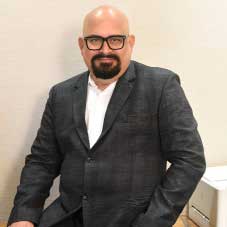
B Srinivas
Chief Procurement Officer
In today’s fast-changing industrial landscape, procurement leaders are also key drivers of innovation, operating efficiency, sustainability and business continuity. Their ability to balance commercial acumen with technical under standing often determines how effectively an organization responds to market volatility, regulatory shifts, and growth opportunities.
Among such seasoned leaders is B. Srinivas, Chief Procurement Officer at Balrampur Chini Mills Limited, whose career reflects a rare blend of technical depth and commercial expertise. A Mechanical Engineering graduate with an MBA in Finance, B. Srinivas began his professional journey in 1990 with Coromandel Fertilisers, where he spent seven years in plant maintenance.
He later moved to Rajasree Cement, now UltraTech Cement, where he expanded his experience across maintenance, project management and eventually vendor develop -ment & sourcing.
Over the years, he has held leadership positions across several major organizations, including Orient Cement as Head of Procurement, Dalmia Cement as General Manager – Techno Commercial, and senior roles at JK Cement, Prism Cement, and H&R Johnson, where he served as Vice President. In 2018, he joined Balrampur Chini Mills as Chief Procurement Officer.
B.Srinivas career is marked by significant milestones, including the successful handling of multiple greenfield and brownfield projects, a seamless transition from technical operations to commercial leadership, and the transformation of procurement functions across fertiliser, cement, and sugar industries. His journey stands as a testament to how procurement leadership, when backed by domain expertise and strategic vision, can create long-term value for businesses. Let’s read on.
How is procurement evolving at BCML to support its transition toward bio-ethanol and renewable energy?
At BCML, procurement has transformed significantly over the years. We have actively
supported the company’s shift toward sustainability by enabling initiatives by expanding our distillery capacity from two to five units by increasing production capacity nearly 1050 KLPD of ethanol daily. We also procure grains like maize and rice for ethanol production.
Additionally, we are working on a project which is India’s first PLA bioplastic plant, which involves global sourcing and complex supply chain management. This is a key initiative from Balrampur Chini Mills to make bioplastic from sugar. This helps in strengthening the rural economy & environmental suitability. This will be the game changer as bioplastic & also reduces the dependency on fossil fuel and import substitution.
What strategies do you follow to evaluate and onboard vendors based on ESG criteria?
I follow a structured approach to vendor evaluation with a strong focus on ESG parameters. We assess suppliers on their compliance with ISO standards and environmental regulations. We also look at their sustainability initiatives, CSR activities, and efforts toward green practices.
We conduct this evaluation annually using a detailed assessment framework. Typically, vendors are expected to meet at least 50–60% of our criteria initially, after which we work closely with them to progressively improve their compliance and align them with higher ESG standards.
How is digital transformation reshaping procurement at BCML?
Digital transformation plays a crucial role in how I manage procurement at BCML. We leverage tools like SAP HANA for planning, maintenance tracking and end-to-end procurement workflows. I also use reverse auctions to ensure transparent price discovery and validation.
Integrating advanced technologies such as AI-driven analytics, automation, digital sourcing platforms, and data-based decision-making can significantly improve efficiency, transparency cost optimization and resilience across the supply chain.
Can you tell us about your leadership approach and the principles you follow?
My leadership approach is rooted in balance and knowledge. I see myself as a bridge between the market and the company, ensuring decisions are fair and sustainable. I strongly believe in knowledge-based negotiation rather than traditional bargaining which requires a deep understanding of market demand, cost structures, and vendor profitability.
Additionally, we are working on a project which is India’s first PLA bioplastic plant, which involves global sourcing and complex supply chain management. This is a key initiative from Balrampur Chini Mills to make bioplastic from sugar. This helps in strengthening the rural economy & environmental suitability. This will be the game changer as bioplastic & also reduces the dependency on fossil fuel and import substitution.
My leadership approach is rooted in balance and knowledge. I see myself as a bridge between the market and the company, ensuring decisions are fair and sustainable
What strategies do you follow to evaluate and onboard vendors based on ESG criteria?
I follow a structured approach to vendor evaluation with a strong focus on ESG parameters. We assess suppliers on their compliance with ISO standards and environmental regulations. We also look at their sustainability initiatives, CSR activities, and efforts toward green practices.
We conduct this evaluation annually using a detailed assessment framework. Typically, vendors are expected to meet at least 50–60% of our criteria initially, after which we work closely with them to progressively improve their compliance and align them with higher ESG standards.
How is digital transformation reshaping procurement at BCML?
Digital transformation plays a crucial role in how I manage procurement at BCML. We leverage tools like SAP HANA for planning, maintenance tracking and end-to-end procurement workflows. I also use reverse auctions to ensure transparent price discovery and validation.
Integrating advanced technologies such as AI-driven analytics, automation, digital sourcing platforms, and data-based decision-making can significantly improve efficiency, transparency cost optimization and resilience across the supply chain.
Can you tell us about your leadership approach and the principles you follow?
My leadership approach is rooted in balance and knowledge. I see myself as a bridge between the market and the company, ensuring decisions are fair and sustainable. I strongly believe in knowledge-based negotiation rather than traditional bargaining which requires a deep understanding of market demand, cost structures, and vendor profitability.
I focus on fair pricing to create win-win outcomes. Additionally, I emphasize team development cross-functional collaboration, and transparency in processes. Delegation of authority is equally important to build ownership. Ultimately, my goal is to develop a competent, loyal, and competitive team that drives long-term success.
What is the future direction you are heading towards, and what advice would you give to aspiring leaders in procurement?
My vision as a leader in procurement is to contribute meaningfully to the Make in India initiative by strengthening domestic manufacturing capabilities, reducing over dependence on imports, and creating opportunities for Indian startups, MSMEs, and local suppliers to scale sustainably. Procurement has the power to shape supply ecosystems and I want to use that influence to build a stronger, more self-reliant industrial base for India. My goal is to help organizations transform procurement into a strategic growth driver rather than just a support function.
Another important part of my vision is leadership development. I see it as my responsibility to mentor and guide the next generation of procurement professionals. For aspiring procurement leaders my advice is to commit to continuous learning and self improvement.
Dedicate time every day to upgrading your knowledge, whether through industry updates, certifications, market intelligence, or global best practices. Stay informed about changing supplier markets geopolitical risks, sustainability trends, and emerging technologies that impact sourcing decisions.
Equally important is building strong analytical, negotiation, and decision-making skills. Procurement leaders must be able to interpret data, manage risks, negotiate win-win outcomes, and make decisions that balance cost, quality, speed and reliability.
Most importantly, shift your mindset from transactional buying to strategic procurement. Focus not only on price savings, but also on innovation, value creation, supplier development, sustainability, and long-term business impact. Leaders who think strategically and act proactively will shape the future of procurement.
B Srinivas, Chief Procurement Officer, Balrampur Chini Mills
B Srinivas is Chief Procurement Officer at Balrampur Chini Mills Limited with over 35 years of experience across fertilisers, cement, and sugar industries. He has led large-scale procurement transformations, centralized operations and driven sustainable sourcing, digitalization, and ethanol-focused initiatives, delivering cost efficiency, resilient supply networks, and strategic value for business growth and industrial innovation while mentoring procurement leaders across India.
What is the future direction you are heading towards, and what advice would you give to aspiring leaders in procurement?
My vision as a leader in procurement is to contribute meaningfully to the Make in India initiative by strengthening domestic manufacturing capabilities, reducing over dependence on imports, and creating opportunities for Indian startups, MSMEs, and local suppliers to scale sustainably. Procurement has the power to shape supply ecosystems and I want to use that influence to build a stronger, more self-reliant industrial base for India. My goal is to help organizations transform procurement into a strategic growth driver rather than just a support function.
Another important part of my vision is leadership development. I see it as my responsibility to mentor and guide the next generation of procurement professionals. For aspiring procurement leaders my advice is to commit to continuous learning and self improvement.
Dedicate time every day to upgrading your knowledge, whether through industry updates, certifications, market intelligence, or global best practices. Stay informed about changing supplier markets geopolitical risks, sustainability trends, and emerging technologies that impact sourcing decisions.
Equally important is building strong analytical, negotiation, and decision-making skills. Procurement leaders must be able to interpret data, manage risks, negotiate win-win outcomes, and make decisions that balance cost, quality, speed and reliability.
Most importantly, shift your mindset from transactional buying to strategic procurement. Focus not only on price savings, but also on innovation, value creation, supplier development, sustainability, and long-term business impact. Leaders who think strategically and act proactively will shape the future of procurement.
B Srinivas, Chief Procurement Officer, Balrampur Chini Mills
B Srinivas is Chief Procurement Officer at Balrampur Chini Mills Limited with over 35 years of experience across fertilisers, cement, and sugar industries. He has led large-scale procurement transformations, centralized operations and driven sustainable sourcing, digitalization, and ethanol-focused initiatives, delivering cost efficiency, resilient supply networks, and strategic value for business growth and industrial innovation while mentoring procurement leaders across India.