

Hardik Joshi: Powering Industrial Growth With Smart Compressed Air Solutions
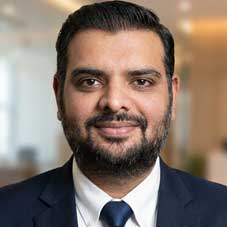
Hardik Joshi
Director
As manufacturers increasingly seek solution-oriented partners capable of combining technical expertise with commercial understanding, engineering leaders are playing a far more strategic role in driving industrial transformation. Hardik Joshi, Director at Anil Air Tech Engineers, represents this new generation of engineering professionals.
With a strong technical foundation and years of hands-on experience working closely with manufacturing industries, he has built his career around delivering practical compressed air solutions that enhance productivity, optimise energy usage, and create lasting customer value.
Holding a Bachelor's degree in Mechanical Engineering from K.J. Somaiya College of Engineering, Mumbai University, and a Diploma in Export-Import Management from the Welingkar Institute he brings together technical expertise and business acumen.
His leadership journey began during his engineering days as Team Captain of Redshift Racing, the college's all-terrain vehicle team. Beyond designing and manufacturing competition vehicles, the role strengthened his ability to lead multidisciplinary teams manage stake holders coordinate sponsorships, and solve complex challenges under demanding conditions.
Joining the family business in 2013 marked the beginning of a transformative phase for both his career and the organisation. Under his leadership, Anil Air Tech Engineers partnered with a multinational company as an authorised dealer and broadened its offerings to include industrial air compressors and compressed air aluminium piping systems, evolving into a provider of comprehensive compre -ssed air solutions.
Travelling extensively across industrial hubs such as Vapi, Dahej, Bharuch, and Vadodara, Hardik worked closely with customers to understand their operational challenges and recommend practical engi -neering solutions.
These experiences reinforced his belief that successful sales are built not on transactions, but on trust, technical competence, and creating long-term value through consultative partnerships.
What customer insights have shaped ANIL AIR TECH ENGINEERS' approach to delivering compressed air solutions across industries?
Our biggest insight has been that customers are not looking for compressors—they are looking for dependable, energy-efficient systems that improve productivity. Across industries such as pharmaceuticals, food processing, automotive, and engineering, the priorities remain the same: maximum uptime, consistent air quality, lower operating costs, and reliable after-sales support.
This understanding has shifted our approach from selling equipment to delivering customised engineering solutions. Before recommending any system, I focus on under standing the customer's manufacturing process, production goals, and future expansion plans. That consultative approach allows us to optimise performance, improve energy efficiency, and create long-term value.
Which technological deve- lopment will have the greatest influence on the future of compressed air systems?
I believe intelligent energy management will define the future of compressed air systems. Since energy represents nearly 70-80 percent of a compressor's lifecycle cost, improving efficiency has become a strategic priority for manufacturers.
Technologies such as IoT, AI-driven analytics, and predictive maintenance allow real-time monitoring of system performance and help prevent failures before they occur. However, technology alone is not enough. Compressors, dryers, filters, storage, and piping must function as one integrated system.
Going forward, customers will expect measurable improvements in energy consumption, reliability, and sustain ability, making solution providers true long-term performance partners rather than equipment suppliers.
How does ANIL AIR TECH ENGINEERS create value throughout the customer life cycle?
I believe our responsibility begins long before equipment is installed and continues throughout its lifecycle. Rather than recommending standard products, I first evaluate the customer's manufac -turing process, air demand, and complete compressed air network. Once the system is operational, we monitor key performance indicators, conduct energy audits, and use ultrasonic leak detection to identify avoidable losses.
Our biggest insight has been that customers are not looking for compressors—they are looking for dependable, energy-efficient systems that improve productivity. Across industries such as pharmaceuticals, food processing, automotive, and engineering, the priorities remain the same: maximum uptime, consistent air quality, lower operating costs, and reliable after-sales support.
This understanding has shifted our approach from selling equipment to delivering customised engineering solutions. Before recommending any system, I focus on under standing the customer's manufacturing process, production goals, and future expansion plans. That consultative approach allows us to optimise performance, improve energy efficiency, and create long-term value.
Before recommending any system, I focus on understanding the cus-tomer's manufacturing process, production goals, and future expansion plans. That consultative approach allows us to optimise performance, improve energy efficiency, and create long-term value
Which technological deve- lopment will have the greatest influence on the future of compressed air systems?
I believe intelligent energy management will define the future of compressed air systems. Since energy represents nearly 70-80 percent of a compressor's lifecycle cost, improving efficiency has become a strategic priority for manufacturers.
Technologies such as IoT, AI-driven analytics, and predictive maintenance allow real-time monitoring of system performance and help prevent failures before they occur. However, technology alone is not enough. Compressors, dryers, filters, storage, and piping must function as one integrated system.
Going forward, customers will expect measurable improvements in energy consumption, reliability, and sustain ability, making solution providers true long-term performance partners rather than equipment suppliers.
How does ANIL AIR TECH ENGINEERS create value throughout the customer life cycle?
I believe our responsibility begins long before equipment is installed and continues throughout its lifecycle. Rather than recommending standard products, I first evaluate the customer's manufac -turing process, air demand, and complete compressed air network. Once the system is operational, we monitor key performance indicators, conduct energy audits, and use ultrasonic leak detection to identify avoidable losses.
Many facilities unknowingly waste energy through pressure drops, air leaks, or inefficient system design. By identifying these issues and recommending practical improvements, we help customers reduce operating costs without unnecessary capital investment. Our objective is to remain a trusted engineering partner throughout the system's life.
What strategic priorities should engineering com- panies adopt to remain globally competitive?
To remain globally competitive, engineering companies must evolve from product manufacturers into innovation-driven solution providers.
For me, quality remains non-negotiable, while cost competitiveness requires conti- nuous improvements in manufacturing efficiency and supply chain optimisation.
Digital technologies such as IoT, AI, predictive maintenance, and real-time monitoring are equally important for improving productivity and customer service.
I also believe Indian companies should actively pursue international oppor -tunities by building strong global partnerships and adopting international best practices.
Organisations that combine engineering excellence, digitalinnovation, operational efficiency, and a customer-centric mindset will be best positioned to succeed in an increasingly competitive global marketplace.
What continues to inspire you as a leader, and what legacy would you like to leave behind?
My ambition extends beyond building a successful business. I want to create an engineering organisation recognised for integrity, technical excellence, and meaningful customer value. I am passionate about helping industries improve energy efficiency through better compressed air system design, reducing both operating costs and carbon emissions.
At the same time, I want to strengthen India's presence in global engineering markets by demonstrating the country's technical capabilities and entrepreneurial strength.
Equally important is nurturing future leaders within our organisation. If I can inspire more Indian businesses to think globally while remaining committed to ethics, quality, and customer trust, I will consider that my greatest achieve -ment.
Hardik Joshi, Director, Anil Air Tech Engineers
Hardik Joshi is the Director at Anil Air Tech Engineers, with a background in Mechanical Engineering from K.J. Somaiya College of Engineering and a Diploma in Export-Import Management from Welingkar Institute. He is passionate about energy-efficient engineering, customer-centric solutions, and expanding Indian engineering capabilities into global markets.
What strategic priorities should engineering com- panies adopt to remain globally competitive?
To remain globally competitive, engineering companies must evolve from product manufacturers into innovation-driven solution providers.
For me, quality remains non-negotiable, while cost competitiveness requires conti- nuous improvements in manufacturing efficiency and supply chain optimisation.
Digital technologies such as IoT, AI, predictive maintenance, and real-time monitoring are equally important for improving productivity and customer service.
I also believe Indian companies should actively pursue international oppor -tunities by building strong global partnerships and adopting international best practices.
Organisations that combine engineering excellence, digitalinnovation, operational efficiency, and a customer-centric mindset will be best positioned to succeed in an increasingly competitive global marketplace.
What continues to inspire you as a leader, and what legacy would you like to leave behind?
My ambition extends beyond building a successful business. I want to create an engineering organisation recognised for integrity, technical excellence, and meaningful customer value. I am passionate about helping industries improve energy efficiency through better compressed air system design, reducing both operating costs and carbon emissions.
At the same time, I want to strengthen India's presence in global engineering markets by demonstrating the country's technical capabilities and entrepreneurial strength.
Equally important is nurturing future leaders within our organisation. If I can inspire more Indian businesses to think globally while remaining committed to ethics, quality, and customer trust, I will consider that my greatest achieve -ment.
Hardik Joshi, Director, Anil Air Tech Engineers
Hardik Joshi is the Director at Anil Air Tech Engineers, with a background in Mechanical Engineering from K.J. Somaiya College of Engineering and a Diploma in Export-Import Management from Welingkar Institute. He is passionate about energy-efficient engineering, customer-centric solutions, and expanding Indian engineering capabilities into global markets.