


Jatin Gupta & Karan Gupta: Strengthening Tradition With A Modern Growth Vision


Jatin Gupta
Director
The challenge for the next generation is to introduce new perspectives and modern systems while safeguarding the values, expertise, and relationships that have supported the business over decades.
At Shree Ji Steel, Directors Jatin Gupta and Karan Gupta are embracing this responsibility as part of the company’s four-generation journey. Their approach centres on building upon the foundation established by their predecessors while preparing the organisation for changing market realities.
Combining inherited business acumen with an analytical and forward-looking mindset, they are working to make the enterprise more structured efficient, and responsive.
Their focus extends to understanding market trends, evaluating growth opportunities, strengthening internal processes, and improving execution. Education and professional exposure have encouraged them to approach decisions with a broader perspective, placing greater emphasis on data, operational discipline, and evolving customer requirements.
They also recognise the importance of developing capable teams and establishing systems that supportconsistent performance as the business grows.
Modernisation, however, does not mean moving away from the principles that have defined Shree Ji Steel. Integrity, quality, prudent financial management, and enduring relationships with customers and suppliers remain central to its business philosophy. For Jatin and Karan, these values provide a stable foundation for progress rather than constraints on change.
This balance is reflected in their efforts to adopt technology, strengthen digital marketing, standardise processes, and explore opportunities across domestic and international markets. Their objective is to create a more organised and scalable enterprise without compromising the trust built over generations.
For both directors, leadership means preserving the achievements of the past while creating stronger foundations for the future. Their journey reflects a commitment to responsible growth continuous improve -ment, and the enduring relevance of a family legacy.
How do you and Karan complement each other’s strengths when making strategic and operational decisions at Shree Ji Steel?
Karan and I bring different perspectives to the business, which helps us make more balanced decisions.
While one of us may focus on strategic growth, market opportunities and long-term positioning the other may concentrate on operations, customer requirements and execution.
We discuss important decisions together, evaluating their commercial viability, financial implications and long-term sustainability. We also challenge each other’s assumptions to arrive at practical solutions.
This partnership allows us to combine the experience and relationships built over generations with a structured approach to business development, technology adoption, customer engagement and market expansion.
What were the key milestones and mindset shifts that transformed Shree Ji Steel from a traditional family business into a professionally managed steel enterprise?
Shree Ji Steel’s transformation has been a gradual process shaped by several important decisions. We first established a strong foundation through lasting relationships with customers, suppliers and business partners.
As the business expanded, we recognised the need for stronger systems, defined processes, financial discipline and technology-enabled operations.
Entering new markets and customer segments further supported our growth. We also began placing greater emphasis on consistency, responsiveness and customer experience.
The biggest shift was moving from running a successful family business to building a scalable institution, while preserving the values and relationships that have supported us for generations.
How have you strengthened sourcing, inventory, distribution and customer servicing to support Shree Ji Steel’s growing scale?
Crossing 125,700 MT in supplies and serving over 4,400 customers has required us to make our suppl chain more structured.
We have developed relationships with multiple dependable suppliers to improve sourcing flexibility and manage availability, pricing and delivery timelines.
Our inventory planning considers customer demand, market movements, lead times and regional requirements. We have also strengthened coordination between procure -ment, inventory, sales and logistics to improve delivery planning.
On the customer front, we focus on more than order fulfilment. We prioritise timely communication, accurate information and responsive service to ensure that quality, availability and delivery remain consistent as we grow.
What has been one of the most difficult decisions during Shree Ji Steel’s trans -formation, and what did it teach you about leadership?
One of our biggest challenges was recognising that the traditional ways of working needed to evolve as the business expanded. Our earlier success relied heavily on personal involvement, experience and relationships.
However increasing customers, transactions and opportunities required stronger systems and clearer responsibilities.
We therefore focused on introducing structured processes, technology, reporting and data-driven decision-making without losing our entrepreneurial culture. Delegation was another important part of this transition.
The experience taught me that an organisation must evolve alongside its business. Leadership is not simply about continuing what has worked in the past; it is also about recognising when change is necessary for sustainable growth.
What is your long-term roadmap for Shree Ji Steel, and what legacy do you and Karan want to create as the next generation?
Our vision is to build a diversified, professionally managed and internationally capable steel enterprise while preserving the values that have defined Shree Ji Steel. We aim to expand across India, broaden our product portfolio and strengthen our supply networks.
Technology will play an increasingly important role in procurement, demand forecasting, inventory management, logistics, customer relationships and analytics. We also see opportunities in strategic partnerships and international markets, supported by the right capabilities in quality, documentation and compliance.
Ultimately, Karan and I want to leave behind an organisation that is scalable, technology enabled, customer-focused and resilient, carrying forward our legacy while remaining prepared for future opportunities.
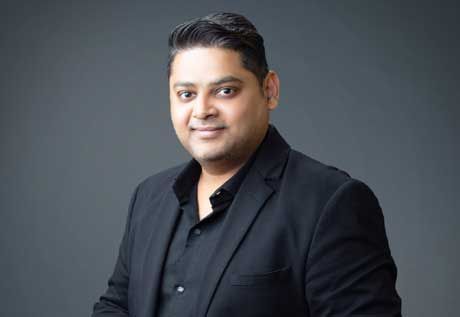
Jatin Gupta, Director, Shree Ji Steel
Jatin Gupta is a Director at Shree Ji Steel and part of the fourth generation guiding the family enterprise. He brings a contemporary perspective to the business, focusing on strategic growth market expansion, technology adoption and professional management while preserving the values, relationships and credibility built across generations.
Karan Gupta, Director, Shree Ji Steel
Karan Gupta is a Director at Shree Ji Steel and part of its fourth-generation leadership. He contributes to the company’s continued growth through a focus on operations, customer relationships, business development and structured processes, helping strengthen the organization while carrying forward its longstanding commitment to quality, integrity and trust.
However increasing customers, transactions and opportunities required stronger systems and clearer responsibilities.
We therefore focused on introducing structured processes, technology, reporting and data-driven decision-making without losing our entrepreneurial culture. Delegation was another important part of this transition.
The experience taught me that an organisation must evolve alongside its business. Leadership is not simply about continuing what has worked in the past; it is also about recognising when change is necessary for sustainable growth.
What is your long-term roadmap for Shree Ji Steel, and what legacy do you and Karan want to create as the next generation?
Our vision is to build a diversified, professionally managed and internationally capable steel enterprise while preserving the values that have defined Shree Ji Steel. We aim to expand across India, broaden our product portfolio and strengthen our supply networks.
Technology will play an increasingly important role in procurement, demand forecasting, inventory management, logistics, customer relationships and analytics. We also see opportunities in strategic partnerships and international markets, supported by the right capabilities in quality, documentation and compliance.
Ultimately, Karan and I want to leave behind an organisation that is scalable, technology enabled, customer-focused and resilient, carrying forward our legacy while remaining prepared for future opportunities.
Jatin Gupta, Director, Shree Ji Steel
Jatin Gupta is a Director at Shree Ji Steel and part of the fourth generation guiding the family enterprise. He brings a contemporary perspective to the business, focusing on strategic growth market expansion, technology adoption and professional management while preserving the values, relationships and credibility built across generations.
Karan Gupta, Director, Shree Ji Steel
Karan Gupta is a Director at Shree Ji Steel and part of its fourth-generation leadership. He contributes to the company’s continued growth through a focus on operations, customer relationships, business development and structured processes, helping strengthen the organization while carrying forward its longstanding commitment to quality, integrity and trust.