


Alok Joshi: Beyond The Balance Sheet, Building Lasting Business Value

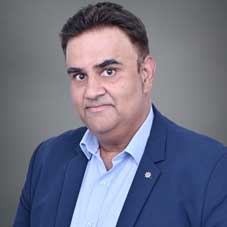
Alok Joshi
Group CFO
It demands not only financial acumen but also sound judgement, people skills, and the ability to balance evidence with experience.
At Oza Holdings, Alok Joshi brings this broader perspective in a senior C-suite leadership role, drawing on years of leadership experience and lessons that have shaped his approach to decision-making.
His leadership philosophy is rooted in a simple principle passed down by his father, a successful C-suite leader: common sense remains essential, even as the complexities of business grow.
For Joshi, there are no shortcuts to effective leadership. Every decision requires careful prioritisation, clear communi- cation, and an understanding of when to act and when to step back.
Equally central to his approach is the belief that business success is built through people. Influenced by his mother’s advice to treat colleagues like friends, Joshi values respect, humility, and fairness in professional relationships.
As his responsibilities expanded, managing external stakeholders with competing commercial interests became an increasingly important part of his role.
He approaches these negotiations with balanced reasoning, aiming to create outcomes that serve mutual interests rather than short-term gains.
For Joshi, leadership success is ultimately measured not by titles or individual achievements, but by the trust his teams place in him and his contribution to building a business which is meaningful and has longevity.
He places particular emphasis on generating multiple options, believing that the strength of a decision often depends on the breadth of possibilities considered. Experience, meanwhile, sharpens intuition - but intuition must remain grounded in evidence.
How do you align financial planning across businesses with different operating cycles, capital needs, and market risks while ensuring a unified financial direction?
I focus on identifying common objectives that allow each business to address its unique operating needs while contributing to the larger organisational vision. I view capital as a shared pool, where every allocation must be weighed against competing priorities and potential returns.
My approach considers the wider impact of decisions across operations, people, finance, and reputation. I also identify threats to cash flows early and build safeguards against potential disruptions. Above all, I avoid reactive decisions and prioritise actions that strengthen the organisation’s long-term interests.
What principles guide your investment decisions and capital allocation to balance immediate business require- ments with sustainable long-term value creation?
I view every capital allocation as an opportunity cost, because investing in one project means foregoing another. My approach is guided by stewardship and an ownership mindset, which encourages me to think in years rather than quarters.
Before approving an investment, I assess five critical aspects: its cash generation potential, associated risks, possible downside exposure, scope for sustainable value creation, and long-term impact on the balance sheet.
This disciplined evaluation helps me distinguish between immediate operational requirements and investments that can create enduring value for the business.
How do you collaborate with operational leaders to improve communication, strengthen accountability, and translate financial insights into measurable business outcomes?
I believe information is valuable only when it leads to meaningful action. I communicate financial and operational issues in clear, practical language that resonates with people across different organisational levels and generations. When opinions differ, I look for common ground that helps move decisions forward.
I strengthen accountability by setting an example, meeting deadlines, and staying committed through every stage of implementation. I own the outcomes and share the credit that belongs to the team. This
I focus on identifying common objectives that allow each business to address its unique operating needs while contributing to the larger organisational vision. I view capital as a shared pool, where every allocation must be weighed against competing priorities and potential returns.
My approach considers the wider impact of decisions across operations, people, finance, and reputation. I also identify threats to cash flows early and build safeguards against potential disruptions. Above all, I avoid reactive decisions and prioritise actions that strengthen the organisation’s long-term interests.
I believe information is valuable only when it leads to meaningful action. I communicate financial and operational issues in clear, practical language that resonates with people across different organisational levels and generations
What principles guide your investment decisions and capital allocation to balance immediate business require- ments with sustainable long-term value creation?
I view every capital allocation as an opportunity cost, because investing in one project means foregoing another. My approach is guided by stewardship and an ownership mindset, which encourages me to think in years rather than quarters.
Before approving an investment, I assess five critical aspects: its cash generation potential, associated risks, possible downside exposure, scope for sustainable value creation, and long-term impact on the balance sheet.
This disciplined evaluation helps me distinguish between immediate operational requirements and investments that can create enduring value for the business.
How do you collaborate with operational leaders to improve communication, strengthen accountability, and translate financial insights into measurable business outcomes?
I believe information is valuable only when it leads to meaningful action. I communicate financial and operational issues in clear, practical language that resonates with people across different organisational levels and generations. When opinions differ, I look for common ground that helps move decisions forward.
I strengthen accountability by setting an example, meeting deadlines, and staying committed through every stage of implementation. I own the outcomes and share the credit that belongs to the team. This
leadership approach builds trust, encour -ages ownership, and helps teams remain focused on improving efficiency and business performance.
Which emerging develop- ments do you believe will influence future investment priorities and C-suite decision-making, and how are you preparing to navigate them?
I believe it is difficult to predict which single development will shape the future, particularly as technologies such as AI continue to evolve. Rather than making assumptions, I focus on strengthening fundamentals and remaining adaptable.
I regularly revisit the business’s purpose adjust strategies as circumstances change, and prefer investments only when the value proposition is clear.
I also prioritise capital discipline and healthy balance sheets to protect against uncertainty.
Timing matters: leaders must exercise patience when risks outweigh returns and act decisively when opportunities become compelling. Above all, I remain committed to continuous learning and adapting to change.
How do you see executive leadership evolving to build organisations that are more agile, accountable, efficient, and prepared for future uncertainties?
I see the C-suite evolving from a collection of functional leaders into a unified team responsible for enterprise wide outcomes. Decisions increasingly require collaboration across strategy, finance, operations, technology, people and other business drivers.
I believe efficiency will depend on directing capital, talent, and management attention towards activities that create lasting value.
Leaders must also prepare for uncertainty through scenario planning, stress testing, and flexible operating models. Equally important are transparent communication, integrity, and constructive leadership development.
Ultimately, I believe executive success will be measured not merely by annual results, but by the ability to build organisations that remain resilient trusted, and adaptable over time.
Alok Joshi, Group CFO, OzaHoldings
Alok Joshi, a senior C-suite leader at Oza Holdings, brings a strategic perspective to financial leadership, combining capital discipline, risk management, and long-term value creation.
Guided by integrity fairness, and commitment to excellence, he emphasizes informed decision-making, stakeholder trust, and collaborative leadership to build resilient businesses that deliver sustainable growth.