


Mehul J Panchal : Turning Filtration Challenges Into Engineering Solutions

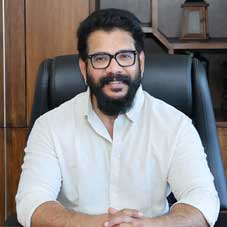
Mehul J Panchal
Founder
Trained as a chemical engineer and later equipped with an MBA, Mehul found that his two disciplines converged naturally in filtration. Engineering taught him to understand what happens inside a process, while management taught him to consider the commercial reason behind it. This inter-section shaped his view of the filtration industry and eventually the foundation of Filter Concept.
When Mehul entered the industry in 2002, filtration was often treated as a replacement component, with customers purchasing filter elements based primarily on size, price and availability. He identified a deeper gap: customers were facing contamination and process problems, yet the industry was frequently responding with hardware rather than engineering solutions.
Filter Concept was therefore built around a simple premise - the answer lies at the site, not merely in a catalogue. For Mehul, effective leadership consequently begins with two disciplines: go and see, and never quote a number that cannot be defended. In filtration, he believes, technical inaccuracies are not merely commercial issues; the wrong micron rating can translate directly into plant stop page. Let’s hear more from him in this one-on-one interaction.
How has your role as CMD evolved as Filter Concept has grown?
In the first decade, I was the company. I did the drawings, met customers, followed up on
payments and signed cheques. That worked, but it could not scale. Over time, my unit of work changed. Earlier, my output was a decision; today, it is the system that produces the decision without me.
My responsibilities now centre on capital allocation, technical governance and people. I also spend more time saying no - whether to an unsuitable enquiry, an unready market or a shortcut on specifi -cations. I believe a company's character is defined as much by what it turns down as by what it wins.
How do you build a culture of ownership and account ability?
I learned that credentials are not always the best predictor of fit. Someone from a large multinational may not necessarily thrive where decisions must be made quickly and resources are finite.
We focus instead on clear domain authority. Engineering owns product and verification, finance owns cash, operations own delivery, while international business development and overseas operations have defined leadership. Within those boundaries, people make decisions without asking me.
Three principles guide us: decisions should belong to those closest to the facts, every number must be traceable to a source, and mistakes reported early are treated differently from mistakes discovered late. Accountability requires both authority and transparency.
What has a difficult business experience taught you about risk and resilience?
We once won a very large order in the water and desalination sector and accepted credit terms that were more accommodating than we normally would have allowed. Although we met every delivery commitment, multiple inspection stages and extended payment terms tied up our cash for nearly a year.
The customer was satisfied, but commercially it was an expensive lesson. I learned that the size of an opportunity should never determine the terms on which we accept it. Since then, every major commitment must answer one question: what condition would tell us to stop? I now value visibility over confidence. Resilience, ultimately, meant
My responsibilities now centre on capital allocation, technical governance and people. I also spend more time saying no - whether to an unsuitable enquiry, an unready market or a shortcut on specifi -cations. I believe a company's character is defined as much by what it turns down as by what it wins.
Mehul J Panchal combines engineering expertise, disciplined leadership, and practical problem solving to transform filtration challenges into reliable solutions
How do you build a culture of ownership and account ability?
I learned that credentials are not always the best predictor of fit. Someone from a large multinational may not necessarily thrive where decisions must be made quickly and resources are finite.
We focus instead on clear domain authority. Engineering owns product and verification, finance owns cash, operations own delivery, while international business development and overseas operations have defined leadership. Within those boundaries, people make decisions without asking me.
Three principles guide us: decisions should belong to those closest to the facts, every number must be traceable to a source, and mistakes reported early are treated differently from mistakes discovered late. Accountability requires both authority and transparency.
What has a difficult business experience taught you about risk and resilience?
We once won a very large order in the water and desalination sector and accepted credit terms that were more accommodating than we normally would have allowed. Although we met every delivery commitment, multiple inspection stages and extended payment terms tied up our cash for nearly a year.
The customer was satisfied, but commercially it was an expensive lesson. I learned that the size of an opportunity should never determine the terms on which we accept it. Since then, every major commitment must answer one question: what condition would tell us to stop? I now value visibility over confidence. Resilience, ultimately, meant
turning up, paying people on time and being honest about the numbers.
Which emerging trends will shape the future of industrial filtration?
Four shifts stand out to me. Sustainability is becoming a documented requirement, particularly as customers increasingly need to account for components at the end of their life. Water and energy efficiency are also becoming central because a clogged filter creates an energy cost before it becomes a maintenance event.
Measurement is perhaps the most important shift. Many plants still lack visibility into differential pressure trends or fluid cleanliness and without measurement, filtration is often purchased on price. Digital monitoring matters because it produces a number.
Finally, servitisation will grow as plants increasingly seek filtration performance rather than hardware alone. My advice is simple: build engineering depth first. New commercial models are easy to announce and difficult to honour.
What is your vision for Filter Concept’s next phase?
Our next phase is a change of identity more than of scale. For twenty-four years we have made filters well, and we already act as a consultant on filtration across the majority of industries now we want to extend that quality of engagement across more industries and geographies.
We are deepening our position in markets where specifications are written, rather than chasing new ones, and we are also investing in technical infrastructure so we can prove what we say under our own conditions.
Filters will increasingly be changed because something was observed, not because a date arrived. On leadership, the goal is an institution that can operate without me. And I will be direct about ambition:we want Filter Concept recognized as the most technically sound filtration company in the world.
Mehul J Panchal, Founder, Chairman & Managing Director, Filter Concept
Mehul J Panchal, Founder, Chairman and Managing Director of Filter Concept, is a chemical engineer and MBA with over two decades of experience in industrial filtration. Since founding the company in 2002, he has built its engineering-led capabilities, international presence and customer base, serving industries across more than 90 countries.