


Mrinal Kumar: Redefining Talent Assessment With Technology
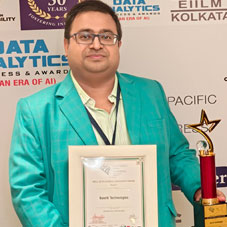
Mrinal Kumar
Founder & CEO
Mrinal leads a team of highly talented professionals committed to empowering people, organizations, and governments, ensuring that every assessment not only effectively and honestly measures skills, but also generates authentic learning interactions and development. He has built a web-based, AI-enabled, powerful solution for assessments, training, and continued learning.
An alumnus of NIT Trichy, Mrinal is a chemical engineer by academic qualification, but his exposure to technology and entrepreneurial activities laid the foundation for his career. He started at Manhattan Associates, where he immediately gained acclaim for his performance and potential as a leader. In 2012, he co-founded Navriti Technologies.
Over the past decade, he turned the company into a provider of assessment and training solutions through technology. Mrinal led multiple strategic pivots, product innovations, and expansions into diverse customer segments, always focusing on creating fair, credible, and scalable assessment solutions that empower individuals and organizations alike. We are delighted to engage in an exclusive interview with Mrinal.
What were the most transformative learning experiences during your time at NIT Trichy?
My time at NIT Trichy was truly transformative, both personally and professionally. I entered college with limited exposure to English, computers, and career
opportunities, but the environment, networks, and experiences there broadened my outlook and gave me confidence.
Though I joined as a chemical engineering student, the exposure I received helped me build a career in IT. One of the most defining experiences was founding my own literary club after being unable to join existing ones, which gave me early lessons in leadership, teamwork and entrepre -neurship. Overall, NIT Trichy shaped me into who I am today, and I consider joining it one of the best decisions of my life.
Could you share the students' accessibility to faculty during your time at the university?
When I joined NIT Trichy, it was just transitioning from REC to NIT. This shift brought central government support, more diverse faculty, and improved systems. While initially accessibility was limited, over time, faculty became more approachable, both academically and through their involvement as advisors to various clubs. Overall, the transformation made faculty interactions far more engaging and supportive during my time there.
How did you use the alumni network as a student or after graduating?
I initially had little awareness of the value of alumni networks during college. However, after moving to Bangalore, I quickly realized the power of networking through meetups and conferences, eventually leading me to actively engage with my college’s alumni association. I played a key role in organizing our first global alumni meet, which gave me invaluable exposure, lifelong connections, and even my future co-founder.
Over the years, this network has not only supported my entrepreneurial journey but also continues to be a platform where I contribute voluntarily, build meaningful relationships, and stay connected with alumni worldwide. It has been a source of personal fulfillment and professional growth for me.
What is the one memory that you cherish from the institute?
Starting and developing my own club on campus was akin to a startup because it involved
Though I joined as a chemical engineering student, the exposure I received helped me build a career in IT. One of the most defining experiences was founding my own literary club after being unable to join existing ones, which gave me early lessons in leadership, teamwork and entrepre -neurship. Overall, NIT Trichy shaped me into who I am today, and I consider joining it one of the best decisions of my life.
Do what you love, love what you do, & rest when you are tired
Could you share the students' accessibility to faculty during your time at the university?
When I joined NIT Trichy, it was just transitioning from REC to NIT. This shift brought central government support, more diverse faculty, and improved systems. While initially accessibility was limited, over time, faculty became more approachable, both academically and through their involvement as advisors to various clubs. Overall, the transformation made faculty interactions far more engaging and supportive during my time there.
How did you use the alumni network as a student or after graduating?
I initially had little awareness of the value of alumni networks during college. However, after moving to Bangalore, I quickly realized the power of networking through meetups and conferences, eventually leading me to actively engage with my college’s alumni association. I played a key role in organizing our first global alumni meet, which gave me invaluable exposure, lifelong connections, and even my future co-founder.
Over the years, this network has not only supported my entrepreneurial journey but also continues to be a platform where I contribute voluntarily, build meaningful relationships, and stay connected with alumni worldwide. It has been a source of personal fulfillment and professional growth for me.
What is the one memory that you cherish from the institute?
Starting and developing my own club on campus was akin to a startup because it involved
gaining popularity, involvement, and a following. Not only did the experience provide me with invaluable knowledge of leadership and entrepreneurship, but it also allowed me to make lifelong friends and a valuable professional network, which I still hold dear to my heart. These events became the foundation of my entrepreneurial career and some of the most valuable accomplishments of my life.
How would you describe your leadership style?
My leadership approach is based on servant leadership. I concentrate on people empowerment, delegation, and opportunities to develop them, even at the expense of giving them room to make mistakes and learn. In my opinion, a good leader can create future leaders who can create continuity in my absence.
I continuously remind my team that they should play to their strengths instead of focusing on what they cannot do, because when one plays to their strengths, they become confident and achieve deliverables. Another significant aspect I would stress is passion and balance: do what you love, love what you do, and rest when you are tired.
What is your envisioned roadmap for the company over the next five years?
Our primary goal is to achieve 100 crore ARR within the next three years, with a targeted revenue mix of 80 percent from non-government business and 20 percent from government. A significant share of the nongovernmental revenue will come from our platform solutions. In the long term, our vision is to become the world’s largest assessment company by driving innovation, launching new solutions, expanding into international markets, and scaling both B2B and B2C offerings.
Mrinal Kumar, Founder & CEO, Navriti Technologies
Mrinal is a visionary entrepreneur who blends technological innovation with a passion for equitable learning to transform talent assessment, training, & workforce development into scalable solutions.
•Hobbies: Reading
•Favorite Cuisine: North Indian
•Favorite Book: The Godfather by Mario Puzo
•Favorite Travel Destination: India
How would you describe your leadership style?
My leadership approach is based on servant leadership. I concentrate on people empowerment, delegation, and opportunities to develop them, even at the expense of giving them room to make mistakes and learn. In my opinion, a good leader can create future leaders who can create continuity in my absence.
I continuously remind my team that they should play to their strengths instead of focusing on what they cannot do, because when one plays to their strengths, they become confident and achieve deliverables. Another significant aspect I would stress is passion and balance: do what you love, love what you do, and rest when you are tired.
What is your envisioned roadmap for the company over the next five years?
Our primary goal is to achieve 100 crore ARR within the next three years, with a targeted revenue mix of 80 percent from non-government business and 20 percent from government. A significant share of the nongovernmental revenue will come from our platform solutions. In the long term, our vision is to become the world’s largest assessment company by driving innovation, launching new solutions, expanding into international markets, and scaling both B2B and B2C offerings.
Mrinal Kumar, Founder & CEO, Navriti Technologies
Mrinal is a visionary entrepreneur who blends technological innovation with a passion for equitable learning to transform talent assessment, training, & workforce development into scalable solutions.
•Hobbies: Reading
•Favorite Cuisine: North Indian
•Favorite Book: The Godfather by Mario Puzo
•Favorite Travel Destination: India