


Nikhil Morsawala: Steering Financial Strategy In India's Clean Energy Transition
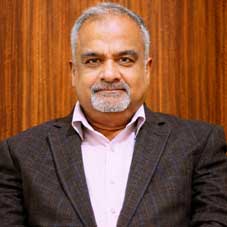
Nikhil Morsawala
Promoter and Chief Financial Officer
Today's CFO is expected to balance growth with resilience, ensuring capital is deployed where it can create long-term competitive advantage. In an industry where every strategic decision carries significant financial implications, the CFO has become one of the most influential voices in the boardroom.
For Nikhil Morsawala, Promoter and Chief Financial Officer of Epic Energy, this broader perspective has been shaped by more than four decades of diverse financial leadership. Born and raised in Mumbai, he completed his education at St. Xavier's Academy and Lala Lajpatrai College before qualifying as a Chartered Accountant in 1983. Rather than building his career within a single industry, he developed a perspective that finance transcends sectors and is ultimately about enabling businesses to grow responsibly, adapt confidently and create lasting value.
His journey began with the Tata Group at Indian Hotels, where he learned the importance of structured systems, operational discipline, and organisational excellence. He later joined HDFC during its formative years under the legendary H.T. Parekh, gaining first-hand exposure to an institution known for its flat hierarchy, ethical leadership, and uncompromising standards of corporate governance. These two contrasting organisational cultures gave him a strong appreciation for both institutional discipline and leadership accessibility.
An equally defining chapter came when he worked in an organisation where governance standards fell far short of those bench marks. Witnessing both exemplary and poor corporate practices gave him a rare perspective on what truly sustains busi-nesses over the long term.
It reinforced his belief that enduring businesses are built on governance, disciplined decision-making and responsible capital allocation. Those principles continue to shape his leadership at Epic Energy, where financial strategy plays a central role in supporting the company's
growth across renewable energy, circular economy, and emerging sustainability-driven businesses. Let’s dive in to know more.
How has your leadership philosophy evolved over the years and what professional milestones have shaped your approach to creating long-term enterprise value?
I believe today's CFO is as much a strategic partner as the CEO, balancing growth with risk while ensuring strong governance and compliance. My leadership philosophy has evolved through over four decades of experience, particularly during cross-border mergers and acquisitions across the US, UK, UAE, Singapore, and South Korea.
Those assignments taught me that buying businesses is easy, but integrating cultures, people, and processes creates lasting value. They also broadened my global perspective, reinforcing my belief that the CFO's role is to shape the future of the business, not simply report its past.
How do you align financial strategy with business objectives, and what role do you play in supporting the company's expansion, investment decisions, and long-term strategic vision?
At Epic Energy, we believe growth must always match our financial and managerial capabili -ties. Before pursuing any opportunity, we carefully assess whether we have both the capital and the leadership bandwidth to execute success fully.
I follow a collaborative leadership style, encouraging discussions and diverse viewpoints before making strategic decisions. My role is to guide the team, build consensus and ensure every investment supports our long-term vision.
Every investment decision is evaluated not only for financial returns but also for its strategic fit, scalability and long-term value to the organisation. Sustainable expansion comes from disciplined planning, responsible capital allocation and emp -owering capable people to take ownership.
What are the company's core strategic strengths, and how do prudent financial planning and disciplined capital allocation contribute to sustaining its competitive advantage?
Our strength lies in balancing stability with innovation. We operate in the mature solar energy sector, which provides predictable growth, while simultaneously investing in emerging areas such as battery recycling and critical mineral recovery under the circular economy.
How has your leadership philosophy evolved over the years and what professional milestones have shaped your approach to creating long-term enterprise value?
I believe today's CFO is as much a strategic partner as the CEO, balancing growth with risk while ensuring strong governance and compliance. My leadership philosophy has evolved through over four decades of experience, particularly during cross-border mergers and acquisitions across the US, UK, UAE, Singapore, and South Korea.
Those assignments taught me that buying businesses is easy, but integrating cultures, people, and processes creates lasting value. They also broadened my global perspective, reinforcing my belief that the CFO's role is to shape the future of the business, not simply report its past.
My leadership philo- sophy has evolved through over four decades of experience, particularly during cross border mergers and acqui -sitions across the US, UK, UAE, Singapore, and South Korea
How do you align financial strategy with business objectives, and what role do you play in supporting the company's expansion, investment decisions, and long-term strategic vision?
At Epic Energy, we believe growth must always match our financial and managerial capabili -ties. Before pursuing any opportunity, we carefully assess whether we have both the capital and the leadership bandwidth to execute success fully.
I follow a collaborative leadership style, encouraging discussions and diverse viewpoints before making strategic decisions. My role is to guide the team, build consensus and ensure every investment supports our long-term vision.
Every investment decision is evaluated not only for financial returns but also for its strategic fit, scalability and long-term value to the organisation. Sustainable expansion comes from disciplined planning, responsible capital allocation and emp -owering capable people to take ownership.
What are the company's core strategic strengths, and how do prudent financial planning and disciplined capital allocation contribute to sustaining its competitive advantage?
Our strength lies in balancing stability with innovation. We operate in the mature solar energy sector, which provides predictable growth, while simultaneously investing in emerging areas such as battery recycling and critical mineral recovery under the circular economy.
This balanced portfolio allows us to generate stability from established businesses while investing in oppor -tunities that will define the next phase of the energy transition. We allocate capital carefully investing in techno- logies backed by strong research, capable partners, and long-term market potential. This disciplined strategy allows us to manage risk while building sustainable competitive advantage.
How is Epic Energy adapting its financial and business strategies to remain resilient while positioning itself for future growth?
We focus on technologies that will define the future of clean energy while remaining within our financial capacity. Alongside our solar business we are investing in battery recycling, solar panel recycling second-life battery solutions, and renewable-powered EV charging infrastructure.
Rather than pursuing every emerging technology, we focus on areas where our experience, capabilities and long-term vision allow us to create meaningful value. Our strategy is to remain financially disciplined while steadily expanding into businesses that support sustainability, circular economy principles, and India's clean energy transition.
What does Top CXOs in the Energy Industry mean to you personally, and what is your long-term vision for strengthening Epic Energy's financial resilience and strategic growth?
This recognition is deeply meaningful because it validates the values that have guided my career for over four decades. More than a personal achievement, I see it as an opportunity to inspire the next generation of finance leaders by demon -strating that integrity, governance, and disciplined leadership continue to matter.
Looking ahead, I want Epic Energy to become the preferred partner in delivering integrated clean energy and sustainability solutions. Our vision is to advise, imple - ment, and deliver integrated solutions that help organisations reduce their carbon footprint while creating long-term value.
Nikhil Morsawala, Promoter & Chief Financial Officer, Epic Energy
Nikhil Morsawala is the Promoter and Chief Financial Officer of Epic Energy and a Fellow Chartered Accountant with over 40 years of experience in finance, corporate governance, strategic planning, mergers & acquisitions, and business leadership.
His career spans leading organisations including the Tata Group and HDFC, bringing deep expertise in financial stewardship, risk management, and sustainable business growth. He plays a pivotal role in shaping the company's growth across renewable energy, battery recycling, EV infrastructure and circular economy initiatives.
How is Epic Energy adapting its financial and business strategies to remain resilient while positioning itself for future growth?
We focus on technologies that will define the future of clean energy while remaining within our financial capacity. Alongside our solar business we are investing in battery recycling, solar panel recycling second-life battery solutions, and renewable-powered EV charging infrastructure.
Rather than pursuing every emerging technology, we focus on areas where our experience, capabilities and long-term vision allow us to create meaningful value. Our strategy is to remain financially disciplined while steadily expanding into businesses that support sustainability, circular economy principles, and India's clean energy transition.
What does Top CXOs in the Energy Industry mean to you personally, and what is your long-term vision for strengthening Epic Energy's financial resilience and strategic growth?
This recognition is deeply meaningful because it validates the values that have guided my career for over four decades. More than a personal achievement, I see it as an opportunity to inspire the next generation of finance leaders by demon -strating that integrity, governance, and disciplined leadership continue to matter.
Looking ahead, I want Epic Energy to become the preferred partner in delivering integrated clean energy and sustainability solutions. Our vision is to advise, imple - ment, and deliver integrated solutions that help organisations reduce their carbon footprint while creating long-term value.
Nikhil Morsawala, Promoter & Chief Financial Officer, Epic Energy
Nikhil Morsawala is the Promoter and Chief Financial Officer of Epic Energy and a Fellow Chartered Accountant with over 40 years of experience in finance, corporate governance, strategic planning, mergers & acquisitions, and business leadership.
His career spans leading organisations including the Tata Group and HDFC, bringing deep expertise in financial stewardship, risk management, and sustainable business growth. He plays a pivotal role in shaping the company's growth across renewable energy, battery recycling, EV infrastructure and circular economy initiatives.