


Rahul Attuluri : Recalibrating Education For A Post-Degree World
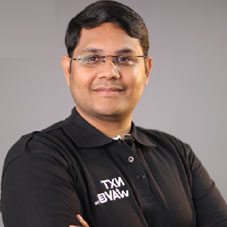
Rahul Attuluri
Co-Founder & CEO
In this dynamic landscape, Rahul Attuluri stands out for reimagining how India cultivates its next generation of technology professionals.
Before establishing NxtWave, Rahul Attuluri was leading a cybersecurity startup where hiring skilled engineers remained a persistent challenge.
When his team engaged with Tier-2 and Tier-3 colleges, they discovered that while raw talent was abundant, there was a significant gap between academic learning and industry expectations.
To bridge this divide, NxtWave introduced focused boot camps that transformed students into job-ready professionals within six to eight months, enabling placements across startups and MNCs. This breakthrough sparked a larger vision, leading to the creation of NIAT.
Built on the belief that talent has no pin code, NIAT offers an industry-aligned curriculum in AI, ML, Data Science, and Robotics, shaped by insights from over 3,000 companies. Through real-world learning, global exposure, and initiatives like the GenAI Buildathon, it empowers students to evolve from learners into innovators ready to compete globally. Let’s hear more about Rahul and his journey in this interaction.
Could you briefly explain NIAT’s role in bridging traditional education with evolving industry demands?
The traditional education system was not designed for an industry that evolves every few months, creating a widening gap between academic learning and workplace expectations.
NIAT positions itself precisely within this gap. Delivered in collaboration with 25+ UGC-recognised and AICTE-approved institutions, it equips students with skills in AI, ML, Data Science and Robotics through a curriculum shaped by insights from over 3,000 companies.
Students gain both a recognised academic credential and hands-on experience through 50+ real world projects, ensuring they graduate with practical capability, not just theoretical knowledge. They also work on industry platforms such as OpenAI Academy and Hugging Face, building and deploying real solutions. This blend of institutional credibility and applied learning enables students to confidently meet industry expectations.
How does NIAT’s hands-on, project-driven learning approach set it apart from other upskilling platforms?
Most platforms focus on teaching technology, whereas NIAT focuses on building technologists, a distinction that significantly impacts outcomes. Traditional systems in India often rely on rote learning, producing students who understand concepts but lack practical application. NIAT addresses this by ensuring every student completes 50+ real-world, deployable projects across AI, ML, Data Science, Robotics, and emerging domains.
Students further strengthen their capabilities by participating in national and international hackathons, achieving notable success, including ₹1.92 crore in internship stipends within the first year. Learning is enhanced through master classes led by engineers from leading global companies, alongside hands-on experience with industry platforms.
NIAT also tackles the communication gap through NxtMock, an AI-powered interview simulation tool offering realistic practice and detailed feedback. Additionally, TeachOS supports educators with AI driven upskilling, ensuring teaching quality evolves alongside industry demands, creating a holistic, future-ready learning ecosystem.
What measurable outcomes have positioned NIAT as a leader in tech upskilling across internships, placements and startup initiatives?
The results from the past year strongly validate NIAT’s impact. Students have developed 1,200+ AI-powered projects, secured 200+ internships through a network of 2,500+ companies, and launched 8+ monetised startups while still studying.
NxtMock, the AI-driven interview platform, has enabled 70,000+ simulations for 42,000+ learners, contributing to 1,581 job and interview opportunities, with over 52 percent of placed students using it. Candidates have been hired by 475+ companies, including Fortune 500 firms. Notably, most usage comes from Tier-2 and Tier-3 regions, reinforcing NIAT’s mission of unlocking widespread talent potential.
How does NIAT’s hands-on, project-driven learning approach set it apart from other upskilling platforms?
Most platforms focus on teaching technology, whereas NIAT focuses on building technologists, a distinction that significantly impacts outcomes. Traditional systems in India often rely on rote learning, producing students who understand concepts but lack practical application. NIAT addresses this by ensuring every student completes 50+ real-world, deployable projects across AI, ML, Data Science, Robotics, and emerging domains.
Students further strengthen their capabilities by participating in national and international hackathons, achieving notable success, including ₹1.92 crore in internship stipends within the first year. Learning is enhanced through master classes led by engineers from leading global companies, alongside hands-on experience with industry platforms.
NIAT also tackles the communication gap through NxtMock, an AI-powered interview simulation tool offering realistic practice and detailed feedback. Additionally, TeachOS supports educators with AI driven upskilling, ensuring teaching quality evolves alongside industry demands, creating a holistic, future-ready learning ecosystem.
What measurable outcomes have positioned NIAT as a leader in tech upskilling across internships, placements and startup initiatives?
The results from the past year strongly validate NIAT’s impact. Students have developed 1,200+ AI-powered projects, secured 200+ internships through a network of 2,500+ companies, and launched 8+ monetised startups while still studying.
NxtMock, the AI-driven interview platform, has enabled 70,000+ simulations for 42,000+ learners, contributing to 1,581 job and interview opportunities, with over 52 percent of placed students using it. Candidates have been hired by 475+ companies, including Fortune 500 firms. Notably, most usage comes from Tier-2 and Tier-3 regions, reinforcing NIAT’s mission of unlocking widespread talent potential.
What are NIAT’s strategic priorities and vision for the next five years?
The next five years focus on making Indian students globally competitive. NIAT’s immediate priority is to deepen impact while expanding university partnerships across India, ensuring quality keeps pace with growth.
A key strategic initiative is GRIT (Global Readiness Immersion Trips) a fully sponsored program exposing students to leading innovation hubs such as the US, Japan, Germany, and Singapore.
Through visits to advanced factories, R&D labs, and global enterprises, students gain direct industry exposure and global perspective.
The broader vision is to build technology creators, not just job seekers, empowering students to solve real world problems.
As the global gig economy evolves, NIAT aims to equip learners with the skills, mindset, and confidence to compete and thrive inter -nationally.
What message does NIAT want to convey to students, educators, and industry partners about the future of tech edu -cation and upskilling?
Students are urged to take ownership of their growth, as barriers between small towns and global opportunities have diminished.
With widespread access to technology and platforms, success now depends on initiative, problem-solving, adapt ability, and continuous learning rather than exam results alone.
Educators must shift from traditional theory based teaching to fostering builders and innovators, equipping students to tackle real-world challenges and aligning education with evolving industry needs.
Industry partners should expand their outlook on talent, recognizing that high-potential individuals are emerging from across India, beyond conventional hubs.
Future success will be driven not by background or pedigree, but by skills, execution, and the ability to create meaningful impact in a rapidly changing, AI driven world.
Rahul Attuluri, CEO & Co-Founder, NxtWave
An entrepreneur driven by a vision to bridge India’s tech talent gap, Rahul Attuluri is the CEO and Co-Founder of NxtWave. He is known for building scalable education ecosystems that transform learners into industry-ready technology professionals.
The next five years focus on making Indian students globally competitive. NIAT’s immediate priority is to deepen impact while expanding university partnerships across India, ensuring quality keeps pace with growth.
A key strategic initiative is GRIT (Global Readiness Immersion Trips) a fully sponsored program exposing students to leading innovation hubs such as the US, Japan, Germany, and Singapore.
Through visits to advanced factories, R&D labs, and global enterprises, students gain direct industry exposure and global perspective.
The broader vision is to build technology creators, not just job seekers, empowering students to solve real world problems.
As the global gig economy evolves, NIAT aims to equip learners with the skills, mindset, and confidence to compete and thrive inter -nationally.
What message does NIAT want to convey to students, educators, and industry partners about the future of tech edu -cation and upskilling?
Students are urged to take ownership of their growth, as barriers between small towns and global opportunities have diminished.
With widespread access to technology and platforms, success now depends on initiative, problem-solving, adapt ability, and continuous learning rather than exam results alone.
Educators must shift from traditional theory based teaching to fostering builders and innovators, equipping students to tackle real-world challenges and aligning education with evolving industry needs.
Industry partners should expand their outlook on talent, recognizing that high-potential individuals are emerging from across India, beyond conventional hubs.
Future success will be driven not by background or pedigree, but by skills, execution, and the ability to create meaningful impact in a rapidly changing, AI driven world.
Rahul Attuluri, CEO & Co-Founder, NxtWave
An entrepreneur driven by a vision to bridge India’s tech talent gap, Rahul Attuluri is the CEO and Co-Founder of NxtWave. He is known for building scalable education ecosystems that transform learners into industry-ready technology professionals.