


Rajesh Mhatre : Engineering Zero-Disruption Telecom Networks For India's Digital Future
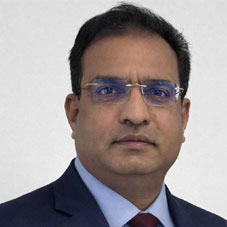
Rajesh Mhatre
Head - Cloud Core Deployment & Technology Enhancement Projects
Rajesh Mhatre's three-decade journey stands as a chronicle of telecom evolution, tracing its arc from foundational switching systems to cloud-native, AI-enabled core infra -structures at Vodafone Idea.
A Mumbai-bred engineer influenced by his exposure to systems, Rajesh began his career at Nelco Telematics, being involved in technology transfer from C-DOT, during the advent of telecom in India.
Selected among a small national cohort to build private mobile networks, he went on to architect Hutchison’s earliest mobile, Fiber, and switching infr- astructures, personally deploying first- of - their - kind systems and managing complex regulatory interfaces.
Over the years, he has delivered iconic transformation programs covering 2G, 3G, 4G, VoLTE, IMS, and 5G ground-breaking initiatives before embarking on one of the world’s largest live network transformations. Today, his focus extends toward future-ready data centres integrating cloud, automation, AI, and energy efficiency. Let’s hear from him.
Walk us through your professional journey high- lighting key experiences that contributed towards your growth story?
I hail from Mumbai, from a family of engineers, graduating in 1991 when telecom exposure in India was limited. I began my career at Nelco Telematics, a manufacturer of C-DOT exchanges under a Government of India initiative led by Sam Pitroda and Rajiv Gandhi.
As part of the R&D and technology transfer team, I translated C-DOT innovations into production - ready systems, gaining cross-functional exposure across manufacturing.
With mobile telephony’s advent, I was among the first 10-15 nationally handpicked by BPL and Hutchison. Choosing Hutchison, I designed its mobile network, evolving through Orange, Hutch, Vodafone, and Vodafone Idea. I deployed the first Fiber optic network, set up data and switching centres, and led engagements with MTNL and authorities.
Selected nationally for Vodafone’s modernization program, I supported the transition from 1G to 4G, delivered a one of the world’s largest benchmark trans- formations, led Vodafone Idea deployments, and enabled nationwide 4G. My work reflects
disciplined execution, risk awareness, and teams.
What leadership lessons have shaped your approach to managing large-scale telecom transformation programs?
Three key lessons have shaped my leadership philosophy:
Transformation is 20 percent technology and 80 percent alignment. In large-scale programs, such as HLR swaps or nationwide VoLTE deployments, stakeholder alignment across vendors/internal Cross functional, regulators, ope- rations, and finance is more critical than the technology itself.
Governance drives speed. Many believe governance slows projects. In reality, structured governance frameworks, risk dashboards, and milestone account ability accelerate execution and reduce rework.
Stability is non-negotiable. In telecom core networks, downtime directly impacts millions. During national migrations, we ensured meticulous rollback planning redundancy architecture, and risk simulation before execution.
How do you stay ahead of technological shifts while ensuring opera- tional stability?
Operational efficiency is paramount for telecom operators. Even a 0.1% risk of failure is often enough to halt progress unless a well-defined contingency plan is in place.
When introducing new technology, operators follow three to four structured steps. First, pilots are conducted in highly controlled environments to validate solutions before any large-scale rollout. Second, parallel systems are maintained during implementation to ensure continuity. Third, cross-functional, cross-vendor, and cross-technology compliance is mandatory and must be proven through lab testing or real-world validation before proceeding.
Equally important is having ground teams with cross-functional and cross-vendor expertise to manage compliance and operational consequences. Clear technology benchmarks are defined to stay competitive while avoiding unnecessary complexity.
Finally, every new introduction undergoes rigorous control checks, including cross-vendor evaluation and backward compatibility, and any solution that fails these checks is not adopted.
How are AI, automation, and analytics being integrated into network core mana- gement and deploy- ment?
AI is often discussed as a new phenomenon, but in reality it has just now become interactive , it has been part of telecom networks from the beginning. Today, however, AI is no longer optional; it is fundamental.
Telecom networks operate at massive scale, with over lakhs of sites across India, Hundreds of exchanges nationwide, and thousands of kilometres of Fiber, generating enormous volumes of data every day. Correlating and analysing this data has always been critical, and multiple applications have long been used to derive insights.
What leadership lessons have shaped your approach to managing large-scale telecom transformation programs?
Three key lessons have shaped my leadership philosophy:
Transformation is 20 percent technology and 80 percent alignment. In large-scale programs, such as HLR swaps or nationwide VoLTE deployments, stakeholder alignment across vendors/internal Cross functional, regulators, ope- rations, and finance is more critical than the technology itself.
Governance drives speed. Many believe governance slows projects. In reality, structured governance frameworks, risk dashboards, and milestone account ability accelerate execution and reduce rework.
Stability is non-negotiable. In telecom core networks, downtime directly impacts millions. During national migrations, we ensured meticulous rollback planning redundancy architecture, and risk simulation before execution.
How do you stay ahead of technological shifts while ensuring opera- tional stability?
Operational efficiency is paramount for telecom operators. Even a 0.1% risk of failure is often enough to halt progress unless a well-defined contingency plan is in place.
When introducing new technology, operators follow three to four structured steps. First, pilots are conducted in highly controlled environments to validate solutions before any large-scale rollout. Second, parallel systems are maintained during implementation to ensure continuity. Third, cross-functional, cross-vendor, and cross-technology compliance is mandatory and must be proven through lab testing or real-world validation before proceeding.
Equally important is having ground teams with cross-functional and cross-vendor expertise to manage compliance and operational consequences. Clear technology benchmarks are defined to stay competitive while avoiding unnecessary complexity.
Finally, every new introduction undergoes rigorous control checks, including cross-vendor evaluation and backward compatibility, and any solution that fails these checks is not adopted.
How are AI, automation, and analytics being integrated into network core mana- gement and deploy- ment?
AI is often discussed as a new phenomenon, but in reality it has just now become interactive , it has been part of telecom networks from the beginning. Today, however, AI is no longer optional; it is fundamental.
Telecom networks operate at massive scale, with over lakhs of sites across India, Hundreds of exchanges nationwide, and thousands of kilometres of Fiber, generating enormous volumes of data every day. Correlating and analysing this data has always been critical, and multiple applications have long been used to derive insights.
With deeper AI integration, the focus has shifted to predictive analytics for traffic forecasting, capacity planning, and dynamic resource allocation. Dynamic allocation is essential to avoid over-provisioning, as network resources are extremely costly, and the objective is optimal utilization without excess capacity.
While self-healing networks are still limited due to high costs, AI-driven insights are already helping preconfigure and prefabricate systems with vendors, enabling faster and more efficient network deployments.
What is your long-term vision for your future roadmap, moving forward?
My long-term vision is to build a resilient, scalable, and integrated infrastructure to support the future growth of India’s telecom industry, including advanced data centre development, which is critical for network evolution. I chose the datacentre industry because of my 30 years of experience & cloud technologies and telecom, giving me strong expertise in cloud deployment and active network operations.
While the industry has strong experts in passive infrastructure, there are very few professionals with hands-on experience in active networks and cloud deployment.
I bring experience across both domains, enabling me to design future-ready data centres integrating AI-driven cloud deployment, automation, optimization, cost efficiency, sustainability, and green energy. In the long term, I aim to contribute to this evolution and pursue a PhD in modern data centre technologies.
What advice would you offer to young profes- sionals?
The key advice I would give to the younger generation is to build strong fundamentals and focus on the basics. Alongside this, maintain a strong focus on automation, as it will be critical for the future. Build fundamentals first, then layer automation on top. Equally important is developing strong problem-solving skills.
Overreliance on systems or AI can weaken human thinking, so do not depend entirely on them. Telecom is a high-pressure domain with constant challenges. Stay calm, approach problems step by step, take ownership, keep perspective, and progress through steps.
Rajesh Mhatre, Head - Cloud Core Deployment & Technology Enhancement Projects, Vodafone Idea
Rajesh Mhatre is a seasoned executive with a wealth of experience in the Indian telecom and cloud infrastructure sector, having worked in the industry for over 30 years and witnessing the evolution of India's digital connectivity landscape.
In his role as Head of Cloud Core Deployment and Technology Enhancement Projects at Vodafone Idea, he has delivered major network upgrades for the company while transforming with a goal of zero service interruptions. Rajesh was Recognized among the “Top 20 Contributors” at Vodafone India (20XX).
While self-healing networks are still limited due to high costs, AI-driven insights are already helping preconfigure and prefabricate systems with vendors, enabling faster and more efficient network deployments.
What is your long-term vision for your future roadmap, moving forward?
My long-term vision is to build a resilient, scalable, and integrated infrastructure to support the future growth of India’s telecom industry, including advanced data centre development, which is critical for network evolution. I chose the datacentre industry because of my 30 years of experience & cloud technologies and telecom, giving me strong expertise in cloud deployment and active network operations.
While the industry has strong experts in passive infrastructure, there are very few professionals with hands-on experience in active networks and cloud deployment.
I bring experience across both domains, enabling me to design future-ready data centres integrating AI-driven cloud deployment, automation, optimization, cost efficiency, sustainability, and green energy. In the long term, I aim to contribute to this evolution and pursue a PhD in modern data centre technologies.
What advice would you offer to young profes- sionals?
The key advice I would give to the younger generation is to build strong fundamentals and focus on the basics. Alongside this, maintain a strong focus on automation, as it will be critical for the future. Build fundamentals first, then layer automation on top. Equally important is developing strong problem-solving skills.
Overreliance on systems or AI can weaken human thinking, so do not depend entirely on them. Telecom is a high-pressure domain with constant challenges. Stay calm, approach problems step by step, take ownership, keep perspective, and progress through steps.
Rajesh Mhatre, Head - Cloud Core Deployment & Technology Enhancement Projects, Vodafone Idea
Rajesh Mhatre is a seasoned executive with a wealth of experience in the Indian telecom and cloud infrastructure sector, having worked in the industry for over 30 years and witnessing the evolution of India's digital connectivity landscape.
In his role as Head of Cloud Core Deployment and Technology Enhancement Projects at Vodafone Idea, he has delivered major network upgrades for the company while transforming with a goal of zero service interruptions. Rajesh was Recognized among the “Top 20 Contributors” at Vodafone India (20XX).