


Rajarshi Bhattacharjee : Pioneering People-Centered Corporate Healthcare In The Power Sector
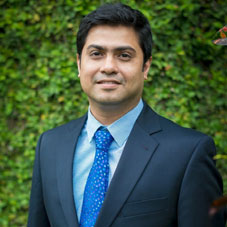
Rajarshi Bhattacharjee
Chief Medical Officer
Embodying an in-depth understanding of this approach is Rajarshi Bhattacharjee, Chief Medical Officer at Hindustan Powers, who has been championing people-centered care through corporate health and wellness for over two decades now.
He began his career as a corporate doctor for a large media company in Southeast Asia, where he learnt the delicate art of dealing with complicated organizational charts, creating cohesion among different departments and gaining the trust of employees and top management. He has constantly moved up the ladder by staying focused on prevention, people-centered policies, honesty, teamwork, and relying on data for decision making.
At Hindustan Powers, Rajarshi has revolu-tionized occupational health management in the power sector by implementing measures to combat physically demanding hazards such as respiratory diseases, heat stress, and musculoskeletal injuries, as well as the increasing problem of mental health among workers in remote areas.
What shaped your journey to CMO?
I have over two decades of professional experience, starting as a corporate physician and eventually becoming a Chief Medical Officer. My journey began with an organization linked to one of India’s largest media houses, where I learned to navigate complex departments and build an organizational healthcare system in a non-healthcare environment. Convincing HR that a fit organization drives profitability required persistence and trust-building.
Key learnings include earning trust, being approachable, and becoming a confidant to employees. Staying updated with healthcare advancements, leve- raging technology, opti- mizing costs without compromising quality, and reducing turnaround times have been central to my approach.
What are the key occupational health risks currently facing employees in the power sector?
Occupational health risks in the power sector are well known. The main concerns include respiratory issues from dust and particulate exposure, heat stress, and fatigue.
A growing challenge is mental health. Many power plants are located in remote areas, requiring employees to relocate. Iso -lation, lack of entertainment, and high work pressure contribute to anxiety, depression, and other mental health issues.
Other prevalent risks include cardio vascular problems due to stress, musculo skeletal injuries from falls or accidents, and respiratory issues. On the positive side, noise-related hearing problems and eye injuries have decreased thanks to improved protective equipment.
Overall, the most significant risks in the industry today are cardiovascular, mental health, musculoskeletal, and respiratory issues.
Highlight your leadership philosophy and the key experiences that enriched your perspective as a healthcare leader?
My leadership philosophy has always been anchored in five guiding principles: prevention over reaction, people-centered governance, transparency, inter disciplinary collaboration, and data-driven decision-making.
These principles have shaped my approach helping me anticipate challenges, empower teams, foster trust, drive innovation, and make informed decisions aligned with both immediate and long-term goals.
In addition, my experience with a major media house, significantly enriched my perspective. I led their foundation and managed corporate social responsibility initiatives, which kept me closely connected to grassroots issues and community needs.
Integrating social responsibility into decision-making has been a key part of my journey, ensuring that my professional actions not only achieve business objectives but also contribute meaningfully to the greater good.
How do your core guiding principles inform your approach to employee health and safety?
My approach is rooted in five core principles, fully embraced by my team. First, prevention and emergency readiness are prioritized.
A small hospital within the plant, supported by a network of multi-specialty hospitals, enables real-time monitoring of critical patients.
Employees are categorized by health risk, with red-flag cases receiving regular checkups. Second, people-centered gover -nance ensures health and safety are adopted, not imposed.
Building trust, presenting six month plans, and securing buy-in facilitates effective imple-mentation within budgets.
Post-COVID, preventive measures like vaccination programs have greater flexibility. Third, trans -
Other prevalent risks include cardio vascular problems due to stress, musculo skeletal injuries from falls or accidents, and respiratory issues. On the positive side, noise-related hearing problems and eye injuries have decreased thanks to improved protective equipment.
Overall, the most significant risks in the industry today are cardiovascular, mental health, musculoskeletal, and respiratory issues.
AI and emerging technologies will make corporate healthcare predictive, personalized, and proactive
Highlight your leadership philosophy and the key experiences that enriched your perspective as a healthcare leader?
My leadership philosophy has always been anchored in five guiding principles: prevention over reaction, people-centered governance, transparency, inter disciplinary collaboration, and data-driven decision-making.
These principles have shaped my approach helping me anticipate challenges, empower teams, foster trust, drive innovation, and make informed decisions aligned with both immediate and long-term goals.
In addition, my experience with a major media house, significantly enriched my perspective. I led their foundation and managed corporate social responsibility initiatives, which kept me closely connected to grassroots issues and community needs.
Integrating social responsibility into decision-making has been a key part of my journey, ensuring that my professional actions not only achieve business objectives but also contribute meaningfully to the greater good.
How do your core guiding principles inform your approach to employee health and safety?
My approach is rooted in five core principles, fully embraced by my team. First, prevention and emergency readiness are prioritized.
A small hospital within the plant, supported by a network of multi-specialty hospitals, enables real-time monitoring of critical patients.
Employees are categorized by health risk, with red-flag cases receiving regular checkups. Second, people-centered gover -nance ensures health and safety are adopted, not imposed.
Building trust, presenting six month plans, and securing buy-in facilitates effective imple-mentation within budgets.
Post-COVID, preventive measures like vaccination programs have greater flexibility. Third, trans -
parency and continuous learning are promoted through health talks, camps, webinars, and seminars.
Fourth, interdisciplinary collaboration ensures seamless teamwork. Finally, data-driven decision-making guides all actions, from risk flagging to targeted interventions. This commitment ensures a robust, responsive, and proactive healthcare system.
How do you see emerging technologies and AI transforming the future of healthcare?
Like in all areas of healthcare, AI will play a major role. Predictive and precision healthcare will become increasingly indi- vidualized, moving away from a generalized approach to truly personalized care.
Emerging technologies, including genetic markers, advanced blood tests, and next-generation radiology, will enable early detection and predictive health insights.
New-age PET scans can detect cancer at very early stages and preventive healthcare systems are evolving to monitor tumor markers and overall health assessments.
There are also significant advancements in orthopedics and neuro- degenerative conditions like Parkinson’s, making occupational healthcare more proactive and precise. Technology is set to fundamentally transform how healthcare is delivered, improving outcomes and efficiency across the board.
What are your goals and vision for the next decade in occupational health?
Looking ahead, I have another decade in my career. My focus will be on making any organization I join future ready, digitally enabled, and globally benchmarked in occupational health.
I aim to build health systems that identify risks before they manifest, support both mental and physical well-being, and empower employees to take ownership of their health.
Ultimately, my goal is to create organizations where people feel protected, valued, and confident. A healthy workforce is the foundation of sustainable growth, and ensuring this will remain at the core of my work.
Rajarshi Bhattacharjee, Chief Medical Officer, Hindustan Power
Rajarshi Bhattacharjee, Chief Medical Officer at Hindustan Powers, is a frontrunner in corporate health and wellness with more than 20 years of experience.
He started out as a corporate physician for a leading media company in South east Asia and became an expert in organizational healthcare by going deep into the intricacies of the corporate world, inter - departmental collaboration, and gaining the trust of all levels.
Fourth, interdisciplinary collaboration ensures seamless teamwork. Finally, data-driven decision-making guides all actions, from risk flagging to targeted interventions. This commitment ensures a robust, responsive, and proactive healthcare system.
How do you see emerging technologies and AI transforming the future of healthcare?
Like in all areas of healthcare, AI will play a major role. Predictive and precision healthcare will become increasingly indi- vidualized, moving away from a generalized approach to truly personalized care.
Emerging technologies, including genetic markers, advanced blood tests, and next-generation radiology, will enable early detection and predictive health insights.
New-age PET scans can detect cancer at very early stages and preventive healthcare systems are evolving to monitor tumor markers and overall health assessments.
There are also significant advancements in orthopedics and neuro- degenerative conditions like Parkinson’s, making occupational healthcare more proactive and precise. Technology is set to fundamentally transform how healthcare is delivered, improving outcomes and efficiency across the board.
What are your goals and vision for the next decade in occupational health?
Looking ahead, I have another decade in my career. My focus will be on making any organization I join future ready, digitally enabled, and globally benchmarked in occupational health.
I aim to build health systems that identify risks before they manifest, support both mental and physical well-being, and empower employees to take ownership of their health.
Ultimately, my goal is to create organizations where people feel protected, valued, and confident. A healthy workforce is the foundation of sustainable growth, and ensuring this will remain at the core of my work.
Rajarshi Bhattacharjee, Chief Medical Officer, Hindustan Power
Rajarshi Bhattacharjee, Chief Medical Officer at Hindustan Powers, is a frontrunner in corporate health and wellness with more than 20 years of experience.
He started out as a corporate physician for a leading media company in South east Asia and became an expert in organizational healthcare by going deep into the intricacies of the corporate world, inter - departmental collaboration, and gaining the trust of all levels.