


Shamik R. Daru : Shaping Financial Strategy For The Future Of Industrial Manufacturing

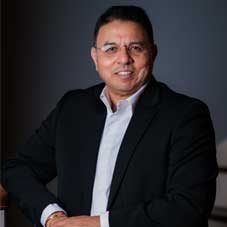
Shamik R. Daru, Chief Financial Officer
Shamik R. Daru, Chief Financial Officer at CARBO Ceramics, brings that broader perspective to the role — shaped by a career that began in Bombay, where he qualified as a Chartered Accountant and worked in public accounting before moving to the United States to pursue an MBA and CPA. Each stage, he says, added another layer to his professional foundation.
Shamik views continuous learning as essential to career progression, since leadership requires more than functional expertise. He compares early career specialization to a tree’s “taproot”: finance and accounting formed his own, while expanding into adjacent areas, businesses, and situations grew the secondary roots that support holistic leadership.
That philosophy shapes how he leads today — centered on empathy, servant leadership, and accountability. Rather than micro managing, he believes leaders should set clear objectives, provide direction, and empower people to execute their own plans, so finance can function as a facilitator of success across manufacturing, sales, R&D, and the board.
As a technology-driven industrial manufacturer, what financial priorities are helping CARBO strengthen growth and longterm competitiveness?
Liquidity is primary, because financial resources are what keep a business moving. That means disciplined resource allocation, cutting waste, and staying prepared for both the obligations we can see coming and the risks that surprise us. I also put real weight on leadership alignment.
At CARBO, the Board, the CEO, and the executive team share a clear read about where we’re headed and what matters most, and that shared understanding lets us move faster and with more confidence when a decision must be made. Put simply: perform well today while managing liquidity, risk, and investment decisions in a way that protects tomorrow.
Which milestones have shaped your leadership journey and contributed most significantly to your professional growth?
I don’t measure success mainly by accolades — I measure it by whether I’m becoming a better version of myself and leaving people and organizations better off. Looking back, the milestones that mattered most weren’t single events so much as expansions: moving from accounting and public practice in India into an MBA program in the U.S., then into broader leadership roles that kept widening my perspective.
That’s the secondary-root growth I mentioned earlier. I think of my career as moving through three stages: growth, achievement, and now, increasingly, significance — wanting to give back through mentoring and sharing what I’ve learned. Individual success is a team effort, and I’m thankful for the people in my personal and family life who shaped who I am.
How do you balance financial discipline with strategic investment and sustainable growth in a capital-intensive manufacturing environment?
I think of the CFO organization as a partner and enabler of growth not a gate keeper. As CFO, I work alongside the CEO and the Board while carrying fiduciary responsibility for the company’s resources and holding both at once starts with understanding the business, so investments track back to our actual priorities and values.
Sales, Manufacturing, and other functions bring optimism to the table, which is valuable, but Finance must bring discernment alongside it. I believe a “right decision” does not exist; one makes a decision and then executes to make it right. Through all of that, Finance still must fund today’s requirements while keeping an eye on
Which milestones have shaped your leadership journey and contributed most significantly to your professional growth?
I don’t measure success mainly by accolades — I measure it by whether I’m becoming a better version of myself and leaving people and organizations better off. Looking back, the milestones that mattered most weren’t single events so much as expansions: moving from accounting and public practice in India into an MBA program in the U.S., then into broader leadership roles that kept widening my perspective.
That’s the secondary-root growth I mentioned earlier. I think of my career as moving through three stages: growth, achievement, and now, increasingly, significance — wanting to give back through mentoring and sharing what I’ve learned. Individual success is a team effort, and I’m thankful for the people in my personal and family life who shaped who I am.
I don’t measure success mainly by accolades — I measure it by whether I’m becoming a better version of myself and leaving people and organizations better off
How do you balance financial discipline with strategic investment and sustainable growth in a capital-intensive manufacturing environment?
I think of the CFO organization as a partner and enabler of growth not a gate keeper. As CFO, I work alongside the CEO and the Board while carrying fiduciary responsibility for the company’s resources and holding both at once starts with understanding the business, so investments track back to our actual priorities and values.
Sales, Manufacturing, and other functions bring optimism to the table, which is valuable, but Finance must bring discernment alongside it. I believe a “right decision” does not exist; one makes a decision and then executes to make it right. Through all of that, Finance still must fund today’s requirements while keeping an eye on
tomorrow’s opportunities and risks.
What is one of the most significant operational challenges you have faced as CFO, and how has CARBO responded?
Workforce availability — and the broader manufacturing skills gap — is a persistent challenge. We compete for talent with workplaces that offer easier conditions than a plant floor, and a lot of traditional manufacturing skills are simply getting harder to find.
Our response is continuous recruitment, training, and knowledge transfer, built around a ‘next person up’ philosophy so we always have a bench ready. Experienced employees play a big part too, developing newer team members on the plant floor. There’s no single fix, so we keep testing better ways to recruit, develop, and retain people.
What does being recognized among the ‘Elite Global Indian Leaders 2026’ mean to you, and how do you view the journey ahead?
The recognition is meaningful and humbling, but it’s never been the point for me to chase a particular destination. The journey matters more than the destination. Having moved from India to the United States decades ago, I’m conscious of how much opportunity shaped my own path, and I want the next chapter to be about handing that experience forward — through mentoring, developing the people around me, and eventually teaching.
Practically, that means staying close to the fundamentals that got me here: continuous learning, strong alignment around values, and anticipating what’s coming rather than reacting to it. If I’ve done that well, the impact should show up less in what I’ve achieved and more in the people and organization I leave better than I found them.
Shamik R. Daru, Chief Financial Officer, CARBO
Shamik R. Daru is Chief Financial Officer at CARBO, bringing extensive expertise in finance, accounting, strategic planning, and industrial manufacturing. A Chartered Accountant from India with an MBA and CPA from the United States, he champions disciplined financial mana- gement, continuous learning, servant leadership, talent development, and sustainable growth through strategic alignment and forward-thinking decision-making.
What is one of the most significant operational challenges you have faced as CFO, and how has CARBO responded?
Workforce availability — and the broader manufacturing skills gap — is a persistent challenge. We compete for talent with workplaces that offer easier conditions than a plant floor, and a lot of traditional manufacturing skills are simply getting harder to find.
Our response is continuous recruitment, training, and knowledge transfer, built around a ‘next person up’ philosophy so we always have a bench ready. Experienced employees play a big part too, developing newer team members on the plant floor. There’s no single fix, so we keep testing better ways to recruit, develop, and retain people.
What does being recognized among the ‘Elite Global Indian Leaders 2026’ mean to you, and how do you view the journey ahead?
The recognition is meaningful and humbling, but it’s never been the point for me to chase a particular destination. The journey matters more than the destination. Having moved from India to the United States decades ago, I’m conscious of how much opportunity shaped my own path, and I want the next chapter to be about handing that experience forward — through mentoring, developing the people around me, and eventually teaching.
Practically, that means staying close to the fundamentals that got me here: continuous learning, strong alignment around values, and anticipating what’s coming rather than reacting to it. If I’ve done that well, the impact should show up less in what I’ve achieved and more in the people and organization I leave better than I found them.
Shamik R. Daru, Chief Financial Officer, CARBO
Shamik R. Daru is Chief Financial Officer at CARBO, bringing extensive expertise in finance, accounting, strategic planning, and industrial manufacturing. A Chartered Accountant from India with an MBA and CPA from the United States, he champions disciplined financial mana- gement, continuous learning, servant leadership, talent development, and sustainable growth through strategic alignment and forward-thinking decision-making.