


Vilas Salunke: Driving Project Execution Excellence Through Integrated Leadership
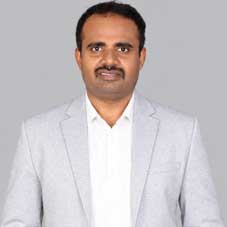
Vilas Salunke
Head of Project Management
Project leaders must therefore combine technical understanding with commercial awareness, risk management, resource planning and effective communication.
Vilas Salunke, Head of Project Management, Forbes Marshall is one such leader who bring more than two decades of experience across manufacturing and project execution.
His professional journey began with a B.Tech from the College of Engineering Pune (COEP), followed by his association with Thermax as an engineering trainee.
During his first five to six years, he worked closely on the shop floor, managing manufacturing operations for boilers, heaters and waste heat recovery boilers. This hands-on experience gave him a strong understanding of products, manufacturing processes and practical field challenges.
In 2008, he pursued a postgraduate diploma in business management from Symbiosis, broadening his perspective beyond individual functions. A significant turning point came in 2010, when he transitioned from manufacturing and quality-related responsi- bilities into project management.
The move exposed him to the complete business cycle of executing contracts, encompassing cross-functional coordination, customer and consultant management, commercial and contractual considerations, statutory compliance and resource planning.
Over the years, his project experience has extended across a wide spectrum of industries, including refineries, metals, cement fertilizers textiles, pharmaceuticals and chemicals, food and beverages, and electronics.
His responsibilities have also provided substantial exposure to international project execution across markets such as Southeast Asia, West Asia, Spain and Russia, strengthening his ability to work across different customer environments, project conditions and stakeholder expectations.
Vilas progressed from an individual contributor to a team leader and eventually headed the project management function at Thermax in 2017.
In 2022, he joined Forbes Marshall, where his responsibilities expanded across project management, site installation and special project purchases. His leadership approach is centered on ownership, alignment, trans- parent communication and accountability.
His execution track record has also earned multiple customer appreciations for timely project
completion, execution quality and safety performance.
These include recognition for best project execution from a leading refinery in Maharashtra, best safety performance from an oil and gas refinery in Gujarat, and on-time performance for refinery projects.
More recently, customers in the cement and textile sectors have appreciated project delivery within committed timelines and quality expectations.
How has Forbes Marshall’s project business evolved, and how has project management changed with it?
Forbes Marshall has evolved from a business focused on steam accessories and products into a provider of integrated project solutions, including high efficiency boiler systems, engineering, installation and commissioning.
As this project business expanded, project management became significantly more important. Unlike product delivery, projects involve engineering customization, procurement, manufacturing, installation, commissioning and performance guarantees.
Today, project management is not limited to coordination; it involves ownership of the complete contract lifecycle, with strong emphasis on quality, timelines, safety, compliance and stakeholder management.
How do you maintain execution discipline in complex industrial projects?
Complex projects require clearly defined SOPs and checklists that are implemented rigorously rather than remaining on paper.
Having the right expertise, attitude and ownership across the team is equally important. Every member must understand the deliverables, contractual commitments and customer expectations.
My experience with Brownfield projects has also strengthened this approach. These projects involve retrofits, revamps, upgrades or relocation of existing assets and require reverse engineering to determine what can be reused, refurbished or replaced. The complexity lies in integrating existing and new equipment while maintaining expected performance.
Working across industries with very different operating environments has reinforced the importance of adapting execution strategy without compromising the fundamentals of planning, safety, quality and contractual discipline.
Whether a project is being executed for a refinery, cement facility, textile operation or an overseas customer, understanding the operating context is essential to anticipating risks and delivering predictably.
How do you build cross-functional collaboration during tight project time lines?
Project success depends on team performance rather than individual performance. I therefore focus on creating
These include recognition for best project execution from a leading refinery in Maharashtra, best safety performance from an oil and gas refinery in Gujarat, and on-time performance for refinery projects.
More recently, customers in the cement and textile sectors have appreciated project delivery within committed timelines and quality expectations.
Vilas Salunke drives project excellence through integrated leadership, disciplined execution, cross functional collaboration, and a strong commitment to customer value
How has Forbes Marshall’s project business evolved, and how has project management changed with it?
Forbes Marshall has evolved from a business focused on steam accessories and products into a provider of integrated project solutions, including high efficiency boiler systems, engineering, installation and commissioning.
As this project business expanded, project management became significantly more important. Unlike product delivery, projects involve engineering customization, procurement, manufacturing, installation, commissioning and performance guarantees.
Today, project management is not limited to coordination; it involves ownership of the complete contract lifecycle, with strong emphasis on quality, timelines, safety, compliance and stakeholder management.
How do you maintain execution discipline in complex industrial projects?
Complex projects require clearly defined SOPs and checklists that are implemented rigorously rather than remaining on paper.
Having the right expertise, attitude and ownership across the team is equally important. Every member must understand the deliverables, contractual commitments and customer expectations.
My experience with Brownfield projects has also strengthened this approach. These projects involve retrofits, revamps, upgrades or relocation of existing assets and require reverse engineering to determine what can be reused, refurbished or replaced. The complexity lies in integrating existing and new equipment while maintaining expected performance.
Working across industries with very different operating environments has reinforced the importance of adapting execution strategy without compromising the fundamentals of planning, safety, quality and contractual discipline.
Whether a project is being executed for a refinery, cement facility, textile operation or an overseas customer, understanding the operating context is essential to anticipating risks and delivering predictably.
How do you build cross-functional collaboration during tight project time lines?
Project success depends on team performance rather than individual performance. I therefore focus on creating
alignment across functions around the common objective of delivering the contract. This alignment should begin even before accepting a project by assessing capabilities, resources and ownership.
Once the project begins, I ensure that the team understands the contract, scope, timelines and quality requirements through a detailed execution plan.
Regular reviews help identify delays, changes and risks early so that mitigation can be planned. I also believe customers, consultants and site contractors should be treated as part of one integrated team. This creates transparency, faster problem-solving and stronger accountability.
How are digital tools influencing project execution at Forbes Marshall?
Customers increasingly expect real-time visibility into asset performance and want to know when preventive or predictive action is required.
Forbes Marshall is already using digitally enabled solutions that capture information related to equipment performance, efficiency, fuel, water and steam quality.
The real value of digital technology lies in converting this information into action. If data indicates declining efficiency, poor input quality or an upcoming maintenance requirement, corrective measures can be recommended before the issue leads to production losses or an unplanned shutdown. Digital connectivity therefore supports better decisions, improved performance and stronger lifecycle value for customers.
What is your vision for the future of project management at Forbes Marshall?
Our focus is on stronger cross-functional alignment and selecting project teams based on the technical, commercial and legal competencies required for each assignment.
Once the right knowledge and ownership are established, digital platforms, ERP systems and dashboards can further improve project visibility and decision-making.
For me, the measure of execution excellence is not merely completing a contract, but creating an experience in which customers see predictability, responsiveness, safety and ownership throughout the project lifecycle.
The goal is to make deliverymore Predictable, strengthen customer relationships and create sustainable long-term value.
Vilas Salunke, Head of Project Management, Forbes Marshall
Vilas Salunke is Head of Project Management at Forbes Marshall and a PMP-certified professional with over 21 years of experience across manufacturing, engineering and industrial project execution.
A B.Tech graduate from College of Engi-neering Pune (COEP) with a postgraduate diploma in business management from Symbiosis, he has expertise in Large industrial projects, including brownfield executions, site construction, special project procurement and techno-commercial project leadership.