

AEPC Chairman Urges Centre to Introduce Focus Market Scheme
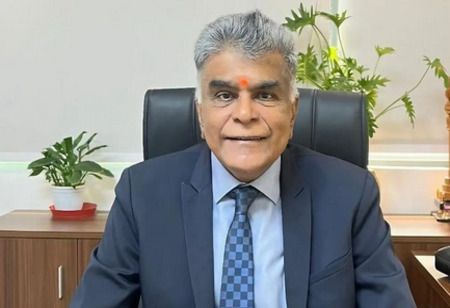
The textile industry has called on the Central government to implement a Focus Market Scheme specifically for apparel exports to the US. This scheme would include transferable duty credit scrips valued at 20 percent of the Free on Board (FOB) price, as recommended by the Chairman of the Apparel Export Promotion Council (AEPC), A Sakthivel.
The request is prompted by the recent imposition of additional tariffs by the US on India, beginning on August 27th.
Also Read: FIGSI Announces New Leadership for 2026 - 2028 Term
This action has had a detrimental impact on the industry and has resulted in Indian products gaining a competitive edge over those from major competitors such as Bangladesh and Vietnam.
At a gathering in Delhi, Sakthivel also called upon the Central government to eliminate the yearly limit of Rs.50 lakhs per exporter under the interest equalization scheme within the Export Promotion Mission, and to increase the interest subvention rate to five percent.
“We are confident that such supportive measures will provide a much-needed boost to exporters, especially MSMEs, in these difficult times,” he said speaking at the 74th Edition of India International Garment Fair.
Despite facing difficult global circumstances and persistent geopolitical and economic uncertainties, the apparel industry in India has displayed noteworthy perseverance. From April to December 2025-26, the combined exports of Ready-Made Garments (RMG) reached $12 billion, exhibiting a 2.4 percent increase compared to the same period in the prior year.
Also Read: Manappuram Finance Appoints Buvanesh Tharashankar as its Group CFO
This achievement highlights the industry's capacity to adjust, create, and progress amidst turbulent conditions, according to a statement.
Earlier, Sakthivel expressed that the India-EU Free Trade Agreement is on the brink of finalization, suggesting that India may gain a significant advantage as competing nations lose preferential market access, including benefits under the Generalized System of Preferences (GSP). These shifts are anticipated to create opportunities for expansion and strengthen India's competitive position in major international markets.
There is a prevailing belief that through collaborative initiatives between the private sector and the government, India can reach the ambitious goal of $40 billion in apparel exports by 2030.
Also Read: BPTP Names Vineet Nanda as Chief Business Officer
In the past, the Apex Apparel Exporters Association, AEPC, requested fiscal incentives such as scrips and a higher interest subsidy rate for loans in the upcoming budget to assist the sector in managing the impacts of tariffs imposed by the US.
The Apparel Exporters Promotion Council (AEPC) has put forward recommendations in advance of the budget, including a request for the reinstatement of a 15 percent concessional corporate tax rate for newly established manufacturing facilities. Additionally, they have proposed a reduction in GST for textile machinery and the implementation of a technology upgradation initiative tailored specifically for micro enterprises.
A Sakthivel, the Chairman of AEPC, noted that the Indian apparel industry is currently encountering a particularly difficult situation, marked by significant tariff changes in crucial markets like the US.
Additionally, the industry is contending with ongoing geopolitical uncertainties that have disrupted global trade patterns, logistics, and demand outlooks. Sakthivel proposed the implementation of a Focus Market Scheme aimed at boosting the sector's exports to the United States. According to his suggestion, exporters would receive transferable incentive scrips or certificates, equivalent to 20 percent of the Free on Board (FOB) value of exports, tailored to align with the duration of the added US tariff.