

CtrlS sets benchmark with India’s first quake-resistant, air pollution free Data Center
The Indian Data center is a fast-growing industry predicted to cross $8 billion by 2026, while globally it is estimated to reach $112 billion by 2028. However, this sunrise industry is responsible for three per cent of global power consumption and nearly two per cent of total greenhouse gas emissions, needs to become sustainable faster than any other industry. As the world produces zettabytes of data every day, the energy consumption to store and process those data will also increase drastically. Various experts predict that the energy consumption of data centers will account for 3.2 per cent of the global carbon emissions by 2025 and will consume one-fifth of global electricity that is doubling every four years. By 2040, storing data digitally is set to create approximately 14 per cent of the global emissions.
Today, being sustainable and carbon neutral is the mission of every data center that cares for the environment and the populace. However, the task is gigantic than one can think of. We now live in a digital world and hence continues to generate huge data that needs to be stored safely. As of 2018, there were nearly 18 million servers deployed in data centers globally (Shehabi et al, 2016). But this number is predicted to multiply many times in the coming years. This means more and more energy is needed constantly to cool the data centers, which makes data centers highly vulnerable to the world. The servers, disks and networking equipment which needs continuous cooling, power distribution, backup batteries and generators, lighting, fire suppression, and the building materials make the data centers infrastructure heavy. This infrastructure overhead is measured using Power Usage Effectiveness (PUE). The ideal PUE is 1.0 and it helps data centers look through its overall operations, and identify opportunities to increase efficiency, which help reduce operating costs. A lower PUE is important in making a data center sustainable.
 Sridhar Pinnapureddy, Founder and CEO, CtrlS says, “We have had 200 innovations since our inception and 80 of those innovations have been focused on energy efficiency. We have successfully lowered the PUE to 1.35. This is the lowest in the industry. We are committed to minimizing fossil fuels, reducing carbon footprint, building green data centers, maximize utilization of renewable energy, while ensuring highest uptime for our customers so that they can run their business seamlessly, while sustainability stays as our major focus area.”
A Truly Sustainable Data Center
A truly sustainable data center is beyond just energy efficient. Zero wastage of water, energy, and food and using ecofriendly materials to construct the data center is an important composition of being sustainable. Sustainability is also about ensuring that clients’ critical data doesn’t suffer any loss due to natural calamities like flood and quake. CtrlS appears to be the most advanced and sustainable data center in northern India with its office at Noida. The company’s Noida data center is certified as a LEED Platinum v4.0 O+M facility, which means that the data center is designed to save energy, water, resources, generate less waste besides being eco-friendly.
 Pinkes Ambvat, CIO, CRIF India, says, “Data is very critical at CRIF Highmark, as we manage our processes completely through technology. Availability of technology infrastructure is key to our operations. To my mind, one of the key players who has taken a pro-active step to protect their customers data in India is CtrlS Datacenters. They have installed an air filtration plant in their Noida data center facility to ensure metal-based equipment does not suffer from corrosion. Secondly, CtrlS data center in Noida is also quake resistant, thus ensuring critical data is completely protected from such natural disasters.”
CtrlS Noida data center is also built to withstand earthquakes measuring 8.5 on Richter scale to ensure smooth and seamless availability of the facility during a disaster. The company is exploring renewable energy as an alternative to fossil fuels to power its data center facility, which is likely to further reduce the carbon footprint. It has deployed an air filtration plant to ensure elimination of air pollutants which harm humans and IT infrastructure, making it an environment and earth friendly Green Data Center.
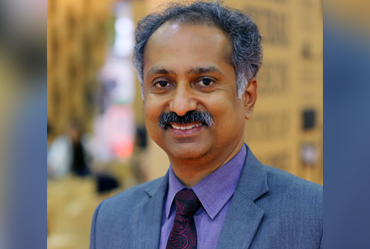 Gopalakrishnan, Managing Director, GBCI – South East Asia & Middle East Markets says, “Sustainability is embedded in the DNA of CtrlS, as the company is focused on best practices in energy management, good indoor air quality management, high performance across rainwater management, heat island reduction, water conservation and efficiency management, atmosphere and light pollution management, grid harmonization, waste management, purchase optimization, green cleaning, and other innovations. All CtrlS Rated-4 Hyperscale datacenters are certified as LEED v4 O+M Platinum by Green Business Certification Inc. (GBCI), setting a benchmark for the datacenter industry both in India and around the world.”
As a responsible organization, CtrlS has reduced water footprint through rainwater harvesting and water recycling, while embarking on recycling and effective management of e-waste. The similar processes are followed at its Mumbai, Hyderabad, Noida, and Bengaluru data center facilities. The company also has a higher adoption of greenery. Further to minimize environmental impact and move to zero-emission, zero-waste, zero-pollution operation, CtrlS is building captive solar power plants with a capacity of 200+ MW. With this and more plans in the pipeline, CtrlS Noida Data Center is truly a power to reckon with, as it not only protects its customer data, but also reducing carbon footprint to safeguard the environment through its laser sharp focus on sustainability.