

Delhi Upgrade ICT Labs, Add Digital Labs in Government Schools
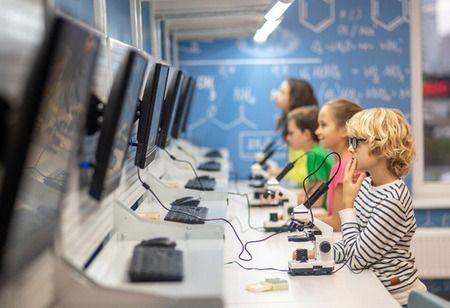
During the fiscal year 2025-26, the Delhi government plans to enhance 376 current ICT facilities in secondary schools and introduce 31 new digital labs, of which 24 will be ICT labs, as part of the 'Samagra Shiksha' initiative, in order to bolster technology-driven education in public schools.
The Ministry of Education's Project Approval Board (PAB) for the 2025-26 fiscal year has granted approval for the enhancement of current Information and Communication Technology (ICT) laboratories.
Also Read: Milk Supply Uninterrupted and Prices of Dairy Items Stable
This falls under the sub-category of ICT and digital efforts within the broader quality improvement initiatives, as outlined in a circular.
The supplementary PAB for the Annual Work Plan and Budget (AWPB) 2025-26 has authorized the establishment of 24 new ICT labs in schools with a student enrolment surpassing 700 at the secondary and senior secondary levels.
Furthermore, the circular stated that an additional seven schools have been chosen to receive Type-I digital hardware and software facilities as part of the ICT and digital initiatives program. This brings the total number of new digital interventions in schools to 31.
The importance of ICT labs in enhancing digital literacy, facilitating subject-specific learning, providing access to global educational resources, and fostering the development of critical thinking and problem-solving skills was also highlighted.
According to the statement, the newly enhanced laboratories will assist students in readying themselves for prospective professions, enhance educator productivity with more advanced digital resources, foster inclusivity in educational settings, and facilitate the streamlining of administrative tasks within schools.
Also Read: Pocket FM Elevates Lalit Gangwar to Chief Operating Officer
The distribution of funds for the establishment of 24 new ICT labs is specified on a district-by-district basis, with the largest allocation designated for North East II, where seven schools will benefit.
This directive underscores the objective of providing students in public schools with access to cutting-edge technological resources that meet the standards of contemporary education.
In the budget for Delhi in 2025-26, the government allocated a sum of Rs 50 crore specifically for the establishment of 175 new computer laboratories in government schools.
This initiative is in accordance with the guidelines of the Central Board of Secondary Education (CBSE) and forms part of a larger effort to enhance the digital education infrastructure.
Earlier, the Legislative Assembly was notified by the government regarding the substantial funding that has been approved and utilized for extensive repair projects in schools throughout Jammu & Kashmir through the Samagra Shiksha Scheme within the last two years, with additional allocations already set aside for the upcoming financial year.
Also Read: Hindustan Copper Plans Rs.7,189 Crore Capex for Mines Expansion
The minister outlined specific information on a yearly basis, stating that in the fiscal year 2023-24, a total of 263 projects were completed with approved funding of Rs 922 lakh, Rs 672 lakh disbursed, and Rs 496.27 lakh utilized.
Similarly, in 2024-25, 109 projects were initiated with approved funding of Rs 336 lakh, Rs 185 lakh disbursed, and Rs 35.73 lakh expended. In fiscal year 2025–26, the government has allocated Rs 1,340 lakh for conducting significant renovations in 322 schools. Of this amount, Rs 533 lakh has already been disbursed, with pending expenses awaiting documentation.