

Trump’s $1.5 Trillion Defense Budget Includes $750 Billion for Ships
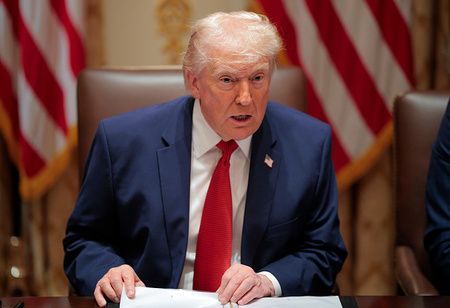
According to reports, President Donald Trump's $1.5 trillion defense budget proposal for fiscal year 2027, marking the most significant annual rise in defense spending since World War Two.
In a novel development, the Pentagon has established a category termed "presidential priorities," which encompasses Golden Dome missile defense, drone supremacy, artificial intelligence and data infrastructure, alongside the defense industrial base, as per reports.
In the previous year, Trump requested a national defense budget of $892.6 billion from Congress and subsequently added $150 billion via a supplemental budget request, making the overall cost exceed $1 trillion for the first time ever.
In shipbuilding, the budget allocates more than $65 billion to acquire 18 warships and 16 support vessels produced by General Dynamics and Huntington Ingalls Industries, as part of the Pentagon’s "Golden Fleet" initiative, which officials state is the largest shipbuilding request since 1962.
The budget increases Lockheed Martin's F-35 procurement to 85 aircraft annually and allocates $102 billion for aircraft procurement and research and development, representing a 26% rise from the previous year, the officials stated.
Also Read: AECOM Partners with Transport Australia on Policy Matters
The advancement of next-generation systems such as the Boeing Co F-47 fighter jet is a key focus, with $6.1 billion allocated for Northrop Grumman's B-21 bomber.
Regarding drones, high-ranking officials characterized the request as the most significant investment in drone warfare and counter-drone technology ever in U.S. history.
Also Read: Netflix's Reed Hastings to Step Down
The budget allocates $53.6 billion for self-operating drone platforms and battlefield logistics, in addition to $21 billion for ammunition, counter-drone technologies, and advanced systems.
Also Read: OpenAI to Spend more than $ 20 Billion on Cerebras Chips
The Defense Autonomous Warfare Group, which formerly obtained around $225 million, would experience its funding surge to about $54 billion. Top officials stated that most of the funds are intended for utilizing current technology rather than for distant fundamental research, and they confirmed that the team has effectively taken in the Pentagon's previous Replicator drone program.