

Govt. Approves Rs.7,350 Crore PLI Booster for Production of Laptops, Tablets, PCs
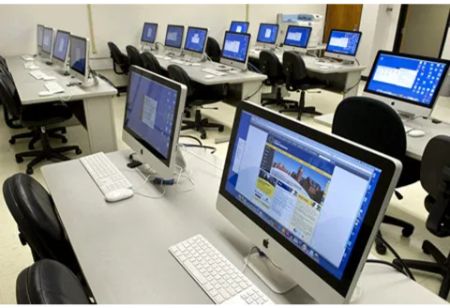
With emphasis on making India a manufacturing hub and enabling global & domestic players to take advantage of this, the government has approved a Rs.7,350 crore scheme to boost production of laptops, tablets, all-in-one PCs and servers in the country.
The PLI push is expected to bolster electronics ecosystem in India at a time when globally manufacturing is undergoing a shift and companies across the world are looking to diversify their manufacturing base, to mitigate the risk involved in depending on a single location, reports PTI.
At the same time, work and study from home during the pandemic has put the PC market in India on a solid growth trajectory.
Production worth Rs.3.26 lakh crore and exports of Rs.2.45 lakh crore are estimated over the next four years under the new scheme. This is expected to create 1.80 lakh jobs.
Briefing reporters after a meeting of the Cabinet, Communications and IT Minister Ravi Shankar Prasad said the Production Linked Incentive (PLI) scheme has been approved for IT hardware products that would cover laptops, tablets, all-in-one PCs and servers.
The Rs.7,350-crore scheme aims to position India as a global hub for hardware manufacturing.
Market watchers are positive that the PLI plan could also prompt US tech giant Apple to assemble some of its iPad tablets in India. Though there have been reports of Apple looking at manufacturing opportunities in India, the company has not commented on it yet.
The PLI boost for hi-tech IT hardware gadgets comes close on the heels of the Cabinet last week clearing a Rs.12,195 crore scheme for telecom equipment manufacturing.
The latest IT hardware scheme offers incentives between one-four percent on net incremental sales (over base year 2019-20) of goods manufactured in India and covered under the target segment, to eligible companies for a period of four years, an official statement said.
The scheme will benefit five major global players and 10 domestic ‘champions’ in the field of IT hardware manufacturing, a segment where attaining self-reliance is important for the country given the huge import dependence for these items at present.
The scheme is expected to usher additional investment in electronics manufacturing to the tune of Rs.2,700 crore.
“The direct and indirect revenues generated from production under this scheme are expected to be Rs 15,760 crore over next four years. Domestic value addition for IT hardware is expected to rise to 20 - 25 per cent by 2025 from the current 5-10 per cent due to the impetus provided by the scheme,” the statement said.
Increase in both domestic manufacturing and local value addition will help offset large foreign exchange outgo that India will have to otherwise incur.
At present, the laptop and tablet demand in India is largely met through imports valued at Rs.29,470 crore and at Rs.2,870 crore, respectively.
The market for IT hardware is dominated by six-seven companies globally which control about 70 percent of the world’s market share. These companies are able to exploit large economies of scale to compete in global markets.
“It is imperative that these companies expand their operations in India and make it a major destination for manufacturing of IT hardware,” the release pointed out.
The PLI scheme is also also expected to contribute significantly to achieving the $1 trillion digital economy and $5 trillion GDP target by 2025.
Kunal Chaudhary, Tax Partner at EY India, said the PLI scheme for IT Hardware is yet another step by the Ministry of Electronics and IT to fulfil the vision of making India an electronics manufacturing hub for the world.
This will enhance India's manufacturing competitiveness, he said, adding that it also promises a substantial increase in value addition which will further the components ecosystems.
As many as 16 companies were approved under the first round of the PLI scheme for large scale manufacturing of mobile phones and specified electronic components.
“In the last five months of scheme operation and despite challenging times, the applicant companies, including top global mobile phone companies, have produced goods worth Rs.35,000 crore and invested Rs.1,300 crore under the scheme. Additional employment generation during this period stands at around 22,000 jobs,” the release added.
The PC market in India is on a strong footing. As per research firm IDC, PC shipments in India grew 27 percent to 2.9 million units in the December 2020 quarter from 2.3 million units in the year-ago period.
During the October-December 2020 quarter, the notebook segment grew 62.1 percent year-on-year to contribute more than three-fourths of the total shipments of 2.9 million units.
On a full year basis, the PC shipments -- comprising desktops, notebooks, and workstations -- stood at 10.27 million units.
In August last year, HP had announced commencement of manufacturing operations at contract electronics manufacturer Flex Ltd's facility at Sriperumbudur near Chennai, Tamil Nadu.
HP, which already has its own manufacturing plant in Pantnagar district of Uttarakhand since 2006, had said the expansion is a part of its long-term commitment to the Indian market.
Earlier this year, Lenovo had also talked about its plans of increasing laptop manufacturing facility by about 10 times at its Puducherry facility, and starting tablets manufacturing in India.
Kavya Katherine Thayil, Associate, J Sagar Associates, termed the new PLI scheme as a 'welcome move' that would encourage domestic companies to expand their business and increase foreign investments into India.
“Apart from this, the PLI scheme would also result in creating more job opportunities in India and reduce our dependency on importing products from other countries,” Thayil added.
India Cellular and Electronics Association (ICEA) said that as per research, the global market for laptops and tablets is expected to reach about Rs.16 lakh crore and in India, the domestic market is expected to reach Rs.50,000 crore to Rs.72,000 crore by 2025.
“It is a strong beginning by the government to cover the IT hardware sector followed by the PLI for the mobile manufacturing sector.
We currently import a large part of our laptops and tablets for consumption. The proposed scheme is likely to benefit major global as well as domestic manufacturers of IT hardware products such as laptops, tablets,” ICEA Chairman Pankaj Mohindroo said.