

India Pitches New Vehicle Rules for Higher Ethanol-blended Fuels
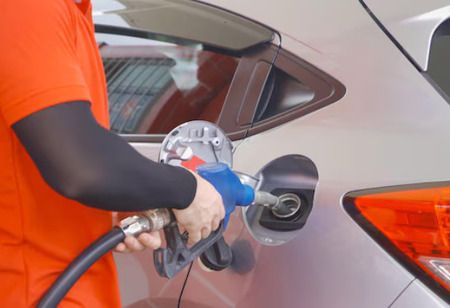
India has put forth extensive revisions to its vehicle fuel policy, aiming to officially incorporate higher ethanol concentrations like E85 and E100. This initiative is a component of its broader strategy to reduce reliance on imported oil.
The proposal aims to extend beyond the existing E20 standard by establishing a regulatory framework that accommodates vehicles capable of utilizing substantially higher ethanol concentrations.
Also Read: Flipkart, Axis Bank and PayU Launch Biometric Card Payments
The suggested amendments encompass regulations for E85 fuel, a mixture containing 85 percent ethanol and gasoline, in addition to E100, which would enable vehicles to operate on almost entirely pure ethanol. These classifications are anticipated to bolster the subsequent phase of India's biofuel initiative, especially in areas tailored or adapted for flexible fuel utilization.
The government has solicited public input on the draft, following which a conclusive decision will be reached. India achieved its objective of attaining a 20 percent ethanol blend (E20) in gasoline by the year 2025, signifying a pivotal achievement in its biofuel initiative.
This recent development indicates a transition towards even greater blending ratios aimed at reducing the reliance on expensive crude oil imports, particularly in light of supply disturbances arising from geopolitical tensions in the West Asian region.
The Ethanol Blended Petrol (EBP) initiative implemented by the government has been instrumental in conserving approximately 45 million barrels of crude oil per year and has significantly curtailed the expenditure on foreign exchange to the tune of approximately Rs 1.65 lakh crore.
Simultaneously, policy evaluations have identified possible negative consequences. A roadmap from NITI Aayog, as mentioned by ToI, indicated that vehicles initially engineered for E10 fuel and later modified for E20 use might experience a mileage reduction of 1–2 percent. This is especially pertinent for vehicles produced between 2012 and March 2023, a period during which many vehicles were designed to be compatible with E10 fuel.
Also Read: Snabbit’s $56 Million Series D Fuels India Leadership Bid
Starting in April 2023, manufacturers commenced the production of vehicles that adhere to E20 material standards. Vehicles sold from April 2025 onward are anticipated to be completely compatible with E20, signifying a progressive shift within the automotive industry. As India advances beyond the adoption of E20, industry stakeholders have called for prudence.
Policy experts caution that increasing blend ratios necessitates technological enhancements and supportive policy frameworks to prevent potential long-term efficiency and maintenance challenges. The automotive sector has also appealed for relief initiatives.
The industry association, SIAM, has proposed tax benefits for E10 and E20 fuels to compensate for the slight decline in fuel efficiency; however, no such initiatives have been implemented yet. In the meantime, policymakers have signaled that the initiative to promote ethanol will persist. Authorities have encouraged automakers to ready themselves for higher blending ratios, with continuous discussions underway regarding forthcoming fuel efficiency standards.
Also Read: India-Africa Relationship Enters New and Decisive Phase
Sujata Sharma, Joint Secretary of the Ministry of Petroleum, has characterized the increase in ethanol blending as "a concept whose time has come." Global case studies, such as that of Brazil, are being examined to facilitate a more seamless integration, including the implementation of distinct fuel dispensers for varying fuel blends.
Additionally, there is ongoing evaluation of a long-term strategy that involves the encouragement of flex-fuel vehicles (FFVs), which possess the capability to operate on ethanol blends up to pure ethanol. The government is also in the process of formalizing revised testing standards to facilitate the commercial manufacturing of these vehicles, even though extensive deployment has not yet commenced.