

India to Continue Procuring Crude Oil: Vikram Misri
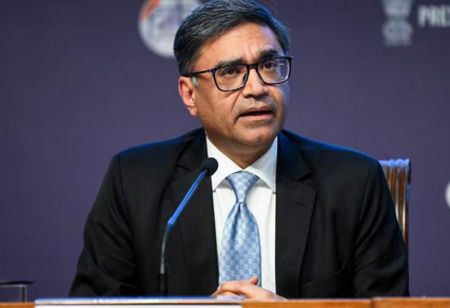
The Foreign Secretary, Vikram Misri, declared that India intends to persist in procuring crude oil from diverse outlets and expanding its sourcing channels to enhance supply chain resilience. He underscored that the nation's strategic interests will be the foremost factor in these acquisitions, especially given the recent discussions regarding the US' claim that India has agreed to cease buying Russian oil.
It marked the initial definitive statement from New Delhi regarding the matter following the decision by US President Donald Trump to retract imposing punitive 25 percent tariffs on Indian goods, with the stipulation that India cease purchasing Russian oil.
Also Read: Gautam Adani Announces Dual Talent Initiatives at IIT-Dhanbad
Vikram stated that the primary factors influencing India's acquisition strategy include ensuring sufficient availability, equitable pricing, and dependable supply. These comments suggest that New Delhi is unlikely to sever its energy partnerships with Moscow. The primary focus of the foreign secretary is to protect the welfare of Indian consumers by ensuring they have access to reliable and secure energy sources at affordable prices.
When announcing a trade agreement with New Delhi last week, President Trump stated that India has agreed to halt its purchase of crude oil from Russia. Through an executive order, Trump rescinded a 25 percent tariff that he implemented in August of last year for India's acquisition of crude oil from Russia.
The US stated in the directive that it would closely observe any efforts by India to resume the procurement of Russian oil, whether through direct or indirect means, with the possibility of reinstating a 25 percent tariff contingent upon such actions.
Also Read: Kult E-Commerce Names Parag Gupta as Chief Financial Officer
Vikram explained that oil companies evaluate the accessibility of crude oil at specific junctures, analyze associated risks and expenses, and base their decisions on this information.
"And obviously, all of these companies also have their own internal accountability-related processes to look at and certain fiduciary responsibilities in the market," he says.
"So, at any given time, there is a rather complex matrix of issues that these companies have to take into account, which -- not to disregard it -- also includes very, very important financial and logistical aspects," he says.
"I expect that what you will continue to see in this sector, in this area, is business choices being made based on these considerations that I have outlined. So, what I can firmly and confidently say is that whether it is the government or indeed our business, at the end of the day, national interests will be the guiding factor for us in our choices," Vikram says.
Expanding on India's strategy for energy acquisition, Vikram highlighted that the nation is a net importer in the oil and gas industry. As a developing economy, India must remain mindful of its resource availability.
Also Read: Ajay Mehta Steps Down at WPP Media After 11 Years
"Naturally, when you are dependent to the extent of 80-85 per cent on an imported resource, you have to have concerns about the possibility of inflation driven by energy costs. So, it's not surprising therefore that our foremost priority is to safeguard the interests of Indian consumers”, he adds.