

India Unveils World’s First Nuclear Powered Hydrogen Plant
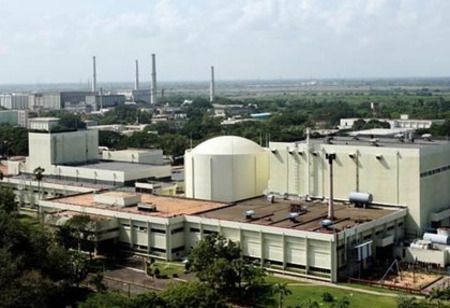
India has reached a significant milestone in clean energy with the opening of the world’s first nuclear-powered hydrogen production facility using the Copper Chlorine (Cu Cl) Thermochemical Cycle at the Indira Gandhi Centre for Atomic Research (IGCAR) located in Kalpakkam, Tamil Nadu.
The facility was inaugurated by the Department of Atomic Energy (DAE). DAE Secretary and Chairman of the Atomic Energy Commission Ajit Kumar Mohanty officially inaugurated the project alongside IGCAR Director Sreekumar G Pillai.
Also Read: Tamil Nadu Pitches itself as Defense Manufacturing Hub
The demonstration facility utilizes heat from the Fast Breeder Test Reactor (FBTR) to generate hydrogen using the locally developed Copper Chlorine thermochemical method. The Bhabha Atomic Research Centre (BARC) in Mumbai developed the technology.
The DAE states that the initiative marks an important advancement in cutting-edge nuclear technology and hydrogen production without carbon emissions. It combines nuclear process heat with hydrogen production, paving the path for extensive hydrogen generation without dependence on fossil fuels.
Hydrogen is regarded as a crucial fuel for the future due to its ability to enable clean and sustainable energy systems. Among various technologies being developed worldwide, the Copper Chlorine thermochemical cycle is considered one of the most effective because of its reduced operating temperatures and enhanced thermodynamic efficiency.
Also Read: Jupiter International Boosts Himachal Solar Cell Capacity
Authorities stated that the initiative stems from years of investigation, design, production, testing, and implementation conducted collaboratively by BARC and IGCAR. The center will assist researchers in acquiring practical experience and enhancing the technology prior to its commercial launch.
In his remarks at the inauguration, Mohanty stated that the combination of nuclear energy with hydrogen production signifies a tactical move towards India's transition to clean energy.
He observed that nuclear energy offers both carbon-free electricity and high-temperature process heat, making it suitable for large-scale hydrogen production.
He commended the scientists, engineers, and technical teams of BARC and IGCAR for turning an advanced scientific concept into a functioning facility.
IGCAR Director Sreekumar G Pillai stated that this accomplishment is a result of over 40 years of experience acquired from the Fast Breeder Test Reactor initiative. He mentioned that the initiative showcases the adaptability of advanced nuclear technologies and enhances India’s proficiency in clean energy solutions.
Founded in 1971, IGCAR has been instrumental in India's Fast Breeder Reactor initiative. The center created and managed the Fast Breeder Test Reactor and played a major role in the nation's 500 MWe Prototype Fast Breeder Reactor, an essential part of India's three-stage nuclear power initiative.
Also Read: NLB Services Repositions as an Enterprise Transformation Partner
The Department of Atomic Energy stated that the new facility aligns with the Atmanirbhar Bharat vision and strengthens India’s dedication to creating sustainable, secure, and low carbon energy options.