

Microfinance Can Drive ‘Macro Progress': RBI Deputy Governor
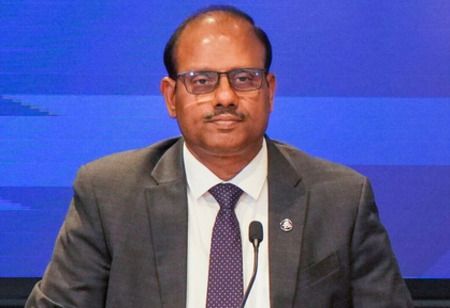
Deputy Governor Swaminathan J of the Reserve Bank of India stated that microfinance, if implemented with care, has the potential to significantly contribute to overall economic development and can act as a key player in promoting India's goal of achieving Viksit Bharat 2047.
During an MFIN event in Mumbai, Swaminathan spoke about the release of Micro Matters: Macro View - India Microfinance Review FY 2024-25. He emphasized that the key principle guiding the microfinance sector is straightforward yet impactful.
Swaminathan highlighted that responsible delivery of microfinance can lead to significant progress on a larger scale, transforming access into sustainable livelihoods, borrowers into successful entrepreneurs, and informal activities into quantifiable economic contributions.
Also Read: PRCI Delhi Appoints Baldev Raj as Vice Chairman
He pointed out that there has been a significant improvement in the financial inclusion index, rising from 43.4 on March 31, 2017 to 67.0 on March 31, 2025.
He emphasised that microfinance is poised to expand its impact in the current financial inclusion landscape built over the past decade. "Jan Dhan has given households a basic account, Aadhaar has simplified verification, UPI has made small payments instant, and the account aggregator framework has the potential to unlock consented cash-flow data," he said, adding that these public rails allow microfinance to travel "far beyond traditional branch footprints."
Also Read: PM to Launch Skyroot’s Multiple Launch Vehicle Facility
The Deputy Governor described four key reasons for the increasing significance of microfinance: its role in filling information and collateral gaps, enhancing productive capacity, fostering financial innovation, and linking marginalized households to formal financial services.
He repeated his stance that microfinance allows those who are typically excluded to access the advantages of formal finance and assists them in establishing a transaction history, ultimately paving the way for them to access larger formal credit in the future.
Swaminathan also offered five suggestions for guiding the sector's future direction. These suggestions include making credit decisions at the household level, using explainable AI in the underwriting process, shifting from single-product lending to supporting micro-enterprises, incorporating climate resilience into credit models, and adhering to responsible data practices.
"Tech can help overcome thin files, but human expert judgment must stay," he cautioned. On regulation, he noted that the RBI's 2022 microfinance framework reset was aimed at expanding inclusion, placing borrower welfare at the centre, and aligning rules across all regulated lenders. While the removal of pricing caps gave lenders flexibility, he stressed that it came with higher expectations of conduct. "Greater flexibility brings a higher bar for conduct," he says.
Also Read: Adani’s $1.2 Billion Copper Smelter Faces Ore Shortage
Calling for responsible pricing, he said loan rates must be "reasonable, reflecting cost, risk, and efficiency improvements, and not taking undue advantage of the borrower's situation. "He insisted that agreements remain transparent and explained in local languages. He further underlined expectations on preventing over-indebtedness, responsible collections, strong grievance redressal mechanisms, accurate credit bureau reporting, and robust operational and cybersecurity standards. "Outsourcing collections does not dilute accountability," he reminded lenders.
Swaminathan said the long-term health of the sector rests on strong governance and responsible growth incentives. "Eventually, if industry standards remain high, regulatory or supervisory intervention can stay light. Flexibility and accountability travel together," he says.