

NPCIL Completes Unit-5 of the Kudankulam Nuclear Power Project
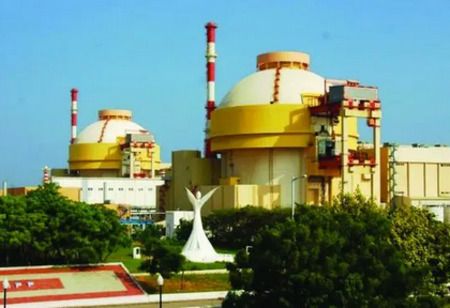
The Nuclear Power Corporation of India Limited (NPCIL) has reached a significant construction milestone at Unit-5 of the Kudankulam Nuclear Power Project (KKNPP) in Tamil Nadu by successfully installing the Reactor Pressure Vessel (RPV) within the reactor building.
The progress follows the approval from the Atomic Energy Regulatory Board (AERB) for significant equipment setup, permitting the start of the installation of essential nuclear island machinery. The milestone signifies a significant shift in the building of the unit.
As per a statement from NPCIL, the Reactor Pressure Vessel, weighing approximately 320 tonnes, is deemed the core component of a nuclear power plant, as it contains the reactor core where nuclear fission occurs.
Also Read: Amazon Bets on Own Charging Infra for EV Delivery Fleet in India
The Nuclear Power Corporation of India Limited (NPCIL) has achieved a significant construction milestone at the Kudankulam Nuclear Power Project (KKNPP) Unit-5 with the successful installation of the Reactor Pressure Vessel (RPV) within the reactor building.
The public sector firm stated that the setup was completed utilizing advanced heavy-lift cranes and demonstrated engineering superiority, thorough planning, and compliance with rigorous safety and quality standards.
This accomplishment also denotes the commencement of the installation of Nuclear Steam Supply System (NSSS) equipment, indicating major progress in Unit-5.
NPCIL stated that the milestone demonstrated strong partnership between the corporation and Russia’s Atomstroyexport (ASE), emphasizing the significance of global cooperation in India’s nuclear energy initiative.
The Kudankulam project continues to be among India's most significant clean energy efforts. NPCIL stated that Units 1 and 2 are currently operating at their full capacity and have collectively generated almost 130 billion units of electricity, contributing to the prevention of approximately 112 million tonnes of carbon dioxide emissions.
Also Read: Chhattisgarh Gains Rs.9,580 Crore Investment Proposals
With Units 3, 4, 5, and 6 advancing through the later stages of construction, the Kudankulam site is progressively approaching its total potential of 6,000 MWe installed capacity, emphasizing India’s enduring dedication to dependable, clean, and sustainable energy.
NPCIL characterized the accomplishment as surpassing a mere engineering landmark, asserting that it embodies India’s aspirations for energy security, environmental accountability, and sustainable progress within the Nuclear Energy Mission for Viksit Bharat.
The progress occurs alongside increasing collaboration between India and Russia in the nuclear energy field. While speaking at the St Petersburg International Economic Forum last week, Russian President Vladimir Putin conveyed his belief that trade between India and Russia could achieve USD 100 billion in the near future.
Referring to cooperation in the nuclear sector, Putin said, “We are not only talking about our plans in energy, including nuclear energy. Kudankulam Nuclear Power Plant (KKNPP) is now being constructed.”
Also Read: MAGGI Celebrates ‘Made So Good, Tastes So Good’ Campaign
Earlier, the AERB authorized the installation of significant equipment at Units 5 and 6 of the Kudankulam project. NPCIL subsequently characterized the approval as an important advancement for India’s nuclear energy initiative. External Affairs Minister S Jaishankar had also highlighted the importance of the project earlier this year, saying, “Russia is our foremost partner in civil nuclear energy and the Kudankulam nuclear project is a stellar example.”
India plans to boost its nuclear power generation capacity to 100 gigawatts by 2047, with Kudankulam anticipated to be pivotal in reaching that goal. After all six reactors are activated, the plant will possess a total capacity of 6,000 MWe, ranking it among the largest nuclear power plants in the nation.