

Slack launched in India to aid Indian companies embrace a digital-first approach
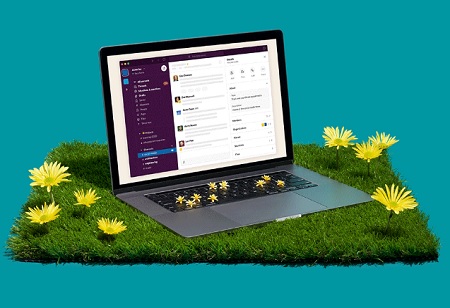 Today, Slack officially launched in India, announcing its mission to help Indian companies navigate the transition to a hybrid workplace by establishing a digital headquarters (‘Digital HQ’).
Having long championed a digital-first approach to work, Slack’s leadership in the workplace collaboration space was further cemented by the rapid shift to remote work in early 2020 brought about by the pandemic. Today – as the impact of the pandemic eases and Indian companies increasingly shift to a hybrid work model – Slack is calling for leaders to be as thoughtful in designing their digital workplaces as they did in designing their physical offices before the pandemic hit.
Adopting Slack as a Digital HQ allows Indian companies to connect their teams, tools, customers, and partners in a digital place that’s fast, flexible and inclusive for a work-from-anywhere world. A Digital HQ allows work to flow, breaking down communication and collaboration silos, internally and externally; automates tasks that take away time from deep, meaningful work; and enables new, flexible ways of working, striking the right balance between synchronous and asynchronous.
A recent study conducted by Slack with over 2,000 Indian knowledge workers, The Reinvention of Work, found 4 in 5 respondents had a desire for flexibility, and a significant 80% would seek a role elsewhere if their employer didn’t accommodate this. Indian companies are keenly aware that the Great Resignation and the Great Relocation are very real, as employee expectations change and the war for talent heats up. Embracing Slack as their Digital HQ provides Indian knowledge workers with the ability to do their jobs from anywhere, at any time.
For the many positives brought about by the proliferation of workplace apps that emerged as a response to the shift to remote work in 2020, there have been some challenges. In the same Slack study, Indian knowledge workers said they were wasting an average of 47 minutes a day switching between the various apps they use to do their jobs. One in five respondents said they were losing 10 hours a week – that’s nearly 10 working weeks a year. With over 2,600 app integrations, the Slack platform is purpose-built to address this loss in productivity and improve employee experience in the process.
One of India’s fastest growing internet commerce platforms, Meesho, has embraced Slack as its Digital HQ to save time, build company culture, streamline processes, and improve the way they work. Shikhar Saxena, Group Product Manager, said, “With the pivot towards remote working, multiple apps and systems were a huge hindrance to productivity and collaboration. We are glad to have Slack as a partner where everything happens in one channel, and what used to take a couple of days is now resolved in a matter of hours.”
Slack, which has users in over 150 countries globally, already has a significant following in India – representing one of the largest free user bases for Slack and positioned in its top 10 markets for paid teams globally. Slack has, in fact, been operating in India for four years, establishing a product engineering team in Pune in 2018 following the company’s acquisition of Astro. The Slack India team has since grown to include a go-to-market function in the last year, and now has over 120 employees across four offices in Pune, Mumbai, Bangalore and Gurgaon. Indian companies such as Zomato, Dreamsports, Freecharge, Razorpay, and many more are relying on Slack to drive their businesses forward.
July 2021 marked the close of the acquisition of Slack by Salesforce, the world’s #1 customer relationship management (CRM) platform. Salesforce has had a presence in India since 2005 and today has over 6,500 employees across Mumbai, Delhi, Bangalore and Hyderabad.