

SoulAce Calls for Strategic Shift in NGO-CSR Partnerships
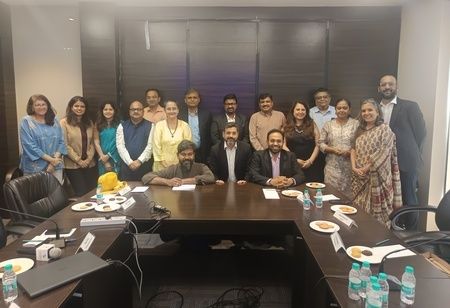
SoulAce convened a high-level roundtable titled “The Impact Dialogue- Reimagining CSR–NGO Partnerships” bringing together NGOs, CSR leaders, and ecosystem partners to examine why NGO–corporate collaborations, despite strong intent, often remain transactional.
The discussion revealed a clear consensus: the challenge is not willingness, but how partnerships are framed, articulated, and governed. Most engagements continue to operate within a compliance–delivery cycle, limiting shared ownership, innovation, and long-term impact.
A key theme that emerged was “the missing ask.” NGOs frequently approach corporates for program funding, while deeper strategic requirements such as capacity building, governance systems, documentation frameworks, collaboration design, and organisational learning remain under-articulated.
Also Read: Andhra Aims to Attain $3.4 Trillion Economy by 2047
This often restricts partnerships to implementation-focused engagements rather than solution-oriented collaboration.
Participants also observed that CSR boards are often under-engaged. While statutory approvals are routinely secured, board-level involvement in impact design and field exposure remains limited, despite growing interest in measurable and credible outcomes.
The roundtable emphasised the need to modernise reporting practices. Activity-heavy legacy formats provide limited insight into outcomes and learning.
There is a significant opportunity to co-create governance-aligned dashboards and review mechanisms that deliver board-level visibility and strengthen accountability.
Multi-NGO and integrated models were recognised as critical for scale. However, unclear roles, unequal power dynamics, and the absence of shared metrics frequently undermine collective efforts. Effective ecosystem partnerships require intentional design, defined governance structures, and common impact metrics.
Also Read: Veteran CMO Rajesh Kumar Launches AI-enabled Playbook
Commenting on the discussion, Adarsh Kataruka, Managing Director, SoulAce says,“India’s CSR ecosystem has matured significantly over the past decade. The next phase requires us to move beyond transactional funding models toward co-creation. When NGOs clearly articulate strategic needs and corporates engage beyond compliance particularly at the board level — partnerships evolve from ‘funding relationships’ to shared impact platforms. Capacity building is not overhead; it is impact-enabling. If we design partnerships around governance, transparency, and shared outcomes, we unlock exponential and sustained social value.”
The roundtable concluded that the future of NGO–CSR partnerships lie in ecosystem-led collaboration. Moving beyond linear “A funds B” structures toward shared ownership models can enable deeper alignment, innovation, and long-term impact.
Also Read: A Sakthivel Hails India-US Trade Deal as Landmark Moment
As India’s CSR landscape continues to evolve, the shift from compliance to co-creation is no longer optional; it is essential for delivering measurable, sustainable change.