

Tata Communications CEO A.S. Lakshminarayanan Retires
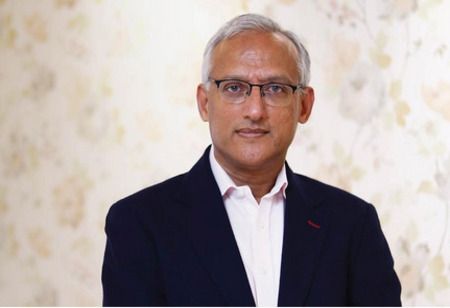
Tata Communications has made public the retirement of its Managing Director and Chief Executive Officer, A. S. Lakshminarayanan, marking the conclusion of his leadership at the company effective April 13, 2026.
The company recognized the valuable contributions of Lakshminarayanan, attributing him with a key role in molding the organization during his leadership tenure.
The departure of Lakshminarayanan represents a deliberate shift in leadership at the Tata Group company.
Also Read: Priyanka Chopra Named Global Ambassador for Bentley Motors
Back in January 2026, the board had already designated Ganesh Lakshminarayanan as the Managing Director and Chief Executive Officer, indicating a seamless transition in leadership. Ganesh Lakshminarayanan boasts more than 30 years of experience working with both domestic and international companies.
Presently, he holds the position of Managing Director and Group Vice President at ServiceNow India, concentrating on promoting the use of AI-driven digital transformation in businesses and enhancing market strategies in the area.
Before his current role, he held the position of CEO at Airtel Business, overseeing Bharti Airtel's enterprise operations. He previously led the Enterprise division within the company. His professional experience also involves serving as Chief Operating Officer at Capillary Technologies and providing advisory services at Ernst & Young and Sequoia Capital.
Tata Communications previously introduced a state-of-the-art self-healing network platform known as IZO Datacentre Dynamic Connectivity. This platform was developed to eradicate expensive datacentre outages and accommodate the requirements of a technology-driven world propelled by artificial intelligence (AI).
Also Read: Agilitas Onboards Smriti Mandhana as Brand Ambassador for ONE8
Tata Communications provided an explanation for the launch, stating that in today's digital economy, interruptions caused by cable damage, route interruptions, or abrupt spikes in AI workload can halt business operations. Every organization relies on the continuous connectivity with a seamless flow of data in order to operate efficiently.
Whether it is for financial transactions, IT-enabled services, manufacturing, streaming services, or online retail, the interconnections between data centers play a crucial role in sustaining the functioning of the contemporary society. Tata Communications further emphasized that any disruption in these connections not only hinders business operations but also brings them to a halt.
The company issued a cautionary statement regarding the outdated nature of the networks that link various enterprise datacenters. The traditional connections between datacenters were originally intended for consistent workloads and steady traffic flow. However, the company emphasized that the present landscape is marked by a substantially more fluid and dynamic environment.
Also Read: Sharon Pais Appointed Head of Myntra, Succeeds Nandita Sinha
Enterprises now function across multiple international sites and cloud platforms, necessitating the immediate transfer of large amounts of data to accommodate the demands of AI operations and business requirements. Given the evolving geopolitical constraints, cable outages, route failures, and abrupt increases in demand can swiftly result in service interruptions and operational risks, ultimately leading to expensive downtimes.
In these situations, the typical response tends to be reactionary and done manually, which wastes precious time at a time when businesses require certainty and efficiency. The IZO datacentre Dynamic Connectivity platform has been developed to tackle these challenges by establishing a sophisticated network that spans significant global datacenters on five continents.
Tata Communications has stated that the new platform utilizes deterministic multi-path routing, in contrast to traditional architectures to provide consistent latency and performance. The company emphasized that this innovation enhances resilience by shifting it from a reactionary approach to an autonomous capability, thereby revolutionizing the way enterprises interconnect their datacenters in a globally evolving AI-infused and decentralized environment.