

The Rise of Bespoke Fragrances: Custom Scents Tailored to Your Unique Chemistry
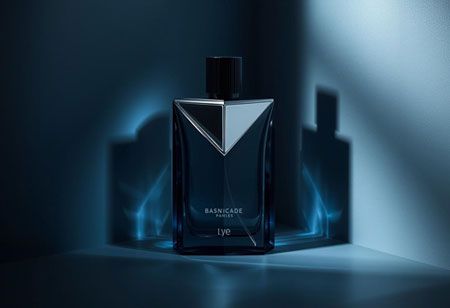 Standardisation has long been the operating principle of the global fragrance industry. A single formula, produced at scale, is bottled, branded, and made available to millions of consumers simultaneously. This model has served the industry well commercially, but it contains an inherent limitation: fragrance does not perform uniformly across all individuals. The same formula smells different on different people, interacts differently with varying skin chemistries, and produces different emotional associations depending on the individual's olfactory history and cultural background. The bespoke fragrance movement is, at its core, a response to this limitation — and it is growing at a pace that is reshaping how fragrance is understood, created, and consumed.
Bespoke fragrance — the creation of a scent formulated specifically for a single individual, based on their skin chemistry, scent preferences, lifestyle, and personal identity — is no longer confined to the ateliers of Paris or the private consultations of luxury fragrance houses accessible only to the very wealthy. Technology, data, and a globalised market for artisanal and personalised goods have collectively brought the bespoke fragrance experience within reach of a considerably broader consumer demographic. And the underlying interest in personalisation — in owning something that is genuinely, specifically one's own — shows no sign of diminishing.
The Science of Individual Skin Chemistry
The starting point for understanding why bespoke fragrance is not simply a luxury indulgence but a scientifically grounded service is the variability of human skin chemistry. Skin pH, sebum production, hormonal profile, diet, medication use, and even genetics all influence how fragrance molecules interact with the skin surface and how they are perceived by those nearby.
pH alone plays a significant role. Skin with a lower, more acidic pH tends to cause fragrance to develop more quickly and fade faster, as the acidic environment accelerates the breakdown of aromatic compounds. More alkaline skin, conversely, tends to hold fragrance longer. This is why the same eau de parfum can project differently on two people who are standing side by side — the chemical environment on the skin surface is genuinely different between individuals.
Sebum production — the skin's natural oil output — is equally relevant. Oilier skin types provide a richer lipid environment for fragrance molecules to bind to, which generally results in better longevity and projection. Dryer skin lacks this binding substrate, which is why dermatologists and fragrance specialists frequently recommend moisturising the skin before applying fragrance. The fragrance formula itself does not change, but the surface it is applied to changes the outcome.
These variables explain why perfume for women selected from a department store tester — smelled on a card or on someone else's wrist — does not always perform as expected on the buyer's own skin. A bespoke formulation accounts for these variables from the outset, building a composition that is calibrated to perform specifically on the individual's skin chemistry rather than on a hypothetical average.
How the Bespoke Process Works
The bespoke fragrance creation process varies between practitioners, but several core elements are common across most serious offerings in this space.
The process typically begins with an in-depth consultation — either in person or, increasingly, through digital profiling tools — in which the individual's scent preferences, lifestyle context, and olfactory associations are explored. Preferences are mapped across fragrance families: floral, oriental, woody, fresh, and their sub-categories. Specific notes that are consistently gravitated toward, and those that are consistently avoided, are identified. Contextual information — whether the fragrance is intended for professional use, personal use, social occasions, or all three — is collected and factored into the brief.
From this brief, the perfumer or formulation team begins constructing candidate accords — small-scale fragrance compositions built around the individual's stated preferences. These are typically evaluated on the individual's skin rather than on paper strips, as the skin evaluation is the only meaningful test of how the composition will actually perform in use.
Refinement follows: adjustments to the balance of top, heart, and base notes are made based on feedback, and the process iterates until the composition is deemed to accurately represent the individual's preferences and perform appropriately on their skin. The final formula is then documented and retained, allowing for future production of the same fragrance.
The Technology Layer: Data and Personalisation at Scale
One of the more significant developments in bespoke fragrance over the past several years is the integration of technology into what was previously an entirely artisanal process. Fragrance brands and startups have developed digital tools that use quiz-based profiling, machine learning algorithms, and in some cases biochemical analysis to generate personalised fragrance recommendations or formulations without requiring a face-to-face consultation with a master perfumer.
These platforms collect data on fragrance preferences, lifestyle habits, skin type, and even emotional associations with specific scent memories, and use this data to generate fragrance profiles that are then used to guide formulation. The output may not be bespoke in the strictest artisanal sense — it is unlikely to carry the same depth of customisation as a session with a skilled independent perfumer — but it represents a meaningful step toward personalisation that the standardised mass-market model cannot offer.
For parfum for men, this technology-assisted approach to personalisation has been particularly well-received. The men's fragrance market has historically been characterised by a narrower range of widely distributed formulas — the aquatic, the woody, the fresh citrus — that have dominated commercial shelves for decades. A data-driven approach to personalisation opens the category significantly, offering men access to compositions that reflect individual taste rather than demographic assumption. The parfum for men that emerges from a personalised profile — whether created through digital tools or a full artisanal consultation — is one that is genuinely connected to the individual's preferences rather than selected from a commercially curated shortlist.
Bespoke Versus Niche: Understanding the Distinction
A common point of confusion in conversations around personalised fragrance is the distinction between bespoke and niche. These two categories are frequently mentioned in the same context but refer to fundamentally different things.
Niche fragrance refers to fragrances produced by smaller, independent, or artisanal houses that prioritise olfactory complexity, unusual ingredients, and creative distinctiveness over mass-market commercial appeal. Niche fragrances are not personalised — they are produced for general sale, simply in smaller quantities and with a more selective distribution model. A niche fragrance is someone else's creative vision, available to anyone willing to seek it out and pay for it.
Bespoke fragrance, by contrast, is created for a specific individual and, in its truest form, is not available to anyone else. The formula belongs to the person it was created for. The scent is not a product selected from a catalogue but a composition built around a specific person's chemistry, preferences, and identity. This distinction is significant — niche fragrance offers depth and differentiation; bespoke fragrance offers singularity.
For perfume for women, the difference matters practically. A woman who has invested in a bespoke formulation wears something that cannot be identified, replicated, or encountered on someone else. The fragrance is, in the most literal sense, hers alone. This degree of ownership over personal scent identity is qualitatively different from even the most exclusive niche offering.
The Emotional Dimension of Personalisation
Beyond the technical and commercial dimensions of bespoke fragrance, there is an emotional dimension that is worth examining. Fragrance, more than most personal care categories, is deeply connected to identity, memory, and self-perception. The scent that is worn consistently over time becomes part of how a person is recognised and remembered by others. It forms part of the non-verbal communication that defines how one is perceived in social and professional environments.
A bespoke fragrance engages with this dimension intentionally. The process of articulating scent preferences — of explaining which memories are associated with specific notes, which emotional states are sought through fragrance, which aspects of identity are wanted to be expressed — is itself a form of self-reflection that most commercial fragrance purchases do not invite. The resulting fragrance carries meaning beyond its olfactory character. It is the product of a deliberate act of self-definition.
This is not an abstract observation. Research in consumer psychology consistently finds that personalised products generate higher levels of emotional attachment and perceived value than standardised alternatives. In the fragrance category, where emotional connection to the product is already among the highest of any personal care segment, personalisation amplifies this effect significantly.
The Accessibility Question
The primary barrier to wider adoption of bespoke fragrance services has historically been cost. A full artisanal bespoke consultation with a skilled independent perfumer represents a significant financial investment — one that has placed it outside the consideration set of most consumers. This is beginning to change, though the change is gradual.
Technology-assisted personalisation platforms have brought the entry point down considerably, making some form of personalised fragrance accessible at price points comparable to mid-range niche offerings. At the same time, the growth of the broader personalisation economy — in which consumers have come to expect some degree of customisation across almost every product category — has created demand that is incentivising more brands to develop accessible bespoke or semi-bespoke offerings.
The trajectory is clear. Bespoke fragrance is moving from a rare, highly exclusive service toward a more accessible segment of the fragrance market. The definition of bespoke may broaden in the process — personalisation at different levels of depth, from algorithm-generated recommendations to full artisanal consultation, will likely coexist within the same broad category. What will remain constant is the underlying premise: that a fragrance calibrated to the individual performs better, feels more authentic, and carries more meaning than one selected from a standardised catalogue.