

Trump Mandates Federal Access to AI Systems Before Launch
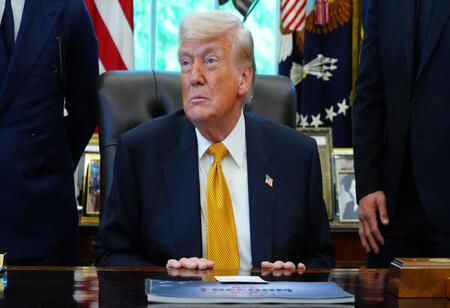
US President Donald Trump signed an executive order establishing a voluntary system that requires AI developers to provide advanced models to the government prior to their public launch.
The main provision enables companies like OpenAI, Google, or Anthropic to provide the government access to their top models for a duration of up to 30 days prior to their scheduled release.
The order was initiated due to worries about Anthropic's Mythos model, which the AI startup has declined to make public because it can reveal weaknesses in computer systems — including those of banks, governments, and hospitals.
The 30-day period signifies a middle ground: the initial draft that was revealed to US media suggested up to 90 days of pre-release government access, whereas tech firms advocated for reducing that period to merely 14 days.
The signing follows a chaotic few weeks during which the White House seemed ready to announce the measure but then abruptly withdrew.
As reported by Politico and other outlets, David Sacks, the Silicon Valley venture capitalist who was Trump's AI and crypto czar, contacted the president to caution that the initiative would hinder innovation and negatively impact the U.S. in its AI competition with China -- surprising White House staff who thought Sacks backed the order.
Also Read: US Tariffs on India an Economic Boon?
Sacks posted on X last week that "excessive regulation poses the greatest challenge to innovation in America," noting that succeeding in the AI competition necessitated removing "bureaucratic obstacles" set by state legislators and politicians in Washington.
The directive additionally directs the Treasury, the National Security Agency, and the CISA agency to create an "AI cybersecurity clearinghouse" in voluntary cooperation with industry and critical infrastructure operators to coordinate scanning for software weaknesses and prioritize updates.
Also Read: 5 Key Leadership Appointments across Global Firms in March 2026
Trump scrapped a Biden-era AI oversight order on his first day back in the White House.
Biden's 2023 order required AI companies to share safety test results with the government and leaned heavily on voluntary commitments -- already a light-touch approach that fell short of what many experts had called for.
Also Read: How US–China Tariffs Are Disrupting Textile Trade
By contrast, the European Union's AI Act -- which entered into force in 2024 -- sets binding rules for high-risk AI systems, including mandatory transparency requirements and, for the most powerful models, obligations around safety testing and incident reporting.