

TSMC in Talks With Musk Over Potential Role in Texas Terafab
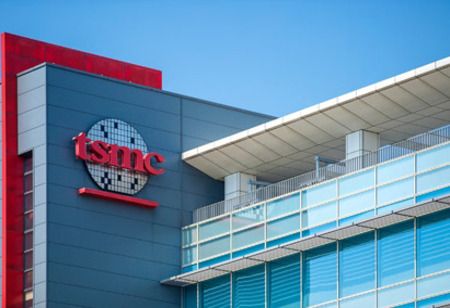
Taiwan Semiconductor Manufacturing (2330.TW) is said to be considering a possible collaboration with Elon Musk's Terafab wafer fabrication initiative.
The large-scale chip production project, collaboratively supported by Tesla, SpaceX, and xAI, might turn into a significant client for TSMC's new facility in Texas if an agreement is reached.
In addition, TSMC is evaluating the potential to assist in operating Terafab's wafer fabrication facility in Texas. Neither party has signed a formal agreement; however, the announcement's timing aligns with reports that TSMC is considering a second major production site in the Dallas, Texas region.
Also Read: Amazon Seeks to Offload $8 Billion of Nvidia Chips to Investors
According to reports, TSMC sees Terafab as a likely key customer for its new Texas campus and is also investigating different methods to support the startup chip maker in running its Texas facility. Conversations are still in the initial assessment phase.
Musk revealed the Terafab initiative on March 21, 2026, stating that the facility would eventually be able to provide 1 terawatt of AI processing power each year. Based on his remarks, this capability would surpass the total production of all chip producers globally.
On August 6 of that year, Tesla and SpaceX announced the location in Grimes County, Texas, with an initial investment of $16.8 billion (around NT$530 billion) and intentions to recruit a minimum of 3,000 workers. SpaceX's S-1 filing submitted in May disclosed that the total possible investment, encompassing all construction phases, might amount to as much as $119 billion (around NT$3.8 trillion).
The physical dimensions of the fab are also unmatched. The intended floor space is around 100 million square feet—comparable to 1,700 football fields—with the campus stretching over 3 miles at its longest stretch, possibly positioning it as the largest single structure in the world.
Also Read: Infineon Opens $1.4 Billion Thailand Plant to Boost Chip Industry
Construction commenced in August, and SpaceX has indicated it plans to initiate restricted operations by the close of 2027. The government of Grimes County had earlier authorized complete tax abatements with a 4-1 decision, and the state of Texas allocated an extra $30 million in grants.
In terms of technology, Terafab highlights the integration of chip design, manufacturing, memory production, advanced packaging, and testing all within a single facility, focusing on the 2-nanometer process node.
Its product roadmap features terrestrial AI inference chips for self-driving cars and humanoid robots, along with heat-resistant space chips for orbital data centers. For a business that currently lacks an operational wafer fabrication facility, this signifies an incredibly bold investment plan. The very magnitude of this scale renders TSMC's name in related reports especially significant.
Musk's choice to establish his own fabrication plant is directly linked to Taiwan. During his address at the All-In Summit in September, he stated that at a future time, "chips might for some reason no longer be able to be sent from Taiwan to the United States." He contended that to secure a reliable chip supply for Tesla and SpaceX, the firm needs to create its own production capacity, regardless of an increasingly complicated geopolitical landscape. He also stressed that for AI to genuinely enter a stage of extensive growth, the existing global fabrication capacity is probably still inadequate.
Also Read: Newsom Signs New California Laws to Protect Workers from AI Risks
The physical dimensions of the fab are also unmatched. The intended floor space is around 100 million square feet—comparable to 1,700 football fields—with the campus stretching over 3 miles at its longest stretch, possibly positioning it as the largest single structure in the world. Construction commenced in August, and SpaceX has indicated it plans to initiate restricted operations by the close of 2027. The government of Grimes County had earlier authorized complete tax abatements with a 4-1 decision, and the state of Texas allocated an extra $30 million in grants.
In terms of technology, Terafab highlights the integration of chip design, manufacturing, memory production, advanced packaging, and testing all within a single facility, focusing on the 2-nanometer process node. Its product roadmap features terrestrial AI inference chips for self-driving cars and humanoid robots, along with heat-resistant space chips for orbital data centers.