

US says India Trade Deal Near, but Gaps Remain
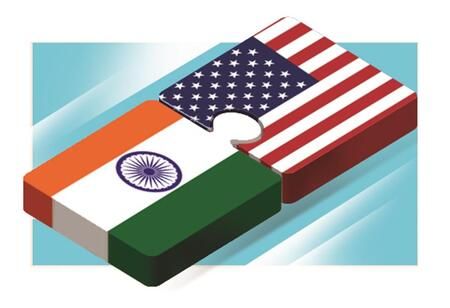
A U.S. official stated that the U.S. and India are close to finalizing an interim trade agreement but must address some negotiating gaps, including discussions on pulses and the timing of tariff reductions.
Washington officials are delving into the details of trade agreements after the U.S. Supreme Court's ruling on February 20, declaring that the International Emergency Economic Powers Act (IEEPA), which supported President Donald Trump’s ‘reciprocal tariffs,’ was applied unlawfully.
The administration is currently focused on restoring the mutual tariffs through alternative legislative measures, such as ‘Special’ 301 trade inquiries carried out by the Office of the U.S. Trade Representative (USTR).
According to the U.S. official, a gap in India-U.S. discussions exists regarding pulses, as India aims to protect its market for this agricultural product while the U.S. desires increased access to it.
Politically, agriculture is a highly contentious topic for both nations, as the administration in DC and the government in New Delhi are not aligned on the same page—or, more precisely, ‘fact sheet’.
Also Read: A Brief History of India's Transformation Under PM Narendra Modi
Last month, the White House released a ‘fact sheet’ that featured the phrase “certain pulses” on a list of goods that, it asserted, India would reduce tariffs on. These and other inconsistencies with the joint statement released by Washington and New Delhi had sparked a political uproar in India. The White House discreetly reissued the 'fact sheet' – a political declaration, not an actual statement of facts – this time eliminating the mention of pulses and addressing several other inaccuracies.
Also Read: 5 Latest CHRO Appointments in Global Corporations
Nonetheless, the U.S. side still seems to be advocating for market entry on pulses. Also discovered that Washington aims for diminished staging (i.e., accelerating a phased tariff reduction) and this remains one of the gaps in negotiation stances and is being discussed.
Also Read: How This Techie Turned Visa Struggles into Startup Success
Trade representatives in Washington are not prioritizing the resolution of trade deal disparities but are occupied with Special 301 investigations initiated in March against multiple countries, including India, ostensibly due to manufacturing overcapacity and forced labor issues.