

What the Best-Run Remote Companies Have in Common
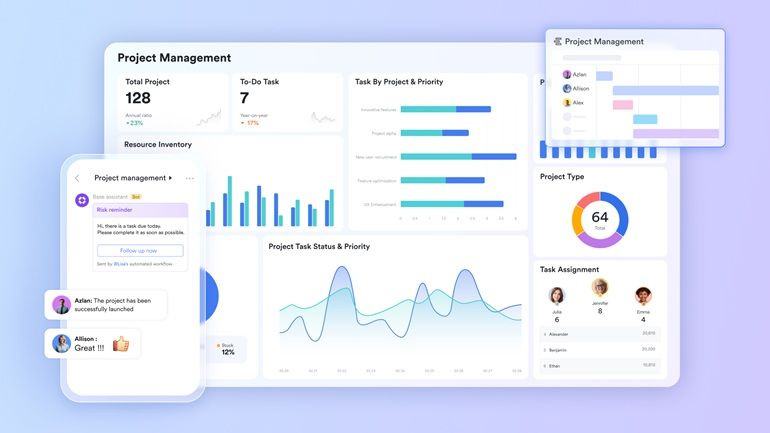
The body of evidence on what makes remote companies work well has grown substantially over the past several years, and the patterns it reveals are surprisingly consistent. The best-run remote companies are not distinguished by their flexibility policies or their home office stipends or their virtual social events. They are distinguished by the quality of their operational infrastructure. Specifically, they have built working environments where information flows to the right people without anyone having to route it manually, where knowledge is findable without anyone having to ask a colleague to retrieve it, where project status is visible without anyone having to request a status update, where decisions are traceable without anyone having to reconstruct the reasoning from memory, and where communication is structured enough to be searchable and clear enough to be acted on without a follow-up for clarification. These are not five separate investments. They are five dimensions of a single infrastructure investment in project management tools that were designed for distributed work rather than adapted from tools designed for offices.
Project visibility that removes the need to ask with Lark Base
The remote company that knows what every team member is working on at any given moment without a daily standup or a weekly status report is not running a surveillance operation. It is running a well-designed project management system where the work itself generates the visibility that the standup was supposed to provide.
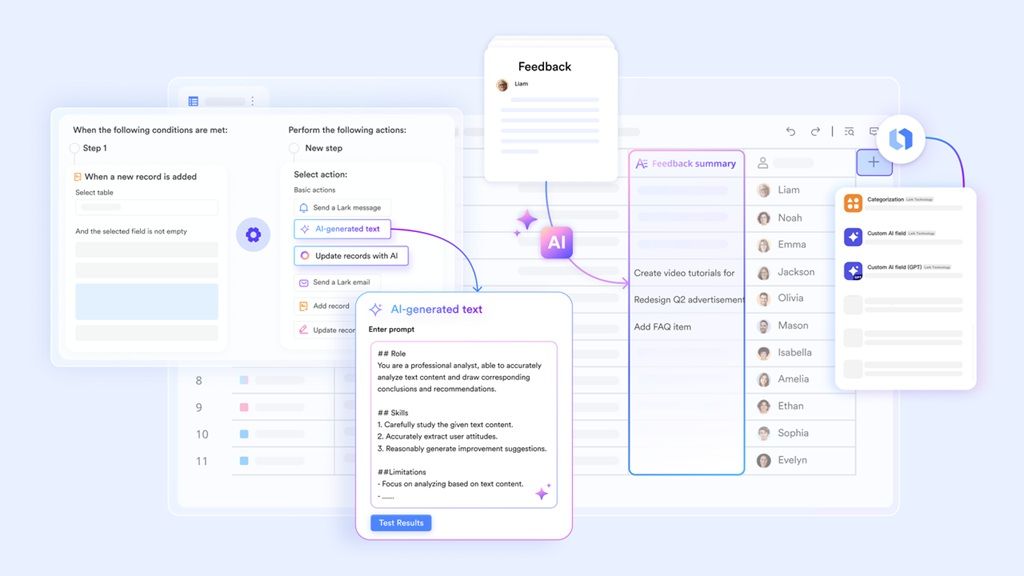
- Shared Kanban, Gantt, and grid views give every stakeholder a live picture of every project's current state at any moment they choose to check, so the question of where a project stands is answered by the system rather than by a message that interrupts a colleague's focused work.
- "Personal task views" allow every remote worker to manage their own work through the same shared database that gives leadership their organizational overview, so the individual and the organizational picture are always derived from the same source and always current.
- Automated notifications deliver status changes to the relevant people at the moment they occur, so the remote team stays synchronized on project progress without a recurring meeting designed specifically to achieve that synchronization.
- "Real-time cross-Base sync" ensures that operational data from different teams and functions is available in a consolidated management view that any leadership team member can access without requesting a compiled report from each functional lead.
Knowledge that is findable without a colleague's help with Lark Wiki
The remote worker who cannot find information without asking a colleague is a remote worker who generates interruption costs for their teammates and delays costs for themselves every time they need context they do not already have. The best-run remote companies have eliminated most of those interruptions by building knowledge bases that are comprehensive enough and searchable enough that self-service is genuinely faster than asking.
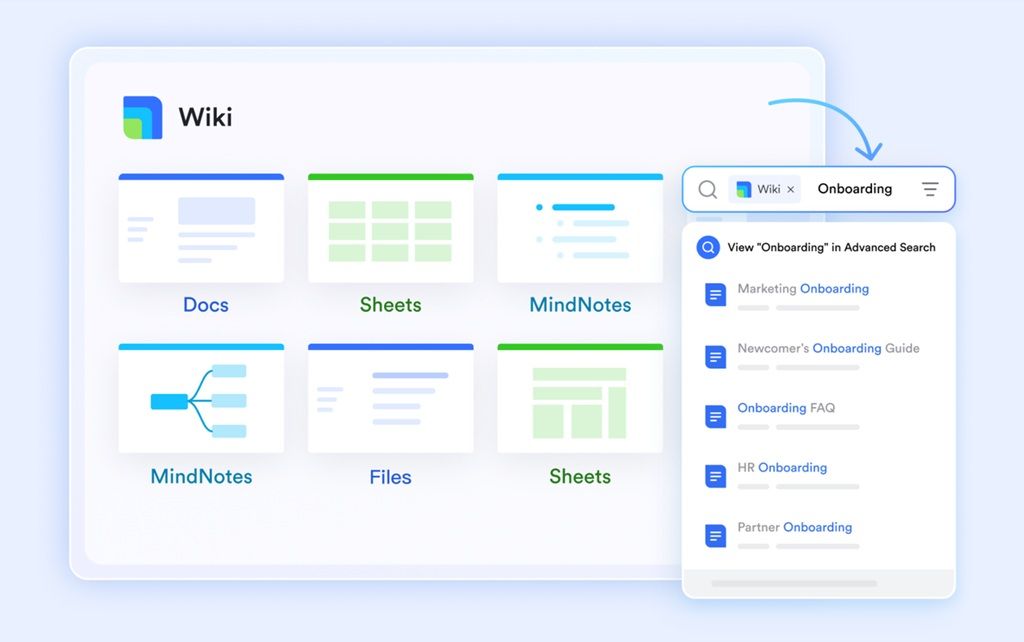
- "Advanced Search" with powerful filters allows any remote worker to find any organizational document, policy, or reference material in seconds, so the information retrieval that would have required a colleague's help in a poorly organized knowledge base takes less time than composing and sending a message.
- "Rich Content" pages carry the full reference layer for any topic, including embedded databases, process documents, and decision records, in a single navigable page that gives the remote worker everything they need in one location.
- "Permission Settings" ensure that every team member sees the content appropriate to their role without navigating content that is not relevant to their function, so the knowledge base serves as a curated reference rather than an overwhelming archive.
- "Migration" from Confluence, Word, and other formats allows the best-run remote companies to consolidate their accumulated knowledge into a single searchable environment without manual recreation, so the investment in documentation that was made before the knowledge base was structured is not lost.
Decisions that leave a traceable record with Lark Docs
The best-run remote companies have solved one of the hardest problems in distributed work: maintaining a reliable, accessible record of the decisions that shaped the organization's direction without requiring every decision to be made in a formal setting with formal minutes. The decision that happens in a conversation needs to be documented. The decision that happens in a document needs to be findable. The best-run remote companies have both.
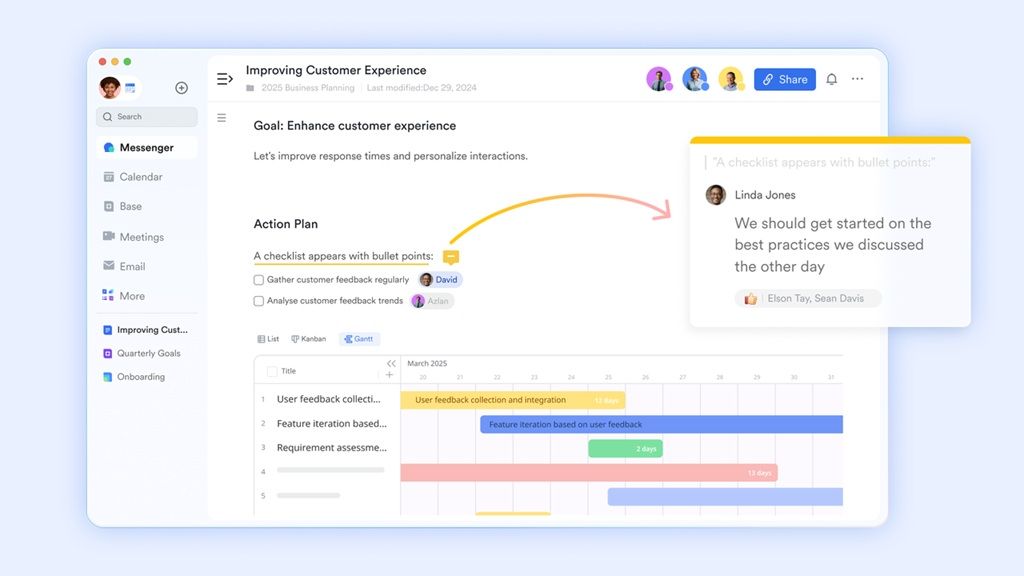
- "Version History" provides a permanent, traceable record of every decision embedded in any document, showing who made each change and when, so the reasoning behind any organizational decision is available to every team member who needs to understand it without a reconstruction exercise.
- Real-time co-editing makes the documentation of decisions simultaneous with the making of them, so the remote team does not rely on individual memory to capture the outcome of a decision-making conversation that happened without a formal record.
- Document templates for meeting agendas, decision records, and project plans ensure that the documentation quality of the best-run remote company is consistent across every team and every team member rather than varying based on individual documentation habits.
Calendar discipline that makes async work possible with Lark Calendar
The best-run remote companies have a different relationship with their calendar than their office-based counterparts. They use it not just to schedule meetings but to structure the working day in a way that makes focused asynchronous work possible alongside the synchronous coordination that distributed work still requires.
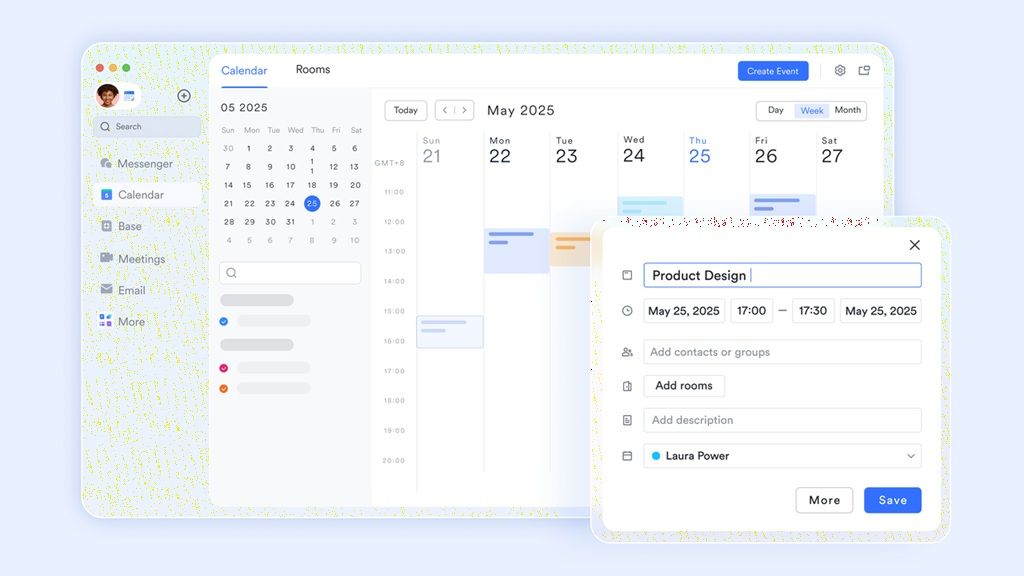
- "Calendar Subscription" to shared project and organizational calendars gives every remote worker full visibility into the working week's structure without requiring them to be continuously available to stay informed, so the async worker is as aware of the organizational rhythm as the real-time worker.
- Protected focus-time blocks visible on shared calendars create a scheduling culture where meetings are arranged around the team's deep work rather than the other way around, so the best-run remote company's calendar is a structure for productivity rather than a source of fragmentation.
- "Meeting Groups" ensure that every meeting arrives with full preparation materials, so the remote worker who has been in focused async work mode transitions into a meeting with full context rather than spending the meeting's first portion getting up to speed.
- "Schedule in Chat" makes the scheduling of necessary synchronous coordination as frictionless as possible, so the async-first culture of the best-run remote company does not prevent the synchronous collaboration that some categories of work genuinely require.
Communication that is structured enough to act on with Lark Messenger
The best-run remote companies have communication environments that are fast enough for real-time coordination and structured enough for asynchronous information retrieval. The chat tool that is great for real-time coordination but terrible for finding a decision that was made in a thread three weeks ago is a communication tool that serves the synchronous remote worker and disadvantages the async one.
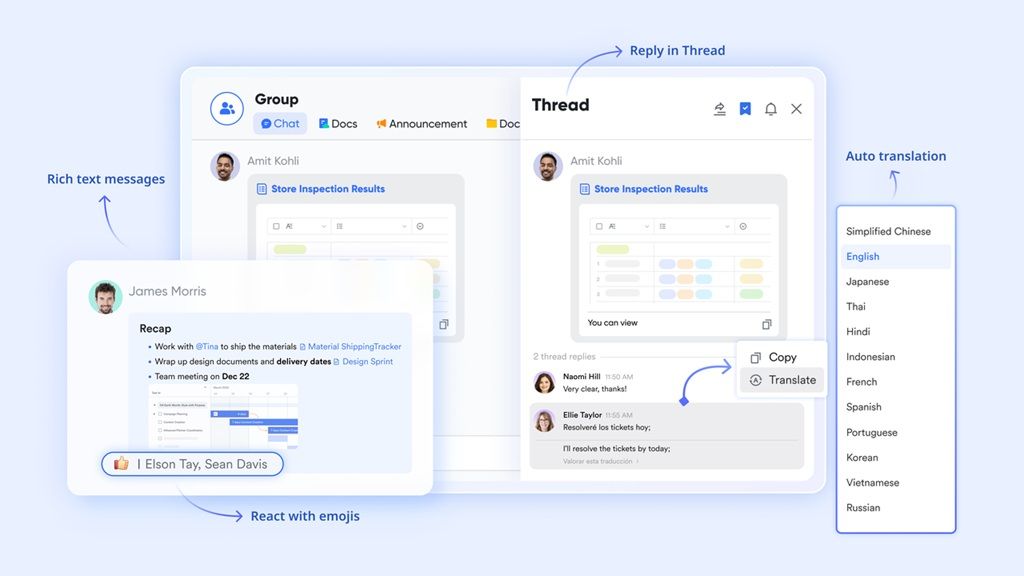
- "Chat Tabs & Threads" keep project-specific communications organized in named threads that any team member can navigate and search without scrolling through chronological message history, so the remote worker who was in a different time zone when a decision was communicated can find it in seconds rather than asking for a repeat.
- "Scheduled Messages" allow remote workers across different time zones to communicate on schedules that respect every participant's working hours rather than creating an implicit expectation of real-time response that only the team members in the dominant time zone can sustainably meet.
- Group folder organization with independent notification rules allows every remote worker to configure the urgency with which different categories of communication claim their attention, so the communication environment supports focused work rather than fragmenting it.
Bonus: Why most remote companies do not run this well
The remote companies that do not run this well are almost always the ones that distribute their workforce without redesigning their operational infrastructure for distributed work. The tools that served a co-located team reasonably well serve a distributed team poorly because the ambient information sharing that physical proximity provided, and that the tools never needed to replace, is no longer happening and nothing has been put in its place.
Tools like Slack and Zoom make distributed work possible. Notion and Confluence make distributed documentation possible. But none of these tools creates the unified operational infrastructure that the best-run remote companies have built, where information flow, knowledge access, decision traceability, calendar discipline, and communication structure are all properties of the same connected environment. Teams evaluating Google Workspace pricing often realize that collaboration tools alone do not cover the full needs of remote operations. Many end up adding separate platforms for communication, documentation, project management, approvals, and goal tracking, creating a fragmented stack that teams have to manage across multiple systems. Lark brings these workflows into one environment, helping remote teams operate with fewer handoffs and less tool complexity.
Conclusion
The best-run remote companies share a common infrastructure that makes information flow automatic, knowledge retrieval self-serve, decisions traceable, calendar structure deliberate, and communication organized enough to act on without a follow-up. A connected set of productivity tools that provides all five of those properties in one environment is what separates remote companies that genuinely work from the ones that are still compensating for the limitations of tools that were not designed for how they actually work.