

Why Enterprises Are Moving Away from Long-Term Office Leases
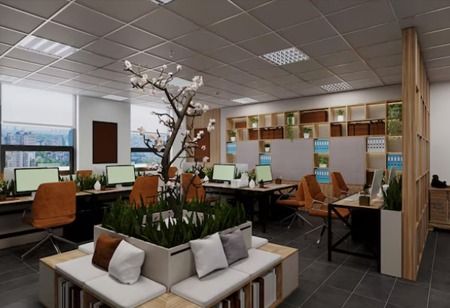 The lease model is no longer aligned with business speed. Large enterprises used to treat office space as a fixed asset. Long leases of five, nine, and even fifteen years were seen as stability. That assumption is weakening. Business cycles are shorter now; hiring plans change to mid-year. Teams expand, contract, or relocate based on client demand, not real estate timelines. A rigid lease starts to feel like friction.
Operational reality: In one enterprise setup in Gurgaon, a 9-year lease locked in excess capacity for nearly 18 months after a project slowdown. The space remained underutilized, but costs didn’t adjust.
Capital Allocation is Shifting Away from Real Estate
Lease structures come with hidden commitments to fit-outs, deposits, long negotiation cycles, and vendor coordination. None of these contribute directly to revenue. Finance teams are questioning this. Capital is being redirected toward core operations: hiring, product development, and market expansion. This is where Managed Office Spaces begin to fit better. They convert fixed costs into operational expenses, with predictable monthly outflows.
Operational reality: CFOs are increasingly comparing office decisions against ROI timelines. If a workspace takes 4–6 months to become operational, it is already seen as in efficient.
Scaling Teams Without Operational Disruption
Growth rarely follows a straight line. A team might jump from 80 to 300 employees within a quarter. Traditional leases don’t accommodate this easily. Expanding within the same building depends on availability. Expanding elsewhere introduces fragmentation of multiple vendors, inconsistent infrastructure, and split teams. Managed Office Spaces allow phased expansion within a controlled environment. Same standards, same systems, minimal disruption.
Operational reality: In Bangalore, a fast-growing tech GCC scaled from 120 to 450 seats within one managed facility cluster. No relocation. No downtime. That continuity mattered more than cost.
The Hidden Complexity of Managing Offices Internally
Running an office is not a single function. It is a combination of:
- Facilities management
- IT infrastructure
- Security systems
- Vendor coordination
Each layer introduces dependencies. Issues rarely stay isolated. Power failure affects productivity. Network downtime impacts delivery. Vendor delays escalate into operational bottlenecks. Enterprises are stepping back from managing this complexity themselves. Managed Office Spaces centralize these responsibilities under one accountable provider, fewer moving parts and faster resolution.
Operational reality: In multi-floor enterprise setups, internal teams often spend disproportionate time managing escalations from air conditioning failures to access control issues, diverting focus from core business.
Location Strategy is Becoming More Fluid
Earlier, companies would commit to a single large campus. Now, distributed models are gaining traction. Teams are being placed closer to talent pools rather than forcing talent to relocate. This leads to multiple smaller offices across cities or micro-markets. Traditional leasing struggles here. Each location becomes a separate project.
Managed Office Spaces enable this distributed approach without multiplying complexity. Standardized setups across locations simplify operations.
Operational reality: Enterprises expanding into Noida, Pune, and Hyderabad simultaneously are prioritizing providers who can deliver consistent environments across all three, rather than negotiating separate leases in each city.
What Decision Makers Are Prioritizing Now
The conversation has shifted; It is no longer about securing space. It is about enabling operations. CXOs are asking different questions:
- How fast can teams start working?
- Can the setup scale without relocation?
- What happens if hiring plans change?
- How much internal effort is required to run this space?
Cost still matters, but predictability matters more.
Operational reality: Leadership teams are increasingly running pilot setups—testing a managed office for one business unit before expanding across functions. Decisions are being validated through usage, not projections.
A Quiet but Decisive Shift
The move away from long-term leases is not dramatic. It is gradual, but consistent. Enterprises are not abandoning leases entirely. They are reducing dependence on them. Flexibility is becoming part of a core strategy, not an exception. Managed Office Spaces are gaining ground because they align with how businesses now operate faster, less predictable, more distributed.
Final takeaway:
Enterprises that continue to lock themselves into rigid real estate models will carry operational drag. The shift is already visible. The question is not whether to adapt, but how quickly leadership is willing to realign office strategy with business reality.