

How Emotional Intelligence Shapes Finance Leadership Decisions
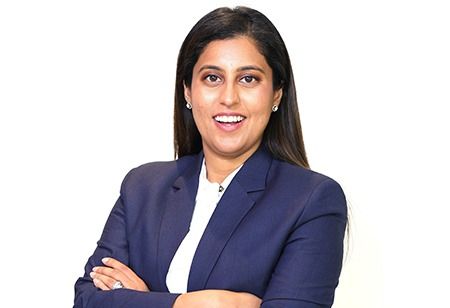
Shruti Mehndroo, a Chartered Accountant with over 13 years of experience in consulting and corporate finance, currently leads Liberty Mutual’s global finance shared services strategy. She excels in driving transformation, governance, and performance, while also balancing her professional expertise with a passion for travel and fitness.
In an impactful interaction, Shruti shares her insights on the evolving role of emotional intelligence in finance leadership. She talks about its growing impact on decision-making, cross-cultural collaboration, and business performance. Her journey highlights the balance of empathy with structure and its transformative effect on leadership. To learn more, read the article below.
Read the full article to explore Shruti’s thoughts on emotional intelligence shaping finance leadership decisions and global alignment.
Looking at today’s finance world, where do you see Emotional Intelligence (EI) gradually changing leaders’ thinking to make more effective, humantistic decisions?
Emotional intelligence is paramount in every aspect of life, and its relevance in finance has become increasingly undeniable. For years, leaders were encouraged to keep EI separate from core business decisions, but this overlooked the fact that people are a company’s most critical asset.
Also Read: Sterlite Electric Appoints Sumil Mathur as the Group CFO
Today, the landscape is clearly changing. Alongside technical expertise, finance leaders are intentionally building and mastering emotional intelligence, and the shift, though gradual, is visible everywhere - from the tone of company communications to the way leaders speak at industry conferences and the well-being initiatives organizations now embed into their culture.
Research from Daniel Goleman and Harvard Business Review reinforces that higher EI drives stronger engagement and more effective decision-making. For me, empathy and calm judgment consistently shape how I lead and influence outcomes.
How have you seen EI change the tone of difficult finance conversations especially those where clarity, empathy, and influence must work together?
In high-stakes finance conversations, I believe the leader sets the emotional temperature of the room.
I start by defining the purpose with absolute clarity especially when it is a tough conversation such as discussing budget constraints or performance shifts - because people make better decisions when they understand the “why.”
From there, I treat the discussion as an intelligence-gathering exercise, listening not just to the loudest voices but deliberately drawing out quieter thinkers whose insights often shift outcomes. I also pay close attention to the cultural context influencing each viewpoint; understanding those nuances elevates the dialogue from transactional to strategic. When empathy, clarity, and cultural awareness intersect, even the most difficult financial conversations become moments of alignment, innovation, and forward momentum.
As you scaled finance operations across 12 countries, in what ways did emotional intelligence enable you to navigate cultural nuances and strengthen cross-border collaboration?
I consider myself incredibly fortunate to have worked across 12 countries, each with distinct communication styles, approaches to hierarchy, and levels of risk tolerance. In today’s fast-paced world, acknowledging these differences isn’t optional but is essential for building strong, collaborative teams.
Before engaging with a new region, I make it a point to understand their cultural priorities and how they naturally respond to challenges, and then I continue learning through real interaction. Trust across borders is built through an open mind, deep curiosity, and consistent transparency. It forms gradually, through small actions done right over time. Respecting local cultures while clearly articulating the “why” behind decisions creates alignment and shared purpose. And sometimes, cross-cultural work even teaches you new skills for e.g. I learned Spanish while supporting the European market.
Also Read: KISNA Appoints Nitin Naik as Chief Technology Officer
As those global dynamics deepened, how did an emphasis on human understanding beyond process efficiency help drive stronger alignment and more consistent performance?
As global operations scale, complexity inevitably rises, and the true strength of a GCC is reflected in its ability to handle increasingly sophisticated work while staying aligned. In these environments, expectation setting becomes foundational, supported by regular check-ins, transparent communication, and purpose-driven town halls. But real alignment doesn’t come from process alone but also from understanding people.
We experienced this firsthand when month-end closes in one region were consistently delayed due to a major local holiday season. Instead of enforcing a rigid global timeline, we acknowledged the cultural reality and introduced a soft close before the break, followed by a true-up afterward. Likewise, we maintain a global holiday master sheet to help teams across India, LATAM, Europe, Singapore and HK, and the U.S. plan with respect for each other’s cultural rhythms. Overcommunication, grounded in empathy, consistently strengthens collaboration. And when people see leaders as human being, someone who shares hobbies, books, or stories beyond work, it helps breaks barriers, deepens trust, and drives more consistent performance.
From your experience across consulting and corporate finance, what personal evolution allowed you to integrate empathy with structure while still delivering strong business impact?
My journey across consulting and corporate finance has been shaped by a gradual but powerful shift in how I lead. Early in my career, I was deeply focused on the core strengths in finance - structure, precision, and execution. But as my responsibilities expanded across countries and cultures, I realized that strong business impact comes from pairing that structure with genuine empathy.
The evolution came from listening more intentionally, appreciating context before forming judgments, and recognizing that people drive outcomes long before processes do. This balance allows me to navigate complexity with clarity, build trust across diverse teams, and inspire alignment even in uncertain moments. Empathy didn’t replace discipline; it elevated it, transforming my leadership from operational to truly influential.
Also Read: India to Continue Procuring Crude Oil: Vikram Misri
What advice would you share with women leaders building their path in finance? How can they apply EI as a cornerstone of confidence and a strategic advantage?
One message I always share with young women in finance is to courageously say “yes” to opportunities. Even when they seem overwhelming, you never truly lose - you grow, you learn, and you discover a new version of yourself. I’ve learned to be my own advocate and my biggest cheerleader, because believing in your own voice is the foundation of confidence.
Seek mentors who inspire you, regardless of age or title; wisdom today comes from many places. Emotional intelligence has shaped my journey profoundly, helping me understand cultures, navigate bias with grace, and lead through presence rather than force. For much of my career, I was often the only woman or the youngest person in the room or even both. What once felt intimidating has become a strength and a reminder that perspective is power, and that every room you enter offers a chance to contribute or learn. The choice, and the agency, always rests with you.