

Capability Building: Powering India’s Next Phase of Independence

India's next phase of independence is increasingly being shaped by Indian industry's ability to build capabilities at home and compete confidently with the world. On the occasion of Independence Day 2026, this article explores how indigenous technology, manufacturing, skilled talent, startups, strong leadership, resilient supply chains and resource recovery are strengthening India’s economic independence. It examines the shift from simply making products in India to developing the technology, expertise and ecosystems behind them, while highlighting how businesses can turn local capabilities into globally competitive solutions.
India has progressed significantly over the last seventy years, evolving from a developing economy to becoming one of the major forces in the global economy today. It has advanced in infrastructure, education, healthcare, science and technology, and in nearly all other areas.
Every Independence Day, we look back at how far the country has come. But this year, the more interesting question to examine is: how far can it still go? Across factories, labs, and startups, Indian businesses are quietly rewriting what independence means; not just making things at home, but owning the technology, talent, and know-how behind them. It's a shift from participating in global markets to actually competing in them.
 Capability building, in all its forms, has emerged as an important catalyst shaping the next chapter for India. Reflecting on India’s next phase of growth, real-estate leader Umang Jindal, CEO, Homeland Group says, “India’s next phase of independence will be defined by how confidently we can build, produce and compete on our own strength. Economic independence does not mean becoming inward-looking; it means having the capability to create value within the country while being strong enough to participate in global markets on our own terms. Businesses have a significant role to play in this journey by investing in local talent, encouraging innovation and creating ecosystems that reduce our dependence on imported products and capabilities”.
The same phenomenon has been observed earlier well. The 1991 economic reforms represented a crucial turning point in India’s economic journey with rising FDI, the adoption of information technology, and greater domestic consumption being significant catalysts that propelled India's economic growth. Gradually, India grew its IT service sector, driven by outsourcing from various international firms and the rise of telecom. These trends have driven the growth of ITES, BPO, and KPO industries. The advancement of information technology skills has led to the generation of numerous new jobs, increasing domestic consumption.
Also Read: JPMorgan to Hire 1,000 Tech Staff for India GCC Amid AI Shift
Building Technology India Can Call its Own
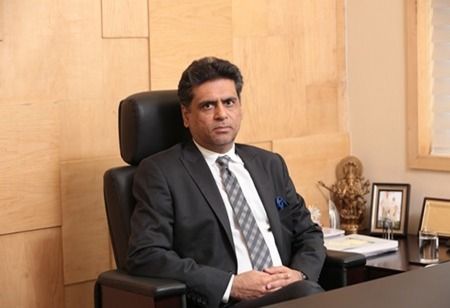 Economic independence increasingly depends on India's ability to develop and control the technologies it relies on. Indigenization is already influencing critical sectors such as defense, space, digital payments and healthcare, helping reduce dependence on imported systems while strengthening national security and economic resilience. Initiatives such as the India Semiconductor Mission and IndiaAI Mission reflect this broader push to build domestic technological capabilities, while investments in research and development can help India move beyond simply adopting global technologies to creating solutions of its own.
Neeraj Gulati, Managing Director, Assotech, said, “The journey of India's economic self-reliance will increasingly be dependent on the ability of Indian companies to develop indigenous capabilities, innovations and solutions to meet their evolving requirements. It is crucial for enterprises to come forward and innovate on the front of developing homegrown technology, strengthening local supply chains and reducing dependence on importing goods and skills. Economic independence in today's world does not mean isolation from the rest of the world. Instead, it means being capable and competent enough to engage in global business operations on their own terms.”
The benefits extend beyond reducing imports. Developing technology within India can strengthen MSMEs, create high-skilled engineering and manufacturing jobs, conserve foreign exchange and produce solutions better suited to the country's unique needs. When indigenous knowledge is combined with engineering and modern research, technology can be adapted to India's environmental, economic and social realities. The National Innovation Foundation, for example, supports grassroots innovations that use local knowledge and materials to address challenges such as sustainable agriculture and rainwater harvesting. The larger ambition, therefore, is not technological isolation but technological confidence: building the expertise, intellectual property and manufacturing capabilities that allow India to absorb global innovations, develop its own, and eventually compete in global markets on its own terms.
From “Made in India” to “Designed and Built in India”
 A product may carry a “Made in India” label while still relying heavily on imported technology, components or expertise. Strengthening domestic supply chains and enabling MSMEs to become reliable technology and manufacturing partners can help India capture greater value within the country while creating jobs and building deeper industrial capabilities.
Shalin Sheth, Founder & Managing Director, Advait Energy Transitions says, “India's next chapter of independence will find its truest measure not in how much we choose to manufacture within our own borders, but in how much capability we come to genuinely own. The act of assembling a product on Indian lands and the act of building self-reliance are two profoundly different undertakings, separated by everything that happens between them. That distance closes slowly, through engineers who teach themselves what no manual explains and vendors who grow alongside the very companies that once depended entirely on imports.”
Also Read: MAHE and Dhruva Space to Co-Develop ASCENT Center in Manipal
 Revathi Rao Gurram, Founder & Design Principal, Stories Design Studio adds, “The next step is to combine this knowledge with contemporary design, technology, quality standards, and stronger manufacturing capabilities”.
“Indian businesses will become more globally competitive when products created here can meet those expectations consistently, not simply because they are made in India, but because they stand on their own for design, quality, innovation, and reliability.”
The next step is to ensure that products developed in India can compete on more than their cost advantage. Indian businesses need to build products that meet global standards for quality, reliability, innovation and performance, allowing them to move from serving domestic demand to becoming exporters and global suppliers. In this sense, the goal of “Made in India” is evolving into something more ambitious: designed, engineered, manufactured and scaled in India for the world. That is where manufacturing becomes a deeper form of economic independence—not simply because India makes more, but because it increasingly owns the capabilities that make it possible.
Talent is India’s Biggest Capability
Factories, technology and infrastructure can strengthen India's economic capacity, but none of them can operate or evolve without people who know how to build, manage and improve them. As industries become more technology-driven, India needs a workforce equipped with engineering expertise, AI and digital skills, advanced manufacturing capabilities and specialized technical knowledge. This makes skill development and vocational education increasingly important, particularly as emerging sectors such as semiconductors, renewable energy, electronics, defense and deep tech create demand for new kinds of expertise. Stronger collaboration between industry, educational institutions and training providers can help ensure that what students learn keeps pace with what businesses actually need.
“For the real estate and infrastructure sector, this responsibility extends beyond developing physical spaces. It is about creating cities and communities that can support businesses, entrepreneurs and a growing workforce, while contributing to employment and local economic activity. India has the talent, consumer base and entrepreneurial energy to build globally competitive businesses. What we need is sustained investment, long-term thinking and greater collaboration between industry, government and institutions.” according to Umang Jindal.
Building talent is also about developing the people who can take Indian capabilities from the shop floor to the global market. Businesses need engineers, researchers, managers and leaders who can solve problems locally while meeting international standards of quality and innovation. Retaining and continuously developing this talent can strengthen India's knowledge base while helping companies build deeper expertise over time. Ultimately, economic independence cannot be measured only by the number of factories India operates or technologies it develops; it also depends on whether the country has the people capable of creating the next generation of products, businesses and ideas. The strongest form of self-reliance is therefore not simply having the tools to build, but having the talent to keep building better.
“Through investment in technology, research, talented people and scalable solutions, along with development of globally competitive products and services, Indian companies will not only help the country to be less dependent on imports, but also generate employment opportunities and encourage entrepreneurship in the country, thus making India an important part of global economic growth”, adds Neeraj Gulati.
Startups as Builders of Indigenous Capability
 India's startups are increasingly becoming an important part of the country's capability-building story, particularly in sectors where new technology can reshape entire industries. From deep tech, artificial intelligence and space to defense, climate technology, energy and advanced manufacturing, startups have the freedom to experiment with ideas that larger organizations may be slower to pursue. Their willingness to take technological and commercial risks can help turn local problems into homegrown solutions, while creating new intellectual property, specialized talent and engineering expertise within the country. For India, this means the startup ecosystem can contribute to economic independence not simply by creating new businesses, but by developing capabilities that may eventually become important to entire industries.
“Startups bring a particular energy here: the boldness of youth married to technical ambition, building indigenous capability from semiconductors to deep-tech AI”, says Sujata Deshmukh.
However, innovation alone does not create national capability; it has to be taken from the prototype stage to widespread adoption. This is where established enterprises can complement startups by providing capital, infrastructure, manufacturing networks, distribution and the operational expertise needed to scale promising technologies. The relationship can become a powerful cycle, with startups bringing speed and experimentation while established businesses provide scale and stability.
Also Read: India’s Goal of 5,000 GCCs by 2030 is achievable: Nirmala Sitharaman
Resource Independence: The Sustainability Connection
Economic independence is not only about producing more goods within India; it is also about securing the resources needed to sustain that production. A circular economy can play an important role by treating materials already in use as valuable resources rather than waste. Plastics, metals, electronic waste, batteries, tyres and industrial scrap can be recovered, processed and returned to the economy as secondary raw materials. This can reduce dependence on virgin materials and imported resources while creating opportunities for new businesses, recycling infrastructure, skilled employment and local manufacturing. As India expands sectors such as electronics, electric mobility and renewable energy, recovering critical materials from products at the end of their life can become increasingly important to long-term resource security.
 Radhika Kalia, Managing Director, RLG Systems India Private Limited says, “Economic independence should not mean turning inward; it should mean building the capabilities to compete globally from a position of strength. For India, self-reliance must extend beyond manufacturing and technology to resource security, resource recovery and resilient supply chains”.
“The Government’s evolving circular-economy framework reflects an important shift—from managing waste to recognizing it as a source of secondary raw materials. This is strategically significant for India, where plastics, metals, e-waste, batteries, tyres, vehicles and industrial scrap represent valuable resources already within our economy. Recovering and reintegrating these materials can reduce dependence on virgin and imported resources while creating new industries and employment”.
This makes sustainability closely connected to economic resilience. A stronger system for collecting, recovering and reusing materials can help India retain more value within its own economy while reducing exposure to disruptions in global commodity and raw-material markets. It also creates an opportunity to move beyond the traditional idea of self-reliance: instead of simply finding new sources of resources, India can make better use of the resources it already has. Building efficient circular supply chains can therefore become another pillar of economic independence, ensuring that India's growth is supported not only by what it produces, but also by how intelligently it manages, recovers and reintegrates the resources that power that production.
Leadership and Organizations: The Hidden Capability
As Indian companies grow, leadership becomes critical to building cultures that attract and retain talent, encourage innovation and make organizations capable of adapting to changing markets. This is particularly important for startups transitioning from founder-led ventures into larger enterprises, where systems, managerial expertise and institutional processes become as important as the original idea. Developing leaders who can build teams, manage complexity and create organizations that can thrive beyond a single founder or funding cycle will be essential to India's next phase of economic growth.
Organizational capability also determines how efficiently companies use the resources available to them. Better management of talent, capital, inventory, technology and supply chains can improve productivity and free up resources for further investment in innovation and expansion. When companies combine strong leadership with operational discipline and a culture of continuous improvement, they become more resilient and globally competitive. In that sense, organizational strength is itself a form of economic capability—one that allows India's technological and manufacturing gains to endure and grow.
Competing Globally is the Final Test
 The ultimate measure of India's economic independence will not be how little it depends on the rest of the world, but how confidently it can participate in it. Self-reliance should not mean building an economy that looks inward; it should mean developing the technological, manufacturing, human and organizational capabilities to engage with global markets from a position of strength. Indian companies must be able to build products here, employ and develop local talent, strengthen domestic supply chains and meet international standards of quality and reliability. When those capabilities come together, India can move beyond serving its own growing market and become a creator and exporter of globally competitive products, services and technologies.
Ira Gilani, Director, Goldratt Bharat says, “India’s journey towards economic independence is not limited to self-reliance; it is about building the capability to compete confidently with the best in the world. For Indian businesses, that means reducing dependence on imports by strengthening indigenous manufacturing and developing critical capabilities”.
“True economic independence will come when India has the technological capability, manufacturing strength, financial resilience, and managerial confidence to build at home and compete anywhere in the world”.
This is where the different dimensions of capability building converge. Indigenous technology can reduce vulnerabilities, manufacturing can deepen domestic value creation, skilled talent can drive innovation, startups can pioneer new solutions, established businesses can take them to scale, and circular systems can strengthen resource security. Together, these capabilities give Indian businesses greater freedom to choose partnerships, markets and technologies based on opportunity rather than dependence. True economic independence, therefore, is not about standing apart from the world; it is about having the strength to stand alongside it. For an India that gained its political freedom nearly eight decades ago, building that economic confidence could define the next chapter of its independence story.