

From Freedom in 1947 to Viksit Bharat 2047: India's Purpose-Powered Growth
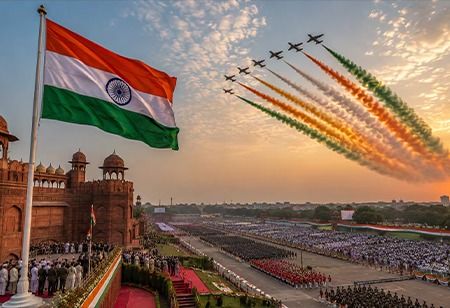
India’s journey from the freedom struggle to its vision of Viksit Bharat 2047 is shaping a new era of nation-building, driven by self-reliance, digital inclusion, sustainable growth, technological innovation, and women-led development. On the occasion of Independence Day 2026 we spotlight the increasing criticality of responsible citizenship, economic resilience, and inclusive progress. The article highlights Indian industry leaders’ perspectives on India’s development priorities and the role of the next generation in building a developed, resilient, and prosperous nation.
There was a time when India’s most powerful aspiration was freedom. From the uprising of 1857 and the formation of the Indian National Congress in 1885 to the Swadeshi movement and Mahatma Gandhi’s calls for non-cooperation and civil disobedience, the freedom struggle evolved into one of modern history’s most significant mass movements. Leaders such as Mahatma Gandhi, Jawaharlal Nehru, Sardar Vallabhbhai Patel, Subhas Chandra Bose, Bhagat Singh, Sarojini Naidu and Maulana Abul Kalam Azad, alongside countless lesser-known heroes, shaped the movement through diverse ideas, unwavering courage and immense sacrifice.
Their struggle was about more than ending colonial rule; it was about giving Indians the freedom to determine their own future. When independence was achieved on August 15, 1947, that responsibility passed to a new generation, beginning the challenging task of nation-building.
Over the decades, India strengthened its democratic institutions while transforming agriculture, industry, infrastructure and technology. The Green Revolution strengthened food security, the 1991 economic reforms accelerated global integration, and the IT boom established India as a major technology and services hub. On the occasion of Independence Day 2026, India looks toward Viksit Bharat 2047, with the journey continuing with renewed ambition to build a developed, self-reliant, inclusive, and sustainable nation driven by innovation and opportunity.
From Freedom to Nation-Building
The values of the freedom movement remain relevant to the challenges facing India today. The nature of the struggle has changed, but the underlying responsibility of citizens has not.
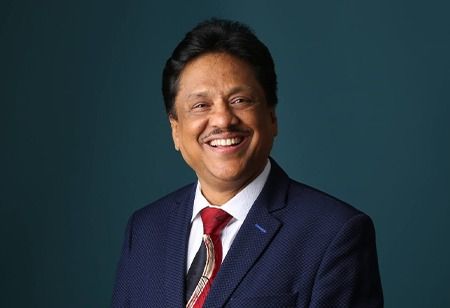 CA K Ravi, President, Bangalore Chamber of Industry & Commerce (BCIC), says, “The sacrifices of India’s freedom fighters provide the moral blueprint for modern citizenship. Today, the battle is not against a foreign power, but against poverty, inequality, and administrative inefficiencies.”
For Aditya Shivkumar, Justice Tech Entrepreneur and Founder, Resolve Disputes Online, the sacrifices of the freedom movement should serve as a standard for contemporary citizenship rather than remain confined to history.
He further says, “The sacrifices of the freedom struggle inspire purposeful nation-building only if we stop treating them as history and start treating them as a standard. My great grand-uncle, K.V.K. Sundaram, became Law Secretary and Chief Election Commissioner without campaigning for either; decades of rooted, unglamorous work, earned in silence. That is the value the freedom generation actually left us: ‘nishkama karma’, duty without needing credit.”
Reflecting an optimistic outlook on Inda’s future, Aditya Shivkumar says, “Responsible growth today means measuring ourselves against that standard, not against how connected or vocal we are online. I have real faith in the system we have now — decisive, delivery-focused governance that has already proven, through UPI, GST, and Digital India, that Bharat can build and execute at a civilizational scale. What that system cannot do on its own is instill values. That has to come from us — a generation willing to earn its place the way the freedom fighters earned theirs, through sacrifice, not sentiment.”
The transition from freedom to development therefore requires more than economic policy. It requires citizens, institutions and businesses to participate responsibly in building the country.
The Viksit Bharat Imperative
Viksit Bharat 2047 represents India's ambition to become a developed nation by the centenary of Independence. Yet development in the 21st century cannot be measured only through GDP, industrial output or infrastructure.
A developed India must also be one where opportunity is widely distributed, communities are resilient, citizens can participate securely in the digital economy, businesses can innovate, healthcare is accessible, education creates employable skills and natural resources are protected.
K Ravi emphasizes the importance of improving people's standard of living through stronger human capital, accessible healthcare, job creation and a more efficient justice system. Revamping primary education and vocational programs to align with industry requirements, ensuring primary healthcare access and strengthening labor-intensive manufacturing can help translate economic growth into wider employment opportunities. Faster judicial processes, meanwhile, can strengthen the overall business and institutional environment.
 Aditya Shivkumar takes a strong view that India's existing digital and governance infrastructure provides a foundation for this next stage of development.
He says, “The most critical priority for Bharat’s vision of a developed nation is not fixing the system, but strengthening what already works. UPI, GST, Direct Benefit Transfer and Digital India demonstrate the impact of decisive, delivery-focused governance. Viksit Bharat now needs a generation that strengthens these institutions through responsibility, rootedness and logic, rather than mistaking online dissent and volume for meaningful contribution.”
The broader challenge is therefore to ensure that India's economic and institutional progress translates into better outcomes for citizens across income groups and geographies.
Self-Reliance as National Strength
Self-reliance has been embedded in India's national imagination since the freedom movement. Swadeshi reflected the belief that economic capability was closely connected to national independence. Today, self-reliance has acquired a broader meaning.
A self-reliant India is not one that operates in isolation. It is one capable of developing and scaling critical capabilities while remaining an active participant in global markets.
Manufacturing, semiconductors, defence technologies, artificial intelligence, biotechnology, space technology, renewable energy and advanced digital infrastructure are increasingly becoming important components of national capability.
The startup ecosystem also has an important role to play. Young entrepreneurs are addressing challenges across financial inclusion, healthcare, agriculture, mobility, climate technology and deep tech. Supporting this ecosystem means creating not just companies but capabilities that can strengthen India's economic resilience.
K Ravi points to the importance of strengthening domestic supply chains while simultaneously pursuing environmental sustainability. Reducing excessive dependence on single-country imports for critical products such as active pharmaceutical ingredients and semiconductor chips can strengthen economic resilience. At the same time, climate-smart farming, micro-irrigation and crop diversification can help address pressure on groundwater resources.
For Aditya Shivkumar, self-reliance is closely linked to India's ability to build critical infrastructure domestically.
He says, “India strengthens self-reliance by building critical infrastructure through initiatives such as UPI and Aadhaar and extending that capability to energy, manufacturing and legal tech. Sustainability is equally rooted in India’s tradition of respecting nature. Self-reliance and green growth require the same discipline: building efficiently, strengthening domestic capabilities and using the systems already created to deliver progress at scale.”
The challenge for India will be to balance domestic capability with global integration, remaining open to investment, knowledge and partnerships while strengthening critical capabilities at home.
Also Read: PM Modi Led Manufacturing Initiatives: Make in India, PLI & More
Digital India, Inclusive India
Technology has become one of the defining forces of modern nation-building. Digital payments, online public services, digital identity, cloud infrastructure and artificial intelligence are changing how citizens interact with institutions and businesses.
But digital inclusion cannot stop at connectivity. As more economic and social activity moves online, cybersecurity, privacy and trust become fundamental to participation.
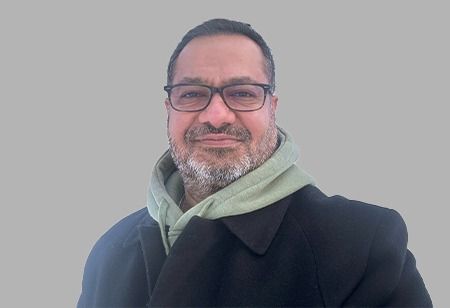 Srinivas Shekar, CEO & Co-Founder, Pantherun Technologies, says, “A truly Digital India cannot be built on connectivity and access alone; it must be built on trust. As more citizens, from metros to rural pockets, move their identities, finances, and services online, security has to be foundational, not an afterthought layered on later. Inclusive digital growth means ensuring that the same protections available to large enterprises extend to individuals, small businesses, and public infrastructure alike.”
“This is where deep-tech innovation in hardware security and encryption becomes critical to safeguarding the invisible digital backbone that enables inclusive participation. As the country continues its push toward a trillion-dollar digital economy, the industry's responsibility is clear: build systems that are secure and robust enough for every Indian, regardless of geography or scale, to participate in the digital economy with confidence,” adds Srinivas.
K Ravi views technology as a powerful equalizer capable of helping India overcome limitations in physical infrastructure and deliver services directly to citizens. Digital Public Infrastructure such as Aadhaar, UPI and ONDC can expand market access for small businesses, while AI can support applications ranging from disease diagnosis in rural clinics to translating educational content into regional languages.
Broadband expansion and digital financial literacy will also be critical to ensuring that technology does not widen existing socioeconomic divides.
Aditya Shivkumar believes inclusion must be built into technology from the outset. He says, “Technology, AI and digital infrastructure can bridge socioeconomic and regional gaps when designed for inclusion, as demonstrated by UPI, Aadhaar and Digital India. True inclusion means reaching citizens in their own languages and making services accessible by default. AI should ultimately be judged by one measure: whether it can reach and benefit the last citizen.”
As artificial intelligence becomes increasingly integrated into public services, businesses, education and everyday life, India's digital future will depend not merely on deploying more technology but on making it accessible, secure, responsible and useful.
Growth with a Green Purpose
Economic development and environmental sustainability are often treated as competing priorities. India's future, however, will increasingly depend on bringing them together.
Rapid urbanisation, expanding infrastructure, rising energy demand and changing consumption patterns make responsible resource management essential. The challenge is not to stop growth but to ensure that growth remains resilient over the long term.
K Ravi identifies energy transition, circular economy practices, local supply chains and climate-smart agriculture as important pillars of sustainable growth. Scaling solar and wind power alongside green hydrogen can support the energy transition, while stronger recycling and waste-management systems can accelerate the shift toward a circular economy.
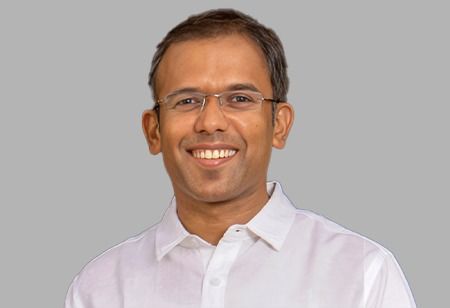 This shift also requires a broader approach to how India uses and manages its land. Srinath Setty, Co-founder & CEO, Hosachiguru, highlights the importance of responsible land stewardship, saying, “India’s built-up area has grown by over 30% since 2005–06, according to data from ISRO’s National Remote Sensing Centre, with agricultural land contributing significantly to this expansion. This makes the way we protect, restore, and manage our remaining agricultural ecosystems increasingly important to the country’s long-term resilience.”
“Managed farmlands, sustainable cultivation, and responsible land stewardship are steadily emerging as credible investment opportunities, offering capital growth while creating a positive environmental impact. The value of agricultural land today goes well beyond production alone. It is closely linked to food security, water conservation, biodiversity, soil health, and the ability of communities to withstand climate and resource pressures,” adds Srinath.
He further highlights, “With growing interest in investments that create long-term value, the farmland sector has an opportunity to bring these priorities together. Responsible use of land can support wealth creation while preserving the natural systems the country will continue to depend on, contributing to a more resilient and self-reliant India.”
Responsible land use becomes even more important as development increasingly moves into India's cities. Urban growth must accommodate expanding populations and economic activity while protecting the resources and ecosystems that sustain them.
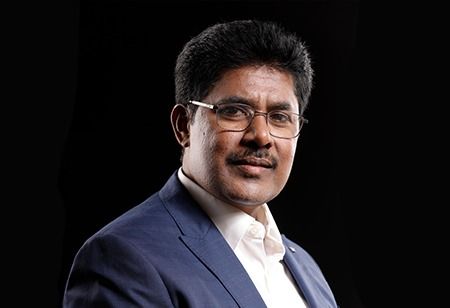 R. Nagaraj Reddy, Founder & Managing Director, Abhee Ventures, explains, “The conversation around sustainable real estate has moved well beyond green certifications. Today, it is about creating communities that use resources responsibly, preserve green spaces, manage water efficiently, and minimise their environmental footprint over the long term. The impact is tangible too. Research shows that green residential developments can reduce water consumption by 30–50%, demonstrating that sustainable design delivers measurable environmental benefits alongside better quality of life.”
“Developers have a greater responsibility to ensure that growth does not come at the expense of the environment. As India celebrates another year of independence, building homes that balance people's aspirations with ecological responsibility will define the next chapter of urban development,” adds R. Nagaraj Reddy.
For India, green growth is increasingly becoming an economic opportunity as much as an environmental necessity.
As the country pursues sustainable development, ensuring that women have an equal role in shaping the economy and society will be essential to building a resilient and inclusive future.
Also Read: Manufacturing: The Engine Driving India’s Industrial Leadership
Women: Driving India’s Next Growth Chapter
Women have been integral to India's journey from the freedom movement to its economic and social transformation. Today, their contribution to nation-building spans entrepreneurship, healthcare, education, technology, business leadership and community development. As India advances toward Viksit Bharat 2047, enabling women to participate, lead and make decisions will be critical to building a more inclusive, resilient and prosperous nation.
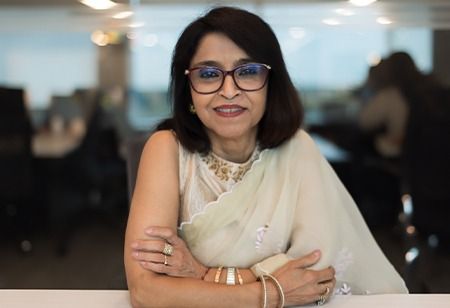 Achal Khanna, CEO – SHRM India, APAC & MENA, says, “On this Independence Day, I believe Indian women can contribute to nation-building in many meaningful ways. Through our work, knowledge, compassion, and leadership, we can create workplaces and communities where everyone feels respected, supported, and valued. My focus on employee wellbeing and a healthy workplace teaches me that a strong nation begins with healthy, happy, and motivated people. By encouraging mental wellness, equal opportunities, teamwork, and a culture of care, we help individuals give their best to the country. Every woman can contribute through her profession, family, ideas, and actions. When women grow, workplaces become stronger, families become happier, and society moves forward. Together, with confidence and responsibility, we can help build an inclusive, progressive, and truly independent India for everyone.”
 Women’s growing role in entrepreneurship is also contributing to economic growth while helping preserve India's cultural heritage. Bindu Sharma, Founder and Creative Director, Mavitrra, says, “As a woman entrepreneur in the jewellery industry, I believe women can contribute to nation-building by creating businesses, generating employment, preserving our cultural heritage, and inspiring the next generation. Entrepreneurship gives women the opportunity to turn ideas into sustainable businesses while contributing meaningfully to the economy. In the jewellery sector, women entrepreneurs can also play an important role in keeping traditional craftsmanship and Indian design heritage alive while taking it to modern, global audiences."
"Beyond business, women bring different perspectives, creativity, and resilience to the workplace and society. I believe that when women have access to education, financial independence, mentorship, and equal opportunities, they can become powerful drivers of economic and social progress. India’s growth will be stronger and more inclusive when women are not just participants but also creators, leaders, and decision-makers shaping the country’s future,” Bindu adds.
 The impact of women's participation is equally visible in healthcare, where women leaders are helping expand access while creating opportunities within local communities. Deepshikha Sharma, CEO of Sharp Sight Eye Hospitals, says, “Indian women have always been integral to the country’s progress, but today their contribution to nation-building extends far beyond traditional roles. From entrepreneurship and leadership to healthcare, education, technology and community development, women are shaping India’s future at every level. As a woman leader in healthcare, I believe empowering women with opportunities, skills and the confidence to lead creates a multiplier effect for society. At Sharp Sight, our expansion into Tier 2 and Tier 3 cities is not only about taking quality eye care beyond urban centres, but also creating meaningful local employment opportunities, particularly for women. When women have the opportunity to lead, earn, innovate and make decisions, we strengthen communities and build a more inclusive, resilient and progressive India.”
Empowering women is therefore not only a matter of social inclusion but also an important component of economic progress. Greater access to education, employment, entrepreneurship, financial independence and leadership opportunities can enable more women to contribute to India's growth.
Also Read: The Leadership Traits Manufacturing CEOs Need to Win in Industry 4.0
India’s Growth Journey: From 1947 to 2047
India’s journey from 1947 to 2047 reflects a remarkable transformation, from a newly independent nation with limited industrial capacity and infrastructure to an emerging global economy with significant technological, entrepreneurial and human capital. The next two decades will determine how effectively India converts these strengths into lasting prosperity.
Achieving this vision will require sustained economic growth, stronger manufacturing, world-class infrastructure, innovation, better education and healthcare, greater opportunities for women and meaningful participation across communities. Development must also remain resilient, inclusive and responsible, ensuring that economic progress does not come at the cost of natural resources, social inclusion or quality of life.
As India celebrates 80 years of Independence, the tricolour represents not only the freedom secured through immense sacrifice but also an unfinished promise. The responsibility of the present generation is to ensure that this hard-won freedom translates into opportunity, dignity, security and prosperity for generations to come.