

Vizag's Rise as India's Next Big Technology Hub: Beyond Steel & Shipping

Visakhapatnam, long known for its steel, ports, and heavy industries, is entering a new phase of growth. With rising investments in AI data centers, semiconductors, clean energy, connectivity, and IT, Vizag is emerging as India’s next big technology hub. The article highlights how these developments are shaping Vizag’s transformation into a diversified technology and innovation hub.
For decades, Andhra Pradesh’s Visakhapatnam, popularly known as Vizag, has been recognized as a major port and industrial center on India’s eastern coast. The city’s lucrative economy has so far been built around steel, shipping, manufacturing and heavy industries. According to reports, Vizag’s estimated economic value stands between $48.5 billion and $62.7 billion in 2026, making it Andhra Pradesh’s largest city economy and placing it among India’s top 10 richest cities.
However, a tech-led transformation is underway in Vizag. The city is emerging as India’s next big technology hub with tech, infrastructure and clean-energy companies increasingly identifying it as a strategic investment destination. Vizag’s location, engineering capabilities, logistics network and access to subsea connectivity provide a strong foundation for this transition.
Beyond data centers, investments in semiconductor packaging, renewable energy, green hydrogen, fiber networks and IT campuses could help Vizag develop into a broader technology hub for Andhra Pradesh and India alike.
AI & Data Centers: Building Vizag’s Computing Backbone
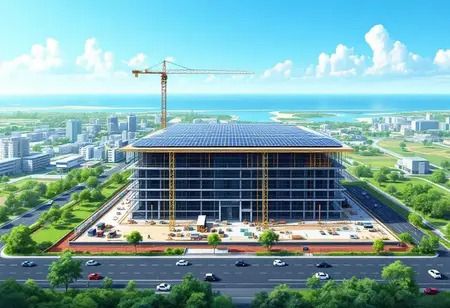 The most visible sign of Vishakhapatnam’s evolution into a technology hub is the emergence of large-scale AI and data-center infrastructure.
A major milestone came with the Andhra Pradesh State Investment Promotion Board approving a Rs. 87,520 crore foreign investment by Raiden Infotech India, a Google subsidiary, for a data-centre project in Visakhapatnam. The facility is planned across three campuses at Tarluvada, Adavivaram and Rambilli. The approval was part of Rs. 1,14,824 crore in investments cleared at the SIPB meeting chaired by Chief Minister N. Chandrababu Naidu, with projects expected to create 67,218 jobs.
Google’s broader AI hub plan involves approximately $15 billion between 2026 and 2030, including an AI-native data-center campus spanning around 400 acres. The development will be supported by subsea cables and clean-energy infrastructure. AdaniConneX and Airtel are key ecosystem partners, contributing data-center, connectivity, fibre and cable-landing infrastructure.
The significance extends beyond the investment itself. Large data centers require reliable power, high-capacity fiber, international connectivity, cooling systems, land and specialized engineering capabilities, creating opportunities across supporting industries. Colliers expects India’s data-center capacity to more than triple to around 4.5 GW by 2030, highlighting the scale of the opportunity.
For Vizag, the challenge will be ensuring that roads, housing, telecommunications, power transmission and logistics expand alongside digital infrastructure.
The city’s technology ambitions also extend to IT services. Tata Consultancy Services is developing an IT campus at Millennium Towers with an investment of around Rs. 1,370 crore and potential employment for 12,000 people, while Infosys has been allotted 20 acres for a planned 7,000-seat facility.
Semiconductors: Adding a Critical Link to Vizag’s Technology Ecosystem
The expansion of AI infrastructure is also increasing the importance of semiconductors, creating an opportunity for Vizag to participate in another strategically important part of the technology value chain.
Advanced System in Package (ASIP) Technologies has begun developing a semiconductor assembly, packaging and testing facility in Visakhapatnam, with a proposed investment of Rs. 2,500 crore. The facility is being developed in partnership with South Korean technology company APACT and is expected to have the capacity to package and test up to 96 million semiconductor devices annually.
The project addresses a critical gap in India’s semiconductor ecosystem. While the country has developed considerable capabilities in chip design and semiconductor engineering, domestic assembly, packaging and testing capabilities have historically been more limited.
The facility is expected to initially support wire-bond and flip-chip ball grid array packaging, with plans to introduce advanced 2.5D and 3D packaging technologies within two to three years.
This is particularly relevant to Vizag’s emerging AI economy. Advanced packaging is increasingly important for high-performance computing, AI systems, data centers and high-speed communications. As computing requirements rise, semiconductor packaging is becoming an important contributor to overall system performance.
Packaging and testing can account for an estimated 30% to 40% of semiconductor manufacturing costs. Developing domestic capabilities could therefore reduce reliance on overseas facilities while improving supply-chain resilience.
ASIP has indicated plans to invest an additional Rs. 2,000 crore to expand packaging operations. If implemented, the expansion could help Vizag develop a broader semiconductor ecosystem, creating opportunities for specialized suppliers, equipment providers, logistics companies and electronics manufacturers.
The development also aligns with India’s Semiconductor Mission, which focuses on strengthening domestic semiconductor manufacturing and supply chains. For Vizag, the strategic opportunity lies in connecting this capability with its growing data-centre, electronics and communications activity.
Also Read: Green Governance and the Leaders Driving Sustainable Growth
Renewable Energy: Powering Vizag’s Next Technology Economy
 Vizag’s technology transition is closely connected to Andhra Pradesh’s expanding renewable-energy sector.
Data centers and AI infrastructure are among the most power-intensive components of the digital economy. As computing capacity grows, access to reliable and increasingly clean electricity becomes an important factor in determining where such infrastructure is developed.
Andhra Pradesh has considerable solar and wind potential, supported by large renewable-energy projects, transmission infrastructure and industrial demand. Solar development across districts such as Anantapur, Kurnool and Kadapa, along with wind corridors, is strengthening the state’s renewable-energy base.
For Vizag, the wider energy ecosystem can support technology infrastructure through generation, transmission and storage capacity.
Google’s planned AI hub reflects this relationship. Its development is expected to involve new transmission lines, clean-energy generation and energy-storage systems to support data-centre operations.
The Pudimadaka region near Visakhapatnam is also becoming important to the state’s clean-energy ambitions. NTPC Green Energy is developing a green hydrogen hub there under the National Green Hydrogen Mission. The project is designed to produce green hydrogen and derivatives including green methanol, green urea and sustainable aviation fuel.
ReNew is another major investor expanding its presence in Andhra Pradesh. The company has announced plans to invest approximately Rs. 60,000 crore in multiple green-energy projects, taking its total planned fresh investment in the state to around Rs. 82,000 crore.
The planned investments include a 6 GW photovoltaic ingot-wafer plant, a 2 GW pumped-hydro project, a 300 KTPA green ammonia facility and 5 GW of hybrid renewable-energy projects involving wind-solar and solar-plus-battery storage.
Earlier, ReNew announced an approximately Rs. 22,000 crore investment in a hybrid renewable-energy project in Anantapur, expected to include around 1.8 GW of solar capacity, 1 GW of wind capacity and a 2 GWh battery-energy storage system.
Although several of these projects are outside Vizag, they contribute to the wider energy infrastructure needed to support the state’s industrial and digital growth.
Also Read: 5 FTAs Strengthening India’s Growth Prospects in 2026 & Beyond
Connectivity & Infrastructure: Turning Vizag into a Digital Gateway
If computing is the engine of the digital economy, connectivity is what keeps it running. Vizag’s position on India’s eastern coastline gives it an important advantage in international digital infrastructure.
The expansion of data-center capacity in Andhra Pradesh is expected to be accompanied by new subsea cable landing infrastructure. This could strengthen Vizag’s role in India’s international connectivity network and provide another gateway for data entering and leaving the country.
Google plans to bring new international subsea cables to the Visakhapatnam region as part of its AI infrastructure development. Airtel is partnering with Google to establish a Cable Landing Station that will host these cables and connect them to broader digital networks.
The development could position Vizag as an additional major international subsea gateway for India, alongside established hubs such as Mumbai and Chennai.
The I-2SEA submarine cable system adds another dimension. The system is designed to connect Southeast Asia, including Singapore and Malaysia, with India’s eastern coast, creating a new digital corridor between the regions.
The importance of this infrastructure goes beyond speed. Multiple landing locations and routes can improve network resilience by reducing dependence on a small number of concentrated gateways.
Google has also indicated that thousands of kilometres of new fiber will need to be installed, connected and operated as part of the broader infrastructure development. This could create opportunities for telecom operators, fibre manufacturers, network infrastructure companies and digital service providers.
Stronger domestic fiber networks would also connect Vizag more closely with other Indian technology centers, businesses and talent markets.
Also Read: Manufacturing: The Engine Driving India’s Industrial Leadership
Talent & Innovation: Building an Ecosystem around People
 For years, a major challenge for cities outside India’s established technology centres has been talent migration. Skilled graduates often move to Bengaluru, Hyderabad, Chennai, Pune and other technology markets in search of opportunities.
Vizag’s emerging technology economy could begin to reverse that pattern if investment translates into meaningful local employment, training and career opportunities.
The Andhra Pradesh government is supporting this objective through policies focused on IT, global capability centers and technology hubs. Initiatives such as the IT & GCC policy and LIFT, or Land Incentive for Tech Hubs, are intended to create a more supportive environment for technology companies.
Industry-academia collaboration and targeted skilling will be equally important. A sustainable technology hub needs universities and training institutions to continuously supply professionals with expertise in AI, software engineering, semiconductor operations, data management, cybersecurity, electronics and clean-energy technologies.
Infosys’ expansion provides an early indication of the potential.
The company has been allotted 20 acres in Visakhapatnam for a planned 7,000-seat facility. Its local workforce has grown from around 250 employees in early 2024 to nearly 1,900, while the company has also recruited more than 1,000 freshers and 500 lateral hires from the region.
These numbers suggest that companies are already beginning to tap into Vizag’s local talent base.
The planned Infosys facility, along with the TCS campus, could create a larger technology workforce and generate secondary demand for professional services, training providers, housing, transportation, hospitality and other urban services.
Over time, this can create a positive cycle: more technology jobs attract skilled professionals, a larger talent pool encourages additional companies to establish operations, and new businesses create opportunities for startups and specialized service providers.
Vizag does not necessarily need to replicate Bengaluru or Hyderabad. Its opportunity may instead lie in developing a specialized technology ecosystem around AI infrastructure, semiconductor packaging, clean energy, industrial technology, digital services and advanced connectivity.
Vizag’s Ultimate Shift from Industrial Strength to Digital Scale
Vizag’s technology ambitions are being built on foundations developed over decades. Its port, engineering capabilities and logistics network are now being complemented by data centres, semiconductor packaging, renewable energy, subsea cables and technology services.
These sectors can reinforce one another. AI infrastructure creates demand for computing and connectivity, while data centers drive requirements for reliable power. Semiconductor packaging strengthens the electronics value chain, while subsea cables connect the city to international markets.
However, the opportunity extends beyond individual investments. Successful execution will require operational facilities, reliable power, strong connectivity, skilled employment and supporting urban infrastructure, including housing, transport and education.
Proposed economic corridors could further connect Vizag with surrounding districts, while developments in Amaravati, Rayalaseema and other regions point to Andhra Pradesh’s broader strategy of creating specialized economic centers.
For Vizag, the AI opportunity is particularly significant. If the city successfully brings together computing, chips, clean energy, connectivity and talent, it could evolve from an industrial powerhouse into a major technology hub.
The Steel City may not leave its industrial heritage behind—it could use that foundation to build its digital future and emerge as India’s next big technology hub.