

From Builder to Leader: Navigating Crypto Uncertainty & Scale
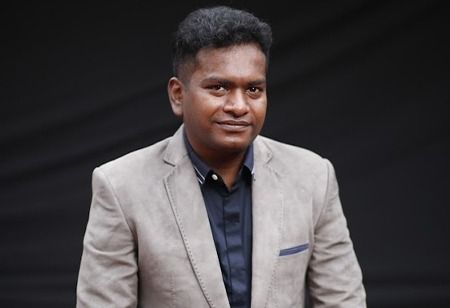
Dr. Sathvik is an entrepreneur specializing in disruptive technologies, blockchain innovation, and digital platforms, with expertise in technology development, strategic partnerships, and investor engagement, driving early adoption of emerging technologies and building scalable, future-focused solutions.
In an impactful interaction with CEO Insights Magazine, Sathvik shares his leadership philosophy shaped by uncertainty and scale, reflecting on evolving from hands-on builder to empowering leader, balancing conviction with adaptability, and navigating disruption through clarity, resilience, trust, and long-term thinking.
How would you define your personal leadership philosophy, and how has it evolved through uncertainty, scale, and constant disruption?
My leadership philosophy has always centered around clarity, resilience, and trust. In the early days, leadership for me was about speed, making decisions quickly, building fast, and solving problems hands-on. But as Unocoin grew, I realized that leadership is less about control and more about creating an environment where others can thrive.
Uncertainty, especially in crypto, is constant. Regulations change, markets fluctuate, narratives shift overnight. Over time, I’ve learned that a leader’s role is not to eliminate uncertainty but to help the team navigate it with confidence. Today, I focus more on long-term thinking, transparent communication, and building systems that can withstand volatility rather than reacting to every short-term disruption.
In your journey from builder to CEO, what inner shifts did you make to move from “doing everything” to “enabling others to lead”?
This was one of the hardest transitions. As a builder, you take pride in solving everything yourself: product, tech, operations. But that approach doesn’t scale.
The biggest shift for me was learning to let go without losing visibility. It required trust not just in others, but in the systems we build together. I moved from asking “How do I solve this?” to “Who can own this better than me?”
It also meant accepting that others might do things differently and sometimes better. That shift from ownership to empowerment is what truly unlocks scale in an organization.
Also Read: How 6G Evolution and Satellite IoT Will Reshape Connectivity Architect
You’ve worn both technical and business hats. How do you make tough decisions when logic, intuition, and stakeholder expectations collide?
In those moments, I rely on a layered approach.
First, I look at data and fundamentals, what does logic tell us? Then I step back and ask what my experience and intuition are signaling, especially in areas where data may be incomplete. Finally, I consider stakeholder impact, but I try not to let short-term expectations override long-term value.
Not every decision will satisfy everyone. But if the decision is aligned with the company’s core mission and long-term sustainability, that’s usually the right direction. Over time, I’ve learned that clarity of intent matters more than consensus.
Also Read: How Cloud, Control & Continuity are Shaping the Next IT Era
As a founder-leader, how do you balance conviction in your vision with the humility to pivot when reality challenges your assumptions?
Conviction gives you the strength to start. Humility ensures you survive.
I’ve always believed in the long-term potential of crypto and financial inclusion. That vision hasn’t changed. But how we execute that vision has evolved many times.
The key is to separate vision from strategy. Your vision should be stable, but your strategy should be flexible. When reality contradicts your assumptions, it’s not a failure; it’s feedback. Listening to that feedback without ego is what allows you to adapt without losing direction.
What’s one leadership belief you held early on that you’ve completely unlearned, and what triggered that transformation?
Early on, I believed that being a strong leader meant always having the answers.
Over time, I realized that the best leaders ask better questions instead. This shift happened as the company grew and the problems became more complex. There were situations where I didn’t have the context or expertise to decide alone.
That’s when I understood that leadership is less about authority and more about collective intelligence. Building a culture where people feel comfortable challenging ideas is far more powerful than trying to be the smartest person in the room.
Also Read: 5 Key Leadership Appointments across Indian Firms in March 2026
For aspiring leaders, what is one simple habit or mindset that has helped you stay grounded and consistent over the years?
Consistency comes from perspective.
In crypto, you experience extreme highs and lows sometimes within the same week. One simple habit that has helped me is stepping back regularly and focusing on first principles: Why did we start? What problem are we solving?
When you stay connected to that purpose, it becomes easier to stay grounded despite external noise. Markets will fluctuate, opinions will change, but purpose provides stability.