

How Smart Thinking Shapes Tomorrow's Technology Leaders
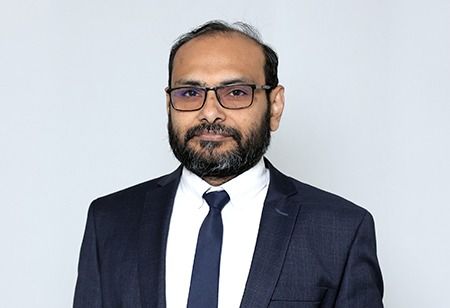 Technology leadership is evolving from technical expertise to strategic thinking, adaptability, accountability, and business-focused innovation.
Saurabh Sharma, Deputy General Manager (BIS), Petronet LNG Limited, believes that strong technology leaders must go beyond solving technical problems and understand business priorities, build trust, influence decisions, and prepare teams for a constantly changing digital landscape.
With over 22 years of experience in IT, cybersecurity, and digital transformation, Saurabh’s expertise spans cyber resilience, SAP transformation, infrastructure modernization, IT automation, and emerging technologies. As a CISM, CEH, ECSA, PRINCE2 professional, Chartered Engineer, Fellow of IE(I), and Senior Member of IEEE, he advocates combining technical excellence with strategic thinking.
In an engaging interaction with CEO Insights India Magazine, Saurabh shares his perspective on building a successful technology leadership journey through continuous learning, collaboration, cybersecurity awareness, and digital transformation.
Read the complete article for deeper insights into his leadership philosophy, technology journey, and vision for future-ready organizations.
Q1. What inspired you to begin your career in technology, and how did your early experiences shape your idea of effective leadership?
A. My interest in technology began during my childhood by watching my father, an Electrical Engineer, solve complex technical problems. People regularly approached him for guidance, and seeing the trust they placed in his expertise inspired me to follow a similar path. By the time I was in school, I had already decided to become an engineer. After completing Class 10, I enrolled in a Diploma in Electronics, which gave me a strong technical foundation.
My first job was with a company specializing in audio-visual equipment repair, where I witnessed visionary leadership firsthand. The company's leadership consistently embraced emerging technologies, becoming one of the early adopters of pagers and mobile communication services at a time when even incoming calls were expensive. These experiences taught me that effective leadership is built on technical competence, foresight, adaptability, and the confidence to embrace innovation ahead of others.
Also Read: Elevating Tech Leadership With Bold, Unconventional Thinking
Q2. Starting in IT infrastructure and technical support, what did those early years teach you about taking ownership and solving problems?
A. After working for a few years, I realized that the future belonged to information technology, so I pursued a Bachelor's degree in Information Technology to build my expertise in this rapidly evolving field.
After completing my degree, I joined IT infrastructure and technical support, where I was responsible for managing the entire IT environment at client locations. This role taught me that IT is the backbone of every business, and uninterrupted technology services are essential for smooth operations. I developed the habit of investigating the root cause of every issue rather than applying temporary fixes, ensuring that problems did not recur.
These experiences instilled in me a strong sense of ownership, accountability, and commitment to maintaining reliable, business-critical IT systems.
Q3. As you moved into systems, SAP, cybersecurity, and digital transformation, how did your leadership approach evolve with each new responsibility?
A. Joining Petronet LNG Limited marked a significant turning point in my career. As part of a small IT team, I was entrusted with managing IT infrastructure as well as SAP, one of the organization's most critical business applications. Ensuring high availability of SAP required not only technical expertise but also an understanding of business processes and functional modules. I regularly coordinated with SAP functional consultants and business users, acting as a bridge to translate business requirements into effective technical solutions.
Over time, I also took on responsibilities for cybersecurity and digital transformation initiatives. Each new role expanded my perspective, teaching me that effective leadership is about understanding business objectives, fostering collaboration across teams, anticipating future challenges, and driving sustainable improvements rather than simply resolving technical issues.
Also Read: Inspiring Success Through Technical Expertise & Strategic Leadership
Q4. As your responsibilities grew, what helped you move from being a technology expert to becoming a leader who could influence people and decisions?
A. As my responsibilities expanded, I realized that technical expertise alone was no longer enough to achieve organizational goals. Leading a growing team required me to guide people, build trust, and help them find the best solutions rather than solving every problem myself. To strengthen my managerial capabilities, I pursued an MBA in IT Management, which provided me with valuable insights into leadership, team management, strategic planning, and decision-making.
I also learned that influencing people comes from listening carefully, communicating clearly, and leading by example.
By combining technical knowledge with management skills, I gradually evolved from being a technology specialist into a leader who could align teams, influence decisions, and deliver meaningful business outcomes.
Q5. As your roles became more senior, how did you learn to lead teams, work with stakeholders, and influence decisions beyond your own area of expertise?
A. As I moved into senior leadership roles, I realized that success was not just about technical expertise but also about the ability to bring people together to a common objective. Leading cross functional teams required me to understand business priorities, listen to different perspectives and build consensus amongst stakeholders from different departments. Be it executing SAP projects, enhancing cybersecurity or leading digital transformation projects, my emphasis was on clear communication and collaboration to ensure everyone knew the merit of the proposed changes.
I also learned how to translate technical concepts into business terms to enable senior management to make informed decisions. These experiences helped me develop into a leader who could influence decisions, build trust, and drive organizational change outside of my own area of expertise.
Q6. With experience in cybersecurity, governance, and compliance, how do you build a culture where people understand the importance of responsibility and accountability?
A. Years of experience in cybersecurity, governance and compliance have taught me that technology alone cannot protect an organization. Despite having multiple layers of advanced security controls, a single wrong click by a user (such as clicking on a malicious link or sharing sensitive information) can expose the entire security framework. This only reinforced my belief that cybersecurity is not just the job of the IT department, but everyone’s job.
I build this culture with continuous awareness, regular training, phishing simulations and open conversation about emerging threats. When people understand how their actions have an impact and how they contribute to protecting the organization’s assets, they develop a greater sense of responsibility, accountability and ownership, and cybersecurity becomes part of the culture of the organization instead of a compliance requirement.
Q7. As technology continues to change, how do you encourage your teams to keep learning, adapting, and preparing for what lies ahead?
A. I strongly believe that learning should be a lifelong journey, especially in the field of information technology, where change is constant and rapid. My message to the team is simple: if we stop learning, we risk becoming obsolete. Continuous learning not only keeps us technically relevant but also prepares us to confidently tackle future challenges and seize new opportunities.
I encourage my team to stay curious, continuously upgrade their skills, and remain informed about emerging technologies, industry trends, and evolving cyber threats. I motivate them to participate in training programs, pursue professional certifications, attend knowledge-sharing sessions, and experiment with new tools and technologies. I also promote a culture where learning from mistakes and sharing experiences is valued.
Q8. Looking back at your journey, which difficult assignment or leadership experience taught you the most about making decisions and leading through uncertainty?
A. One of the most challenging leadership assignments in my career was implementing a Data Loss Prevention (DLP) solution across the organization. We anticipated significant resistance from business users, as many believed that the initiative was intended to monitor their daily activities rather than protect sensitive organizational data. Leading this project required careful decision-making, transparent communication, and effective change management.
Instead of enforcing the solution abruptly, I focused on engaging stakeholders, addressing their concerns, explaining the business need, and demonstrating how DLP safeguards both organizational and employee interests. This experience taught me that successful l
eadership during uncertainty depends on building trust, communicating openly, and balancing security requirements with business needs. It reinforced that lasting change is achieved through collaboration and understanding rather than authority alone.
LAST WORD: What advice would you give young technology professionals who want to move beyond technical expertise and grow into trusted, influential leaders?
My advice to young technology professionals is to first build a strong foundation in their technical domain, as credibility begins with competence. However, do not limit yourself to technical expertise alone. As your career progresses, invest time in developing managerial, communication, and decision-making skills. Learn how businesses operate, understand organizational goals, and start looking at challenges from a broader perspective rather than only through a technical lens.
I encourage professionals to think like a CEO/CIO in their day-to-day work by considering business impact, customer value, cost, and long-term sustainability. Combining technical excellence with strategic thinking, collaboration, and empathy will help you earn trust, influence decisions, and grow into an effective and respected leader.