

How Manufacturing Leaders Can Build Future-Ready Industrial Excellence
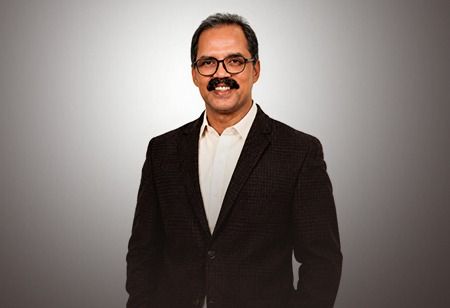 Manufacturing is changing rapidly, with technology, continuous improvement, and skilled leadership playing a bigger role in building efficient and future-ready businesses. With over three decades of experience in the wire and cable industry, Mritunjay Kumar, Head of Manufacturing/AVP, RR Kabel, has witnessed this transformation closely and developed a leadership approach rooted in learning, adaptability, and people development.
Mritunjay has extensive experience across production management, Lean Management, Kaizen, process improvement, cost reduction, product development, and plant operations. He believes manufacturing leaders must look beyond daily operations, embrace new technologies, improve efficiency, and develop strong teams.
In an engaging interaction with CEO Insights Magazine, Mritunjay shared his perspectives on evolving manufacturing leadership, continuous learning, technological change, operational excellence, and building resilient manufacturing systems for long-term business growth.
Read the complete article for deeper insights.
Q1. After more than three decades in manufacturing, how has your definition of leadership evolved from managing production excellence to shaping long-term industrial competitiveness?
A. I have worked in the core manufacturing areas during the tenure of 32 years. The journey has been very exciting full of learning, challenges and varied experiences. For any technical graduate who starts his career in manufacturing sector, the first 12 to 15 years are more of learning technical skills and gaining technical competence.
After around 15 years the focus should shift to more on learning leadership qualities, mentoring the young engineers and developing competent teams. This is how the good leaders emerge and contribute significantly to the organization.
Q2. As manufacturing evolved through automation, digitization, and changing customer expectations, what leadership principles consistently helped you stay relevant while continuously learning and adapting?
A. As a leader we always have to be in touch with the ongoing developments in the industry and the changing customers' requirements. Also, we need to ensure that the products are continuously upgraded so as meet the environmental and safety regulations globally.
The leader should be able to foresee the future changes in the industry and align the product designs. To have the competitive edge, another important aspect is the plant efficency. As a leader we are always finding ways to continuously improve the plant efficiency and OEE by implemention of GMP’s and digital transformation through IOT (industry 4.0), AI tools and process automations.
Also Read: A CIO's Journey: AI, Digital Transformation & the Future of Technology Leadership
Q3. How did moving beyond operational expertise into enterprise-level thinking redefine your approach to driving manufacturing excellence across increasingly complex business environments?
A. Moving into leadership shifted my focus from optimizing plant operations to creating value across the entire enterprise. While operational excellence remains essential, I now evaluate decisions based on their impact on customers, financial performance, supply chain resilience, sustainability, and long-term business growth.
I believe manufacturing excellence comes from cross-functional collaboration, data-driven decision-making, digital transformation, and continuous capability building. Equally important is developing empowered teams that drive innovation and ownership. Today, I view my role as aligning manufacturing strategy with business objectives, ensuring every operational improvement strengthens competitiveness, enhances customer value, and supports sustainable organizational success.
Q4. Over three decades, which operational assumptions did you deliberately challenge to build more resilient, efficient, and future-ready manufacturing systems before industry trends demanded change?
A. Over the years, I learned that manufacturing cannot rely on old ways of working. I have always encouraged my teams to question existing practices and look for better, simpler, and more reliable solutions. We moved from reactive problem-solving to preventive actions, increased automation where it added value, used data for better decisions, and improved collaboration across functions. I also believed that developing people is as important as improving processes. Instead of focusing only on cost and productivity, I emphasized quality, flexibility, safety, and customer satisfaction. This approach has helped build manufacturing systems that are stronger, more efficient, and ready for future challenges.
Q5. Manufacturing leaders often balance efficiency with transformation. How did you learn to make long-term strategic decisions when immediate operational priorities competed for attention?
A. My career has taught me that good leaders must balance today's priorities with future goals. Daily production issues are important, but we cannot ignore improvements that will benefit the business in the long run. I always try to solve immediate problems while continuing to invest in better processes, automation, people, and technology. I make decisions based on business needs, not just short-term results. This approach has helped improve efficiency, quality, and customer satisfaction while preparing the organization for future challenges and sustainable growth.
Also Read: 10 Indian Solar Manufacturing Leaders Shaping India’s Renewable Energy
Q6. Having witnessed multiple industrial transitions, how did continuous learning influence the way you evaluated emerging technologies without losing focus on manufacturing fundamentals?
A. Throughout my career, I have witnessed many changes, like product going out of demand due to change in technology and people going out of business due to not adapting to the changes in the manufacturing ecosystem. Although manufacturing fundamentals remain the same, but changes happen periodically to make the processes better, cheaper and faster.
It is the leader's responsibility to ensure that the people working in the organization must keep along with the changes and hence learning process should be continuous. This is very important for gaining the competitive advantage.
Q7. As your responsibilities expanded, how did your perspective shift from improving factory performance to creating manufacturing ecosystems capable of sustaining long-term business growth?
A. As my role grew, I understood that my job was not just to improve factory performance but to help the business grow. I started focusing on building strong processes, developing people, improving teamwork, and using technology to make operations more efficient. I also looked beyond daily production and considered customer needs, quality, cost, and future challenges.
I believe long-term success comes from creating a manufacturing system that is reliable, flexible, and continuously improving, so the business can grow with confidence.
Q8. With decades of cross-functional manufacturing exposure, what leadership decisions ultimately created greater value than the technical expertise that first accelerated your career?
A. Technical knowledge helped me build a strong foundation early in my career, but leadership decisions created the greatest value as my responsibilities grew. I learned that building capable teams, empowering people, encouraging co-ordination across functions, periodic reviews, and making decisions based on business priorities have a much bigger impact than solving technical problems alone. I also focused on continuous improvement and inculcating sense of ownership among the team members in order to groom them as future leaders. These leadership decisions have helped improve performance and strengthen the organization as a whole.
LAST WORD: For young manufacturing professionals aspiring to lead global industrial operations, which long-term leadership disciplines should they cultivate today to remain relevant over the next three decades?
My advice to young professionals is to be a life long learner. Build a strong technical competency, but also develop leadership, communication, and problem-solving skills. Learn to work across different functions, understand the business, and be open to new technologies like AI, automation, and digital manufacturing. Technology will continue to change, but leaders who can adapt, inspire teams, and make sound business decisions will always remain relevant and create lasting value.