

A CIO's Journey: AI, Digital Transformation & the Future of Technology Leadership
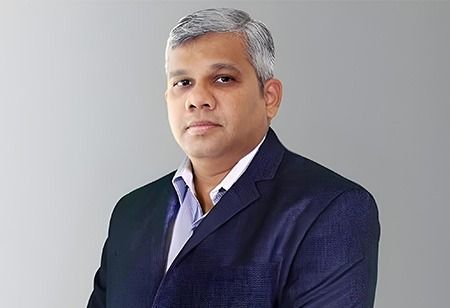 Technology leadership is no longer about simply implementing systems, instead, it has become about understanding business challenges, enabling smarter decisions, and creating measurable impact. For Ashok Nayak, CIO, Ipac, tech leadership has always been about understanding core business needs across diverse industries.
Starting his journey at a time when technology was still viewed largely as a domain for engineers, Ashok’s curiosity about computers led him to explore automation and programming before technology became central to modern business strategy. His transition from finance into IT shaped a leadership philosophy rooted in one belief: technology creates value only when it solves real business problems.
Over nearly three decades in the pharmaceutical sector, Ashok has witnessed and contributed to multiple waves of technology evolution — from process automation and ERP transformation to digitalisation, data platforms, analytics, and AI-driven innovation. His approach combines technology expertise with business understanding, regulatory awareness, and a focus on building solutions that deliver sustainable organisational value.
In an exclusive interaction with CEO Insights India Magazine, Ashok, a seasoned pharmaceutical technology leader, shares his perspectives on digital transformation, enterprise decision-making, organisational change, AI adoption, and the principles that have shaped his leadership journey. He also discusses the importance of business curiosity, communication, empathy, judgment, and continuous learning for emerging technology leaders.
Read the full interview below for deeper insights into his journey, leadership philosophy, and vision for technology-led transformation.
Q1. You began in pharmaceutical finance and operations before moving into IT, how did that early business exposure shape your philosophy of technology leadership?
A. I entered technology through curiosity, not qualifications. In the late 1980s, IT was largely seen as a field reserved for engineering graduates. I was working as a finance trainee, primarily involved in financial audits, when I first became curious about the EDP room. At that time, computers were large machines, data was entered manually, and records were physically verified. I had no technical background, but I was fascinated by what these machines could do and kept asking how they worked.
Initially, I was not even allowed into the EDP room because access was restricted. Seeing my curiosity, however, the team eventually gave me an opportunity to do some data entry and understand the process. I was told quite clearly that even if I learned programming, the industry would still consider IT roles primarily for engineers. That did not stop me. I joined Silverline Academy and learned COBOL and FoxPro simply because I wanted to understand technology.
When I joined my current organisation in 1991 in finance, I found that several processes were still largely manual, despite having separate systems for areas such as finance, materials and payroll. With permission from the EDP team, I began using my programming knowledge to automate some of these processes. The improvement in accuracy and turnaround time eventually gave me an opportunity to move into EDP.
That experience shaped my philosophy permanently: technology is the enabler, but understanding the business determines where technology can create real value.
Q2. As you moved deeper into IT, how did you learn to lead technology decisions from a business perspective rather than simply a technical one?
A. My evolution as a technology leader coincided with the organisation’s digital evolution. Coming from finance and then moving into EDP and IT, I quickly realised that technology had to solve a business problem. My perspective therefore developed through experience rather than a formal leadership framework.
Over the years, I had the opportunity to participate in and lead different stages of the organisation’s technology journey. We moved from basic digitisation and process automation to digitalisation, then towards enterprise-wide digital transformation, and today we are exploring how data and AI can take us towards autonomous digital transformation. Each stage required a different way of thinking.
Developing an end-to-end ERP was very different from automating a particular process. Aligning systems with regulatory requirements required yet another mindset. Automating Quality Control and Quality Assurance, building a data lake and analytics capabilities, modernising infrastructure, and strengthening cybersecurity each brought its own business challenges. These experiences gradually changed the question I asked. Instead of starting with, “What technology should we implement?”, I began with, “What does the business need to achieve, what problem are we trying to solve, and what is the right technology to get us there?”
That distinction has been important throughout my career. Technology itself is not the achievement. The achievement is what the organisation is able to do better because of it—whether that means improving productivity, strengthening compliance, making faster decisions, reducing risk, or creating better visibility.
Q3. Over two decades in a regulated pharmaceutical environment, how has navigating business complexity influenced the way you make high-stakes leadership decisions?
A. Pharmaceuticals has taught me that important decisions are rarely one-dimensional. A technology decision that appears straightforward can have implications for quality, regulatory compliance, data integrity, cybersecurity, people, cost, supply continuity and business risk. After nearly three decades in the industry, I have learned to assess these interdependencies before making an important decision.
I encourage my teams to look at what other organisations and industry peers are doing. There is tremendous value in learning from experience, understanding what has worked elsewhere and studying established practices. However, I do not believe a solution becomes right for us simply because it has worked for someone else. Every organisation has its own processes, culture, regulatory environment, technology landscape, people capabilities and business priorities.
That is why I strongly believe in value mapping before making a technology choice. We need to understand what the solution will deliver for our particular environment, what changes it will require, what risks it introduces, what it will cost and whether the expected benefits justify the investment.
Over time, this has shaped my approach to high-stakes decisions: benchmark intelligently, but decide contextually. I prefer to take a calculated risk based on facts and business understanding rather than simply follow a trend or adopt something because it is considered an industry standard.
Good leadership is not about avoiding risk altogether. It is about understanding the risk, balancing it against the opportunity and making a decision that is right for the organisation.
Q4. Your journey spans operations, consulting, IT strategy, and enterprise leadership; how did each transition expand your understanding of what effective leadership requires?
A. Every stage of my career has added a new dimension to my understanding of leadership. My early experience in finance taught me discipline, accountability, and, importantly, the need to understand a process from the ground up. When I moved into EDP and IT, I began to see how technology could transform those processes. It also taught me that a good technology solution starts with understanding the people who use it.
My consulting experience gave me a different perspective on problem-solving. Although my entire career has been with the same organisation, consulting assignments exposed me to structured approaches, diverse frameworks, and the discipline of looking at a problem objectively rather than simply accepting the way things had always been done. It taught me the value of asking fundamental questions: Why are we doing this? Is there a better way? What can we learn from outside our immediate environment?
As I moved into IT strategy and enterprise leadership, the scale and complexity of decisions changed. Developing an end-to-end ERP and transforming Quality and other regulated processes taught me that technology, processes, people, and governance must move together.
Over time, my focus shifted from managing technology and projects to building organisational capability. I learned that leadership is not about having all the answers. It is about asking the right questions, listening, bringing people together, creating clarity, and taking responsibility for the outcome.
Q5. Leading technology across R&D, quality, manufacturing, supply chain, finance, and regulatory functions requires competing priorities; how do you establish alignment without compromising business ownership?
A. I try to maintain a clear distinction between business ownership and technology responsibility. The business should own its processes, priorities and outcomes. IT's responsibility is to understand those requirements and provide the technology, data and platforms that help the business achieve them. I do not believe IT should take ownership away from the business simply because technology is involved.
At the same time, working across functions has taught me that solving every department's requirement independently can create more problems than it solves. While developing or onboarding solutions, I therefore try to look beyond the immediate functional requirement. Can we build a common platform? Can we remove duplication? Can we avoid creating another silo? Can the same data be used across functions? Can we establish a single source of reliable information?
This enterprise view has been particularly useful across functions such as R&D, Quality, Manufacturing, Supply Chain, Finance, and Regulatory, where processes may differ, but information and decisions are often connected.
When priorities compete, I bring the discussion back to the common business objective rather than allowing it to become a debate between departments. This approach has helped us reduce redundancy, connect information and create a stronger foundation for analytics. More recently, it has also helped us move faster in developing and deploying AI models because the underlying data and platforms are already better connected.
For me, alignment means allowing every function to retain ownership while making the organisation work more like one enterprise.
Q6. As digital transformation became an enterprise agenda, how did you lead organisational change while ensuring technology remained connected to measurable business outcomes?
A. Change is constant, but leading it is never easy, particularly in a regulated pharmaceutical environment. People naturally become comfortable with processes that have worked for years, and in pharmaceuticals there is an additional question: if a process is well validated and proven, why change it? Any change can also raise concerns about validation, data integrity, and how regulators may view the new process. These concerns can't be overcome simply by announcing a new technology.
I have found that the CIO must take ownership of the change and build confidence gradually. Rather than attempting to transform everything at once, I believe in identifying the right opportunities, demonstrating small wins, involving the business and Quality teams early, and using evidence to show that the new approach is better, safer or more efficient. Once people see the benefit and trust the process, willingness to change increases.
This is also where the CIO faces a unique challenge. The organisation may be willing to invest significantly in R&D even when the outcome of a new product is uncertain, but technology investments are often expected to deliver almost certain returns. Digital transformation therefore needs patience, a clear business case and visible milestones. My approach has been to connect every initiative to a measurable outcome while recognising that meaningful transformation takes time. The objective is not change for its own sake, but change the organisation can trust and sustain.
Q7. Your repeated recognition through CIO leadership platforms reflects sustained impact; what leadership principles have remained constant while your responsibilities and the technology landscape have evolved?
A. Technology has changed enormously during my career. As I often say, change is constant, but in technology the pace is even faster—sometimes technology changes before you have fully understood the previous change. Yet the principles that have guided me have remained simple. Consistency, persistence and continuous learning have been important throughout, but above all, I believe in having passion for what I do. Passion gives you the energy to keep learning, the resilience to keep going when things do not go as planned, and the desire to keep looking for a better way.
Curiosity has also remained a constant. The questions I asked about computers when
I first entered the EDP room are not very different from the questions I ask about AI and emerging technologies today. The subject has changed, but the curiosity has not.
I have also learned that leadership is not about always being the smartest person in the room. It is about listening, respecting different views, trusting people and creating an environment where others can contribute and grow. In a fast-changing technology environment, you also have to be comfortable saying, “I don't know yet,” and be willing to learn.
The recognition I have received through CIO platforms is encouraging, but I see it primarily as recognition of the team's collective effort. For me, the real measure of leadership is whether you keep learning, stay grounded, develop people and continue finding ways to create value.
Curiosity started the journey. Passion sustained it. Continuous learning evolved it. Business value defined it.
Q8. After nearly 27 years in pharmaceuticals, what distinctions have you developed between managing technology operations and actually leading an organisation through technology-led change?
A. Managing technology operations and leading technology-led change require different mindsets, but both are essential. I treat them as two parallel responsibilities: first, run the enterprise reliably through strong SOPs, cybersecurity, compliance, service management, and continuous performance monitoring; second, create dedicated focus for transformation through business-led priorities, process redesign, digital platforms, data, and AI. The discipline is to prevent operational firefighting from consuming the organisation’s capacity to change, while never compromising the stability on which transformation depends. I also believe transformation must be progressive. The Wright brothers did not begin by attempting to build the Airbus A380; they first proved sustained flight was possible. Similarly, organisations must build capability step by step. For me, leadership means running today with discipline while deliberately building tomorrow’s capabilities.
They need different mindsets, and both are essential. I treat them as two parallel responsibilities rather than choosing between them.
The first is running the enterprise reliably. It is unglamorous work, and nobody sends a congratulatory note when systems simply stay up. But it is the foundation. No one will trust you with a transformation agenda if the basics are shaky.
The second is creating dedicated space for change — business-led priorities, process redesign, digital platforms, data and AI. I say dedicated because operational firefighting will consume every hour you give it. If the same people are asked to do both, urgent work always wins over important work, and after a year you will find nothing has moved. So you have to deliberately protect the capacity for change. At the same time, I will not sacrifice stability to chase transformation, because transformation depends on that stability.
I also believe change has to be progressive. The Wright brothers did not start out trying to build an Airbus A380. They first proved that sustained flight was possible, and everything else followed. Organisations work the same way. You build capability step by step, and each step earns you the credibility and the foundation for the next one. Attempting the final vision on day one usually ends with an expensive system nobody uses.
LAST WORD: For young leaders building careers at the intersection of business and technology, what leadership disciplines would you recommend developing early to eventually influence enterprise-level decisions?
I would tell them to build business curiosity alongside their technical skills. Learn how your organisation actually makes money, where it carries risk, and how decisions are really made. Technology capability is increasingly available to everyone. The difference comes from how intelligently you apply it to a particular situation.
I also do not believe in creating copies of myself. Education gives you methods. Experience teaches you which method suits which situation, and that is very different. Every organisation, every environment, and every problem has its own character. So I would rather help someone develop judgement than hand them my answers. Judgement matters as much as technical ability, and it comes only from being allowed to make decisions and live with them.
Communication is next, and it is badly underrated. If you cannot explain a technical recommendation to a finance head or a quality head in the language they use, your recommendation will not travel. Listening matters even more than speaking. Most of what I have learnt about our business came from listening to people who had no interest in technology at all.
Empathy belongs on the list too. Change is uncomfortable for people, and understanding that is part of the job, not a soft extra. So is the ability to influence without authority. For most of your early career, you will need people who do not report to you to cooperate, and you earn that through credibility and relationships.
And stay curious. Keep learning, deliberately, throughout your career. The strongest technology leaders I have seen are the ones who understand the context, choose wisely, and turn technology into outcomes the business can feel.