

Technology, Quality & Trust: Satish Agrawal's 38-Year Pharma Journey
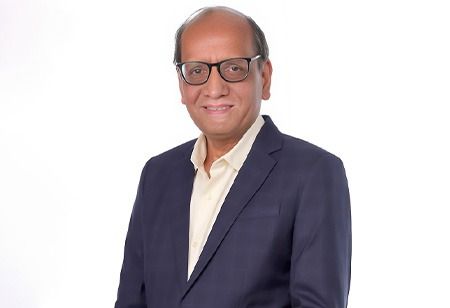 The pharmaceutical industry has changed dramatically over the past four decades, moving from manual processes and paper-based systems to highly automated, digital, and data-driven operations. Few careers reflect this transformation as closely as that of pharmaceutical leader, Satish Agrawal, President, Ajanta Pharma, who has spent more than 38 years navigating these shifts.
Beginning with hands-on manufacturing responsibilities, his journey gradually expanded into plant management, technology, operations, procurement, projects, production planning, and digital transformation. Along the way, Satish’s focus remained consistent: strengthening quality, improving productivity, ensuring regulatory readiness, and preparing manufacturing systems for the future.
From championing paperless manufacturing and Industry 4.0 initiatives to driving technology transfers, capacity expansion, operational excellence, and sustainability, Satish’s experience has reinforced one belief—technology creates value only when it serves quality, people, and business priorities together.
In an engaging interaction with CEO Insights India Magazine, Satish Agrawal reflects on the experiences that shaped his leadership philosophy as a pharma leader. He talks about the decisions that transformed pharmaceutical operations, and the principles that have remained constant through decades of change.
To explore the leadership lessons behind his Satish Agrawal remarkable journey in pharmaceutical manufacturing, read the following interview.
Q1. Over 38 years in pharmaceuticals, how has every technological shift reshaped your definition of leadership while balancing scientific rigor, regulatory expectations, and business growth?
A. Thirty-eight years ago, leadership in this industry meant being the most technically capable person in the room. Today it means something quieter: building the judgment and trust that let a team make the right call when I am not there. Every technology shift, from manual machines to high-speed integrated lines, from paper records to a fully paperless, SAP-driven environment, forced me to redefine what leading actually meant. Early on, it was about mastering the process myself. Later, as automation and AI increasingly support technical decision-making, leadership became about designing systems people can trust, and knowing when to step back. What has not changed is the sequence: technology must serve the patient first, and growth and compliance follow from that.
Also Read: Transforming Pharmaceutical Operations With Strategic Leadership
Q2. From laboratory practices to enterprise operations, how did expanding responsibilities change your approach to making decisions with long-term organizational consequences?
A. My career began as a production supervisor, moved to plant manager, and then into a corporate role as technical head, before taking on procurement, projects, production planning and information technology. Each step changed what a “good decision” meant: as plant manager, a good call fixed a line or a batch; at enterprise level, it had to create value and remain relevant for years.
Championing our shift to a fully digital, paperless manufacturing environment was one such decision, reshaping efficiency, productivity and regulatory compliance across every plant, with few Indian companies matching this level of integration. Regular capacity expansion and timely technology decisions have kept our supply chain growing with excellent OTIF, including four greenfield projects in recent years built on state-of-the-art technology that added capacity without disrupting supply.
Q3. Having worked through evolving FDA regulations and GLP standards, how did regulatory excellence become a leadership discipline rather than simply a compliance requirement?
A. Working toward US FDA approval reshaped how the organization thought about regulation. We stopped treating compliance as a burden and began treating it as the natural by-product of an authentic quality mindset; when quality becomes culture, compliance follows naturally.
Complete digitalization has significantly strengthened data integrity, since data is captured, time-stamped and traceable at source.
Today, Ajanta operates two US FDA-approved plants and has been through many successful US FDA and other regulatory inspections without major observations, demonstrating the strength of this approach. It rests on strong infrastructure, a digital framework and a well-established quality management system, reinforced by regular training and structured quality and operations management reviews that keep the organization aligned and accountable.
Q4. Technology transfer demands precision beyond technical expertise. How did leading successful transitions influence your philosophy of creating scalable manufacturing excellence across functions?
A. Every technology transfer I have led, most recently across our four greenfield projects, has moved products between plants end-to-end, through planning, validation, regulatory submission, inspection, approval and commercial scale-up, as a repeatable process rather than a one-off event. This taught me that scalable manufacturing excellence is built on teamwork: every cross-functional team, from R&D and quality to regulatory and engineering, works on the same platform, aligned to a common objective, so nothing depends on heroics from any one function.
Timely, proactive capacity expansion combined with smooth transitions has made our supply chain more resilient and helped build a strong, consistent sales record. My philosophy is simple: precision in technology transfer is an organizational discipline, and when embedded into routine execution, it becomes a genuine source of competitive advantage.
Also Read: Strengthening Industrial Manufacturing Through Operational Leadership
Q5. As pharmaceutical operations became increasingly technology-driven, how did you determine which innovations deserved investment and which required disciplined restraint?
A. At Ajanta, we have invested substantially in automating every production line, in Industry 4.0 tools spanning digital analytics and operational excellence, and in renewable energy, which now supplies 39 percent of our energy, targeting 70 percent by December 2026 and cutting roughly 36,000 MT of carbon footprint.
Brownfield upgrades have made our older plants regulatory compliant too, giving us flexibility to manufacture across multiple sites, while a focused operational excellence program, supported by external consultants, has effectively doubled production in existing facilities. Restraint matters equally: we recently deferred continuous manufacturing technology since it is not yet mature enough for our scale.
Every investment decision is tested against four criteria: ROI, quality enhancement, efficiency improvement and service improvement; we proceed when the overall business case demonstrates alignment across these dimensions.
Q6. Moving from technical specialization to leading technology and operations, how did you learn to connect scientific decisions with sustainable business outcomes over decades?
A. A technical or scientific choice must move hand in hand with cost, timeline and market demand, never in isolation. This became my guiding principle as responsibilities grew from technical specialization to leading technology and operations: no decision, however sound scientifically, could stand alone without a clear business rationale. Our digitalization decision reflected this: we first understood the technology, assessed our capability to absorb it, ran a cost-benefit analysis, and only then took the leap. Connecting science with business came from staying engaged outside the plant, through forums like IPA and IDMA, workshops networking with industry experts, and exhibitions revealing where markets were heading. That habit of continuous learning continues today, as I study AI basics to apply it meaningfully and translate innovation into sustainable business value.
Q7. After witnessing multiple industry transformations, how did you ensure operational excellence evolved continuously without disrupting the reliability expected from pharmaceutical manufacturing?
A. At Ajanta, a dedicated operational excellence team runs Kaizen and POOGI programs focused on lifting efficiency, productivity and quality while reducing cost. Over the years we have engaged three specialist consultants who helped lay this platform, and we have benefited significantly from it. Every initiative, including machine upgrades or capacity expansions, is deliberately implemented alongside live production through controlled execution, defined SOPs and rigorous oversight, so reliability is protected while improvement continues.
This approach, layered on our brownfield and greenfield projects, has lifted productivity by at least fifty percent. Kaizen is no longer a project with a start and end date; it has become a way of life across Ajanta, embedded in how every team works.
Q8. Looking back across decades of advancing pharmaceutical capabilities, which leadership principles remained unchanged despite evolving technologies, regulations, and manufacturing expectations?
A. Across every phase of my career, one principle has stayed constant: Learn, Define, Train, Delegate and Monitor. Whatever changed around us—whether automation, digitalization, new regulations or emerging technologies like AI—I first learned it thoroughly myself, then defined clear criteria covering integrity, quality, teamwork, cost and operational excellence, trained the organization against those criteria, delegated ownership to well-prepared teams, and monitored outcomes closely.
A well-trained team aligned to a shared goal consistently delivers what is expected of it; that has held true from my early years in the laboratory through leading technology transfers, regulatory transformation and enterprise-level decisions. Integrity, a deep quality mindset, disciplined teamwork and continuous learning have never gone out of fashion, regardless of which technology or regulation dominates the moment.
LAST WORD: For young leaders aspiring to shape technology and operations, what long-term leadership practices help build influence that outlasts changing industries and responsibilities?
For young leaders, lasting influence rests on competence, integrity and people development. Technology and responsibilities will keep evolving, but these principles remain constant.
Stay curious and keep learning, not only about technology but also about business, customers and people; seek exposure across functions early, because every vantage point sharpens judgment later. Credibility is built through execution, ownership and the ability to deliver, especially in difficult situations.
Most importantly, measure leadership not only by what you accomplish, but by how many capable leaders you create; a strong leader builds a pipeline of people who can take on greater responsibility and create value independently. Positions may change, but trust endures: competence builds credibility, integrity builds trust, and developing people creates a legacy that outlasts any designation.