

From Chartered Accountant to CEO: A Journey in Strategic Leadership
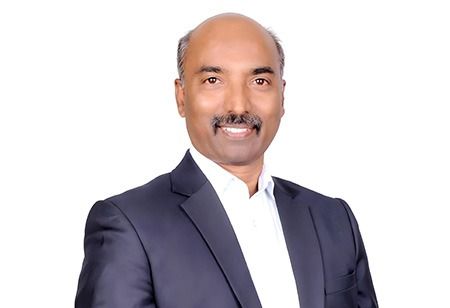 Business growth is no longer defined simply by scale; it is shaped by the ability to build adaptable organizations, create repeatable value, and turn strategic ambition into disciplined execution. As technology-led businesses expand across markets and industries, sustainable growth increasingly depends on strong leadership, customer-centric thinking, scalable platforms, and the ability to navigate transformation with clarity.
In an exclusive interaction with CEO Insights India Magazine, Doreswamy Palaniswamy, Chief Executive Officer, Excelsoft Technologies, shares his perspectives on business leadership, product-led growth, strategic expansion, acquisitions, organizational transformation, and building scalable technology businesses for global markets.
Drawing from more than 25 years of experience across technology, services, entrepreneurship, and business operations, he explores how leaders can balance agility with governance, transform acquisitions into long-term value, enter new markets strategically, and build the leadership capabilities needed to support sustainable global growth.
For a deeper look at business leadership insights from Doreswamy P’s career journey, read the following interview.
Q1. Beginning as a Chartered Accountant and now leading a global SaaS enterprise, how did every career transition reshape your understanding of business leadership?
A. Starting as a Chartered Accountant gave me a strong foundation in finance, governance and discipline. But as my responsibilities expanded, I realised that numbers tell you what has happened; understanding customers, people and operations tells you why it happened and what you should do next. Moving into operational and business leadership taught me execution, while technology taught me the importance of innovation and scalability. My board experience added another perspective around governance, risk and stakeholder expectations.
Each transition therefore widened my view of business.
Today, I believe leadership is not about being the best functional expert in the room. It is about setting a clear direction, bringing the right people together and converting strategy into measurable outcomes.
Q2. Moving across technology, services, and operations, how did working in multiple industries prepare you to lead businesses beyond functional expertise?
A. Working across industries has taught me that while business models may change, the fundamentals of building a good business remain largely the same. You need to understand your customer, create a differentiated offering, build the right team, allocate capital carefully and execute consistently. Moving beyond finance into operations, services and technology also made me comfortable entering areas where I was not necessarily the subject-matter expert. A CEO cannot and need not know more than every specialist in the organisation. What is important is the ability to ask the right questions, connect different perspectives and make decisions. That experience has helped me look at businesses as an integrated system rather than through the lens of any one function.
Also Read: 5 Latest Business Leadership Changes in India in 2024
Q3. After experiencing both corporate leadership and entrepreneurship through CredoPay, how did your definition of building a scalable business fundamentally change?
A. My experience across established organisations and entrepreneurial environments changed my understanding of scale considerably. CredoPay was one part of that journey and reinforced an important lesson: growth and scalability are not necessarily the same thing. A scalable business needs repeatable offerings, sound unit economics, disciplined processes and an organisation that can grow without depending excessively on a few individuals.
I also learnt that staying close to customers does not mean building everything every customer asks for. This is particularly important in technology businesses. Sustainable scale comes when customer insights and innovation are converted into reusable products, intellectual property and platforms. That thinking continues to influence how I approach product strategy, investments and organisational design today.
Q4. Having led multiple acquisitions across your career, what leadership principles helped transform integration into long-term business value rather than operational activity?
A. I have always believed that signing an acquisition agreement is only the beginning; the real work starts after the transaction closes. Before acquiring a company, we must be very clear about why we are doing it. Are we acquiring technology, customers, talent, market access or a new capability? Integration should then be designed around that objective rather than simply absorbing the acquired company into existing structures.
I also believe we should preserve the entrepreneurial energy and key talent that made the company attractive in the first place. At the same time, there must be clear accountability and measurable outcomes. Ultimately, an acquisition succeeds only when the combined organisation creates more value than the two businesses could have created independently.
Q5. Serving first as an Independent Director before becoming CEO, how did your perspective on organisational priorities evolve once execution became your responsibility?
A. This has probably been one of the most interesting transitions in my career. As an Independent Director, my responsibility was to ask questions around strategy, governance, risk, capital allocation and stakeholder interests. As CEO, I have to answer those questions through execution. From the boardroom, priorities can sometimes look straightforward. Once you are responsible for execution, every decision involves customers, employees, technology, resources and competing priorities. It has reinforced my belief that a good strategy has limited value unless the organisation has the capability and discipline to execute it.
At Excelsoft, my focus is therefore on creating clarity of ownership, strengthening leadership bandwidth and connecting sales, products, delivery and innovation around a common direction and measurable outcomes.
Q6. Leading Excelsoft beyond education into healthcare, BFSI, aviation, and pharma, how has industry diversification influenced your long-term leadership approach toward sustainable growth?
A. Learning and assessment are important strengths of Excelsoft and will continue to be so. At the same time, I see opportunities to take some of our capabilities into regulated and mission-critical sectors such as healthcare, BFSI, aviation and pharma.
I do not believe diversification should mean entering unrelated markets simply because they appear attractive. We should enter areas where our existing strengths in assessment, learning, proctoring, AI and secure technology platforms solve a genuine customer problem. My approach is therefore to diversify from our capabilities rather than merely diversify our revenues. Done well, this creates additional growth engines, reduces concentration risk and allows us to build reusable technology platforms while developing the domain knowledge and compliance capabilities required for each industry.
Also Read: Green Governance and the Leaders Driving Sustainable Growth
Q7. As Excelsoft evolves into a global product-led organisation, what leadership decisions become essential when scaling platforms serving mission-critical, high-compliance industries worldwide?
A. Excelsoft is already an established, global, product-led organization, with a strengthening presence across more than 20 countries and a client base exceeding 90 customers worldwide. We deliver enterprise-grade, AI-native solutions spanning assessment, learning, and proctoring, built on deep expertise in large-scale enterprise application development. Looking ahead, our next phase of growth centres on extending this expertise into new geographies and sectors.
For a product company to scale globally, it has to gradually move from building separately for every customer to building platforms that can serve many customers while still addressing genuine market requirements. That requires strong product ownership, clear roadmaps, modern architecture, security by design and discipline around customisation. In regulated and mission-critical environments, security, reliability, privacy and compliance cannot be added later; they have to become part of the product itself. Another important leadership decision is creating clarity between product engineering and customer delivery while keeping both closely connected. At Excelsoft, our opportunity is to combine our domain experience with reusable technology and AI. As we grow revenue, we must ensure that complexity does not grow at the same pace.
Q9. Drawing from your experience of leading multiple acquisitions and business transformations, how do you envision Excelsoft's next phase of growth? What role will strategic expansion and inorganic opportunities play in shaping the company's future?
A. I see Excelsoft's next phase of growth coming from a combination of strengthening our existing businesses, accelerating product-led growth, entering selected new markets and adding capabilities through inorganic opportunities. We already have strong foundations across assessment, learning technologies, content and enterprise solutions. The opportunity now is to make these capabilities more connected, reusable and scalable while expanding our global relevance.
Acquisitions can accelerate that journey, but I do not believe in acquiring companies merely to add revenue. An acquisition should bring something strategic—technology, customers, geography, talent or domain capability—that would take us considerably longer to build ourselves. Our ambition is to build a larger, diversified global technology company where growth, profitability, innovation and governance reinforce one another.
LAST WORD: Looking back across 25 years of building, transforming, and scaling businesses, what leadership mindset should young professionals develop before pursuing executive responsibilities?
My advice to young professionals would be not to chase titles too early. Instead, increase the size and complexity of the problems you are capable of solving. Functional expertise is important at the beginning of a career, but leadership requires curiosity about areas beyond your own function—customers, technology, finance, operations and people. It is equally important to become comfortable making decisions without having perfect information and then taking responsibility for the outcome.
The world is changing rapidly, particularly with AI, so the ability to continuously learn and unlearn will become even more valuable. Ultimately, executive leadership is not about authority or designation. It is about accepting responsibility for people, customers, capital and outcomes, and earning the trust required to exercise that responsibility.