

Clinical Excellence: Dr. Samir Sud on Leading the Future of Ophthalmology
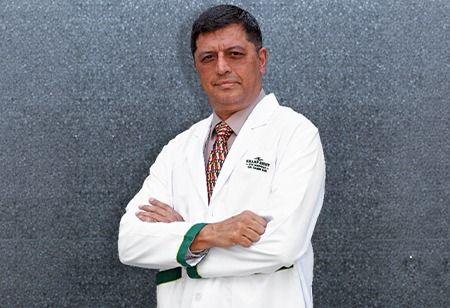 India’s ophthalmology sector is entering a period of sustained growth, supported by rising healthcare investments, increasing digital-screen exposure and a growing ageing population. Public health initiatives, private healthcare investments and the growing adoption of advanced technologies are expanding access to modern eye-care solutions across the country.
At the same time, indigenous innovations are making ophthalmic technologies more affordable, while hospitals are increasingly focusing on clinical expertise, training, service quality and technology-enabled care.
As the sector evolves, strong clinical leadership and continuous knowledge-sharing will be critical to ensuring that innovation translates into better patient outcomes. In an exclusive interaction with CEO Insights, Dr. Samir Sud, Co-Founder & Director, Sharp Sight Eye Hospitals, shares his insights on leadership, clinical excellence, mentorship, technology and the future of accessible, high-quality eye care in India.
Dr. Samir Sud, is an ophthalmic surgeon with extensive expertise in cataract and LASIK surgery. An AFMC alumnus, he has advanced training from Sir Ganga Ram Hospital and is actively involved in surgical training, research and national and international conferences.
Q1. As Co-Founder and Director, how would you describe your leadership philosophy, and how has your 24-year journey in ophthalmology shaped it?
A. Most of what I know about leadership, honestly, I learned in the operating theatre, not from any management course. Surgery has a way of stripping things down. You either show up prepared or you don't, and there's no room to fake it once you're at the table. That habit started at Armed Forces Medical College, where discipline wasn't optional, it was just how things worked.
Carrying it forward into running an organization wasn't really a conscious decision. I just kept applying the same standard, show up prepared, take responsibility, don't cut corners, and somehow that became a leadership style. Twenty four years in, I still think about most decisions the way I'd think about a patient sitting in front of me.
Q2. What values have guided you while building the organization and leading its clinical and professional growth over the years?
A. A handful of things never really changed for me. Trust comes first, even on days when a shortcut looks tempting and nobody would notice. Clinical rigor stays the same whether we're in a metro or somewhere smaller, no exceptions there, ever. I've also cared more about building solid teams than chasing quick expansion, because at the end of the day it's people, not equipment, that decide whether a patient gets a good outcome. Access matters to me too, maybe more than it should logically, given how much easier it would be to just stay concentrated in big cities. That's part of why we've pushed into smaller towns where good eye care is genuinely hard to find.
Q3. How do you balance your responsibilities as a medical professional and a leader while keeping patient care at the center of decision-making?
A. I don't really separate the two the way people assume I should. I'm still in the operating room regularly, and that keeps things real for me, the nervous small talk before a procedure, the relief once it's done. That contact changes how I make bigger decisions too staffing, equipment, and training, all of it. If something's operationally convenient but clinically questionable, the clinical call wins, full stop, no debate needed on my end. I lean on senior colleagues a lot for the administrative side, which honestly is a relief, since it leaves me free to stay close to surgery and mentoring, the part of this work I'd never want to give up.
Also Read: Raveena Chauhan: Designing Beyond Trends With Purposeful Architecture
Q4. Having trained ophthalmologists in Cataract and LASIK techniques, how important is mentorship in developing the next generation of eye-care professionals?
A. Mentorship isn't a nice extra in this field, it's basically how the whole discipline stays alive. I've trained plenty of surgeons in Cataract and LASIK techniques over the years, and every single time it reminds me how much patience the process actually takes. A book can walk someone through the steps of a surgery.
It can't teach the judgment part, when to slow down, when something looks slightly off, when to trust your gut over the protocol. That only comes from doing it next to someone who's been through it before. Watching a surgeon I trained go on to train someone else themselves, that's genuinely one of the better feelings in this career.
Q5. How have your experiences at institutions such as AFMC and Sir Ganga Ram Hospital influenced your approach to clinical excellence and leadership?
A. The two places shaped me in pretty different ways, honestly. AFMC gave me structure, the sense that there's no room for shortcuts when someone's vision is what's at stake. Sir Ganga Ram, where I did advanced training later, threw a much wider range of cases at me, more volume, more complexity, and that kind of exposure sharpens your hands in a way lectures never could.
Between the two I picked up something I still believe, clinical excellence isn't one skill. It's steady hands plus good judgment plus having seen enough strange cases that nothing completely throws you. That's roughly the combination I try to build into how we train younger ophthalmologists now.
Also Read: Green Governance and the Leaders Driving Sustainable Growth
Q6. As someone actively involved in training, research, and international conferences, how have these experiences shaped your perspective on innovation and knowledge-sharing?
A. Staying involved in conferences and research keeps you honest about how much this field still moves. Ophthalmic surgery looks nothing like it did when I started out twenty four years ago, and it hasn't slowed down since. Every international conference I go to, I come back with some small refinement worth trying at home, even if it's a minor tweak.
Knowledge sharing runs both directions too, I've picked up as much from a good question after a paper presentation as from the paper itself sometimes. That's part of why training programs matter so much to me, more than just performing surgery quietly and moving to the next case. Real innovation here rarely comes from one big leap, it's usually a lot of small ones shared out loud.
Q7. How do you see technology and advanced surgical techniques transforming ophthalmology and the way eye care is delivered in India?
A. Technology has changed what's realistically possible in this field, and it's happened faster than people outside medicine probably realize. Refractive surgery today is far more precise than when I started, recovery times have dropped a lot too. What actually excites me more, though, is that this precision is finally reaching places beyond the big cities.
Equipment's gotten more portable, techniques less invasive, and put together that means good eye care in a smaller town isn't the stretch it used to be. Cataract surgery is still one of the more treatable causes of vision loss out there, yet access across India stays uneven. Closing that gap, better tech paired with well-trained local surgeons, is where the real progress happens next.
Also Read: Vizag's Rise as India's Next Big Technology Hub: Beyond Steel & Shipping
LAST WORD: What is your vision for the next chapter, and what impact do you hope to create in the future of eye care in India?
Going forward, I'd rather grow carefully than grow fast. We want to keep pushing into regions that don't have enough specialized eye care right now, north and east India especially, without letting clinical standards slip in the process.
Training stays central to that, since none of this scaling works without enough well trained surgeons behind it. I'd also like to put more into accessible refractive surgery, since uncorrected vision problems still affect a huge number of people in India who just don't have a nearby, affordable option. If ten years from now a family in a small town can get the same quality cataract or LASIK care as someone in Delhi, that's the kind of progress I actually care about.