

How Modern Leadership Has Evolved from Operations to Agentic AI
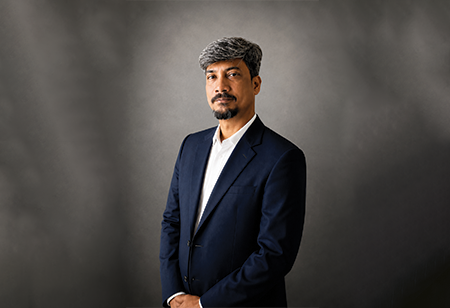 For nearly three decades, David Ross has built a career transforming complex operations across healthcare, travel, and technology-enabled services. From rebuilding struggling client relationships to creating scalable, high-performing operating models, his leadership has consistently turned uncertainty into sustainable growth.
Today, as Agentic AI reshapes how organizations operate and make decisions, he believes the principles of trust, business understanding, and people-centric leadership remains more important than ever.
In an exclusive interaction with CEO Insights India Magazine, David Ross, a seasoned transformation leader with 27 years of experience, shares how leadership has evolved through strategic change, digital transformation, and AI. He also discusses why judgment, accountability, continuous learning, and empowering people will remain the defining qualities of successful leaders in an AI-driven future.
For deeper insights, read the full interview below.
Q1. Every decade of your career demanded a different leadership language—from execution to transformation to AI. Which transition was the hardest to unlearn?
Ans: Moving from execution to strategy was harder than anything technology later demanded. When you have spent years being the person who fixes things with your own hands, you carry a quiet belief that visibility equals value. Letting go of that instinct, learning to lead through others’ decisions rather than your own and only participate in quality of the decision, took real unlearning.
Strangely, adapting to AI and agentic thinking echoed that same discomfort decades later. Once again, I had to firstly study again, step back from doing and trust a system, this time a digital one, to think alongside me. Both transitions asked the same question in different disguises: can you still lead when you are no longer the one holding the tool.
Q2. Your journey spans telecom, travel, healthcare RCM, and AI. Which industry fundamentally reshaped how you approached leadership decisions?
Ans: Healthcare, and specifically the revenue cycle world, changed me in ways no other industry did. When the outcome of a decision touches a patient’s bill, a provider’s cash flow, or someone’s access to care, precision stops being a metric and becomes a responsibility.
That shift in stakes forced me to slow down, question assumptions harder, and build compliance into instinct rather than checklist. It taught me that leadership in a regulated, human-consequence environment cannot chase speed alone. It demanded a different kind of discipline, one where accuracy and empathy had to move together. That lesson quietly reshaped how I now evaluate every decision, regardless of industry.
Also Read: How Emotional Intelligence Shapes Finance Leadership Decisions
Q3. Your responsibilities grew from managing programs to influencing enterprise strategy. How did your definition of leadership expand with every role?
Ans: Early on, leadership meant delivering what was asked, on time and within scope. As responsibility widened, I realized delivery alone was never the real job. Enterprise-level thinking demanded that I anticipate problems clients hadn’t articulated yet, and build capability in people long before the business needed it.
Leadership stopped being about answers and became about asking better questions, earlier. With each role, my definition expanded from managing outcomes to shaping the thinking that produces outcomes. The most important shift was realizing that my success would increasingly be measured by how well others around me grew, thought independently, and eventually needed me less.
Q4. You have witnessed outsourcing, automation, and now Agentic AI. Which transformation challenged your leadership assumptions the most, and why?
Ans: Agentic AI has challenged me more than outsourcing or automation ever did, because those earlier shifts changed how work got done, while this one changes how decisions get made. Automation replaced repetitive tasks; agentic systems now participate in judgment itself. That forced me to confront an assumption I didn’t know I held, that leadership meant being the smartest, most decisive voice in the room. I have had to learn to lead systems that reason alongside me, not just tools that execute for me. It is a humbling shift, and an exciting one, because it pushes leadership toward orchestration and continuous learning rather than control.
Q5. Across multiple turnaround assignments, what taught you that sustainable transformation depends more on leadership than operational excellence?
Ans: Every turnaround I have led looked, on paper, like a process problem. In reality, it was almost always a trust problem first. Processes could be redesigned quickly, but relationships, whether with clients or teams, took patience and consistent presence to rebuild. What sustained the transformation long after I moved on was not the new workflow, it was the culture of accountability and confidence people carried forward.
Operational fixes create a moment of relief. Leadership creates a habit of resilience. That distinction taught me to spend less energy proving competence through numbers and more energy building the belief that people and clients could rely on us again.
Q6. Having led both mature operations and emerging technologies, how do you decide what deserves stability and what deserves disruption?
Ans: I have learned to ask whether something is broken in outcome or simply unfamiliar in method. Mature operations often deserve stability because their value lies in consistency, predictability, and the trust built over years, not in constant reinvention.
Emerging technology deserves disruption precisely because its promise lies in questioning the default. The real skill is resisting the temptation to disrupt for its own sake, or to protect stability out of comfort. I look for where genuine friction exists for the customer or the team, and let that friction, not novelty or nostalgia, decide what gets challenged and what gets preserved.
Q7. As AI reshapes leadership itself, what responsibilities do you believe tomorrow's leaders cannot afford to delegate?
Ans: Judgment rooted in context, and as of today accountability for people, cannot be delegated, to a system or to a title.
AI can process patterns faster than any of us, but it cannot carry the weight of a decision’s human consequence, nor can it mentor someone through a difficult season of their career.
Tomorrow’s leaders must stay close to the why behind every recommendation a system offers, and remain deeply invested in developing the people around them. The moment leadership becomes purely about approving outputs, it stops being leadership. Curiosity, ethical judgment, and genuine care for people’s growth remain irreducibly human responsibilities.
Also Read: The Next Phase of U.S. AI Leadership: From Innovation to Responsibility
Q8. Across twenty-seven years, what belief has guided your toughest leadership decisions, regardless of industry or technology?
Ans: The belief that people will rise to the level of trust you place in them has guided nearly every difficult call I have made. Whether restructuring a failing client relationship or introducing a technology no one had used before, the hardest part was never the strategy, it was believing the team could get there before they believed it themselves. That conviction has meant occasionally being patient when pressure demanded speed, and investing in someone’s growth when a quicker fix was available. Technology and industries changed constantly around me, but that single belief about people’s potential never needed updating.
LAST WORD: What should young leaders build first—business understanding, technological curiosity or execution discipline—and why?
Business understanding first, because technology and execution only matter in service of a problem worth solving. Young leaders who understand how value is created and where a business genuinely struggles will always know which tools deserve their curiosity and which disciplines deserve their focus. Execution without context becomes busywork, and technological curiosity without business grounding becomes novelty for its own sake. Once that foundation exists, curiosity should be nurtured continuously, because the tools of tomorrow will look nothing like today’s. But it starts with understanding people, markets, and outcomes deeply enough that every new skill you build has a clear purpose behind it.