

Precision in Copper Building India's Zero-Defect Manufacturing Standard
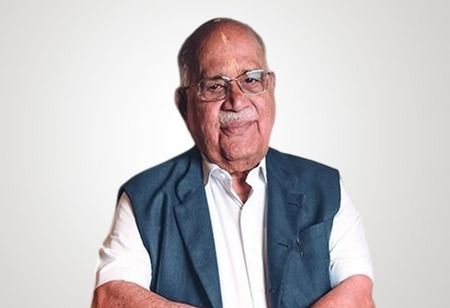
Manufacturing at scale demands precision, and few in India have pursued it as deliberately as business leader, C. Gopalan. From laying the foundation of Gopalan Enterprises, a Bengaluru-based real estate development company in 1984, to founding Gopalan Metals, a precision copper manufacturing company, in 2011, his philosophy has remained constant: "trust is the only foundation worth building on."
That belief now anchors the "Zero Defect Manufacturing," standard Gopalan has instilled at Gopalan Metals' state-of-the-art facility in Hoskote. At the state-of-the -art facility, it is not merely a slogan, but a discipline every employee is expected to uphold.
Having spent four decades across real estate, infrastructure, and manufacturing, Gopalan remains as enthusiastic about facilitating business growth as he was in the early days of his career. Today, he is harnessing Gopalan Metals’ strength to demonstrate to the world that Indian manufacturers can compete on accuracy and efficiency, not merely on price. The Hoskote facility, combining aerospace-grade precision with the dependability of a 40-year industrial foundation, is central to that case and to his commitment to nation-building through the Make in India and Atmanirbhar Bharat initiatives.
Ask him about the legacy he hopes to leave behind, and Gopalan points to the principles of trustworthiness and precision that the company has upheld since 1984.
In an exclusive conversation with CEO Insights, C. Gopalan, Founder and Chairman, Gopalan Metals outlines a strategic approach to building India’s industrial future by applying architectural systems thinking to high-precision, sustainable copper manufacturing at their Hoskote facility. He also shares the leadership foundations that helped him foray into diverse industries. Talking about Gopalan Metals, he highlights the company’s focus on sustainability, digital operations and manufacturing excellence.
To know more about C. Goaplan’s four decade long entrepreneurial journey, leadership ideologies, zero defect manufacturing standard and vision for Gopalan Metals, read the following interview.
Q. Having built Gopalan Enterprises from the ground up, what core leadership philosophy has guided your journey across real estate, infrastructure, and manufacturing?
A. Every business we have entered, from constructing our first residential apartments in Bangalore in 1984 to setting up a precision copper manufacturing unit four decades later, has been guided by one principle: trust is the only foundation worth building on. Our philosophy, "Inspired by Life, Built on Trust", is not just a tagline; it is a working discipline. When you build homes, malls, schools, and now industrial infrastructure, you are entering long-term relationships with families, institutions, and partners who trust you with something significant. That trust has to be earned project after project, sector after sector. 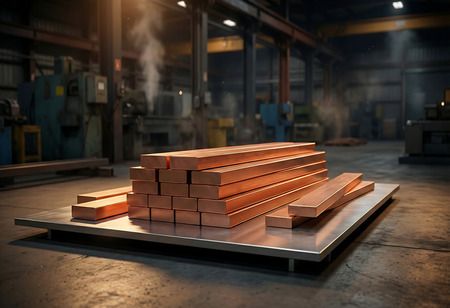
The second part of this philosophy is patience with scale. We have never chased a sector because it was fashionable. We entered residential real estate because Bangalore needed quality housing. We entered manufacturing because India needed a domestic, high-precision copper ecosystem. In both cases, we asked a simple question first: does this sector need what we are good at, which is disciplined execution and long-term thinking? If the answer is yes, we commit fully. That has been the constant across real estate, infrastructure, and now manufacturing.
Q. You've led the Gopalan group through multiple industry expansions over three decades. What drives your decision-making when entering a new sector like Indian copper manufacturing?
A. Three things have to align before we enter a new sector: a genuine national or market need, a credible right to win, and a long horizon we are willing to commit to. Copper manufacturing checked all three. As India moved toward high-speed rail, electric mobility, and a digitally powered economy, the demand for high-purity, precision-engineered copper grew sharply, yet the market stayed fragmented between large commodity producers and smaller players who could not meet global standards. That gap told us there was a real need waiting for a credible operator.
Our right to win came from four decades of engineering discipline, financial strength, and execution capability built through Gopalan Enterprises. That is not something you can manufacture overnight, and it gave us the confidence to invest in a state-of-the-art facility in Hoskote rather than enter cautiously. Today, that facility has the capacity to produce approximately 7,200 metric tonnes of OFC rods and 1,400 metric tonnes of copper strips annually, alongside a range of copper wires and cables. Numbers like these are the outcome of decision-making that starts with the market's need, not our own comfort zone.
Also Read: Piyush Goyal: Transformations in Navigating International Trade Relationships
Q. What does 'zero-defect manufacturing' mean to you as a leader, and how do you instill this mindset across teams and operations?
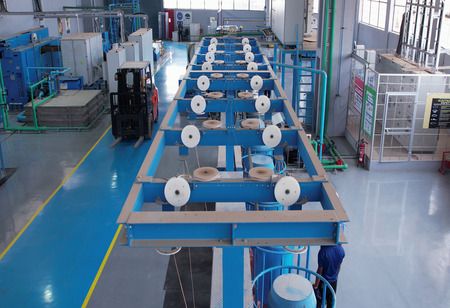
A. Zero-defect manufacturing means designing a system where quality is not inspected at the end but built in at every stage. At our Hoskote facility, this starts with high-purity electrolytic copper as the raw material, moves through continuous casting, automated wire drawing, and precision annealing, and is monitored throughout by an SAP-driven digital backbone that gives us real-time visibility into every stage of production. When you can see a problem the moment it emerges rather than after a batch is complete, you prevent waste instead of managing it.
 Instilling this mindset across teams comes down to accountability and clarity. Every person on the floor needs to understand that their specific task has a direct line to the final product's reliability, whether that is a customer's power cable, an automotive component, or critical infrastructure. We reinforce this through rigorous in-house testing and process controls at every stage, not just at dispatch. 'Zero-defect' is not a slogan we put on a wall. It is a standard we hold ourselves to because the industries we serve, from railways to renewable energy, cannot afford failure in the field.
Q. How do you approach risk and resilience while navigating economic cycles and industry disruptions over such a long entrepreneurial journey?
A. In my experience, resilience comes not from being able to predict interruptions but rather from making one’s affirmative business able to take in disruptions. Over the span of three decades, we have consistently diversified our organization across different sectors, including real estate and commercial and retail business, then education, hospitality, and aerospace, and now manufacturing. It means we are not exposed to a single economic cycle. It is important to emphasize that this diversification is not simply opportunism. All sectors are entered with the same focus on the long term, which allows them to survive independently from each other even during disruption. 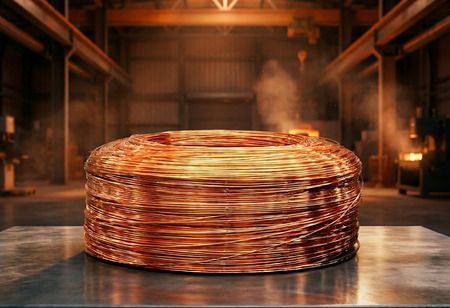
Within Gopalan Metals specifically, resilience is built through vertical integration and digital control. Having end-to-end, in-house manufacturing and a SAP-integrated operation means we have real-time visibility into our supply chain and can respond to disruption quickly rather than reactively. I also believe strongly in financial conservatism during good times. We invest heavily in capability and infrastructure, but we do not overextend, because the businesses that survive industry disruptions are usually the ones that entered the downturn with a strong balance sheet, not the ones that grew fastest during the upturn.
Also Read: PM Modi Led Manufacturing Initiatives: Make in India, PLI & More
Q. Sustainability is central to your business philosophy. How do you translate this vision into actionable strategies across Gopalan Enterprises?
A. Sustainability is only relevant when it is implemented into operations rather than merely applied as a concept. At Gopalan Metals, this starts with the material itself. Copper is recyclable, and slowly but surely, with the growth of domestic copper production, India will be able to harness energy-efficient infrastructure. It will enable the use of copper in the manufacturing of renewable technologies.
From an operational perspective, our commitment to zero-defect manufacturing is in itself a sustainable strategy. Each defective product signifies a loss of materials, loss of energy, and loss of time, so reducing defects and reducing environmental impacts are the same objective tackled using the same method.
Our automated assembly lines have been designed specifically to minimize material losses and maximize energy efficiency in the process of casting and drawing products.
As for the Gopalan Group, whether in terms of organic farming or real estate developments, the same principle again applies: sustainability has to be embedded in the everyday operations of a business, rather than being announced once in a year.
Q. In an era of rapid industrial transformation, how do you ensure your leadership stays relevant while preserving the core values of Gopalan Enterprises?
A. I separate two things that leaders often conflate: values and methods. Our values of integrity, accuracy, and long-term commitment towards our customers stay unchanged with the usage of technology. However, evolution of methods is a must. In Gopalan Metals, an evolved digitally backed SAP-integrated operation with tracker supplies and effective planning caters to modern manufacturing standards. But our motivation to use digital resources is based on the same rationale as our willingness to pay attention to quality four decades ago; we do not want to let our customers down.
Staying relevant means being connected to what is happening in the real world. The intention is never to learn the technology deeply so that we can operate various systems, but also to ask challenging questions to my teams. This way, the leadership is based on reality, rather than on trends. The organizations that lose their relevance are those where leaders lose their connection with reality. We work very hard to stay in touch with this reality despite all changes that happen around us.
Q. Having witnessed the evolution of India's infrastructure and manufacturing sectors, what opportunities do you believe will define the next decade of growth?
A. The next decade will be defined by India's push toward electrification and self-reliant manufacturing under initiatives like Make in India and Atmanirbhar Bharat. Every part of this shift, from electric vehicles and high-speed rail to renewable energy and expanding power distribution networks, runs on copper. As demand accelerates, the opportunity will belong to manufacturers who can deliver both scale and precision, rather than one at the expense of the other. 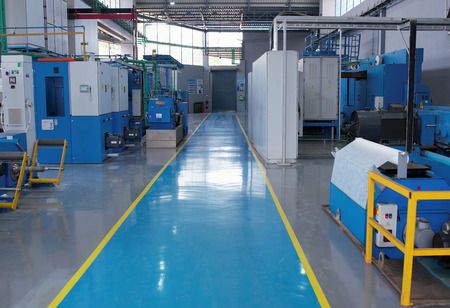
I also see a significant opportunity in import substitution for high-specification materials. For too long, India has depended on imports for precision-engineered components that we are fully capable of manufacturing domestically. Gopalan Metals was built to close that gap, and we are actively expanding our footprint across domestic and international markets with a focus on renewable energy and power distribution. The manufacturers who invest now in precision capability, digital operations, and sustainable practices will be the ones setting the benchmark a decade from now.
Q. Looking ahead, what legacy do you aim to build through Gopalan Metals and the larger Gopalan Group in India's industrial and economic landscape?
A. I believe Gopalan Metals is going to be known as a business that shows that Indian manufacturers can hold their own in terms of accuracy and efficiency, not only price. When we started our business, we wanted to create a facility that successfully combines aerospace-grade precision and the dependability of a forty-year industrial foundation. Internally, what we call the Gopalan Standard, we want it to become a genuine benchmark for clean, disciplined industrial growth in India's copper sector.
Also Read: Manufacturing: The Engine Driving India’s Industrial Leadership
I aspire for the Gopalan Group’s legacy to be one of consistent and quiet nation-building. Our organization started with the construction of homes in Bangalore, but we are now engaged in constructing the basic physical infrastructure for India’s electrification and self-reliance. If ten years later, Gopalan Metals is considered one of the most trusted copper manufacturers in India, and if the future generations will adhere to the same principles of trustworthiness and precision the company has applied since 1984, then this would be the legacy I want to achieve.