

Leading India's Recycling Industry Toward Circular Growth: A CEO’s Perspective
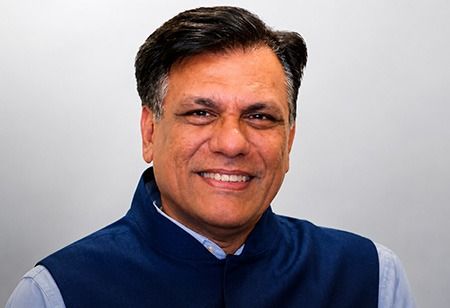 India’s recycling and polymers industry is entering a transformative phase where circularity, resilient supply chains, and policy-driven sustainability are becoming structurally embedded into long-term growth strategies. Lakshman K Iyer, CEO of Telangana-based plastic recycling company, Srichakra Polyplast, believes that such periods of disruption cause accelerated shifts and the same can be observed in India’s recycling and polymers industry.
Lakshman brings 37 years of global leadership experience across polyolefins, specialty polymers, compounding, and masterbatches. He has led strategic business transformation, supply chain, and commercial initiatives across Asia and the Middle East.
In conversation with CEO Insights Magazine, Lakshman deep-dives into policy reforms, petrochemical exemptions, and global geopolitical tensions influencing India’s recycling and polymers landscape. He talks about the growing importance of resilient supply chains, multi-polymer business models, and collaborative industry ecosystems in building future-ready circular economy solutions.
Read the full article for deeper insights.
Q. With recent waste management rule changes and petrochemical exemptions amid West Asia tensions, how do you interpret their combined impact on India's recycling and polymers landscape?
A. The recent policy developments need to be viewed together to fully understand the direction the industry is moving in.
The Plastic Waste Management (Amendment) Rules, 2026 represent a structural shift for India’s recycling ecosystem, with mandatory recycled content targets starting at 30% and progressively increasing to 60%. This creates long-term demand visibility for recycled polymers and reinforces the transition toward a more circular materials economy.
At the same time, the government’s decision to exempt select petrochemical products from import duty is a pragmatic response to near-term supply disruptions arising from ongoing tensions in West Asia. These disruptions have tightened global supply chains and led to significant volatility in raw material prices.
While these measures may appear contradictory at first glance, they are in fact complementary. The exemptions are aimed at stabilising the market in the immediate term, easing cost pressures, improving material availability, and supporting downstream sectors such as packaging and FMCG. The recycled content mandates, on the other hand, are clearly designed to shape long-term industry behaviour.
Taken together, these decisions reflect a balanced policy approach, one that addresses short-term market realities while steadily steering the industry toward greater circularity and resilience, signaling a clear inflection point where circular materials are moving from a compliance requirement to a structurally embedded part of India’s polymers economy.
Also Read: Circular Economy for Plastic Packaging
Q. How has your global exposure to Middle East markets influenced your understanding of how geopolitical disruptions reshape material flows and regulatory responses?
A. Having managed polymer offtake across Africa, the Middle East, and the Indian subcontinent, I have seen how quickly regional disruptions translate into broader market shifts. Supply constraints tend to cascade through multiple layers, from freight and feedstock availability to pricing and, eventually, regulatory responses, and rarely remain localised.
At Srichakra, these learnings have directly shaped how we approach sourcing and supply chain resilience. We have consciously moved toward a more diversified sourcing model, reducing dependence on any single geography or material stream. At the same time, we are investing in stronger input intelligence and pre-processing capabilities, which allow us to better manage variability in feedstock quality and ensure consistency in output, even during periods of disruption.
This approach also informs how we engage with the broader ecosystem, working more closely with aggregation networks and partners to improve traceability and reliability at the source. In this context,
Businesses that combine diversified supply models with a deep understanding of material flows are better positioned to navigate volatility while maintaining operational continuity.
Q. In this evolving scenario of stricter waste rules alongside petrochemical exemptions, how would you rethink business models to stay competitive while protecting the long-term viability of recycling ecosystems?
A. Srichakra Polyplast has been building toward a more integrated, multi-polymer platform that can cater to a wider range of materials and applications. Today, this includes capabilities across PET as well as polyolefins such as rHDPE and rPP, along with a growing focus on value-added, application-specific solutions across end-use segments.
While regulatory developments like the PWM Amendment bring greater structure to demand, the shift underway is much broader. Business models are moving beyond material-specific or compliance-driven approaches toward platforms that can operate across polymers, ensure consistent quality, and respond to evolving application requirements.
In this environment, competitiveness will be defined by depth of capability rather than scale alone. The ability to manage feedstock variability, deliver application-grade materials, and integrate more closely with brand and manufacturing ecosystems will become critical differentiators. This also places greater emphasis on technology-led processing, traceability, and long-term partnerships that go beyond transactional supply.
From an industry perspective, companies that can build flexibility into their sourcing and production models, while expanding into higher-value applications, will be better positioned to navigate volatility and sustain long-term growth.
Q. How do you see market demand and pricing dynamics shifting between recycled and virgin polymers, and what ripple effects could this create across the value chain?
A. The ongoing situation in West Asia has clearly added volatility to polymer pricing in India. Given the region’s central role in global petrochemical supply, any disruption has a direct impact on availability and pricing across polymer categories, with sharp movements visible over relatively short periods.
In this context, recycled polymers are increasingly establishing their own strategic relevance within the material mix. Their economics are driven by collection, processing, and logistics ecosystems, making them a structurally distinct part of the supply chain rather than an extension of conventional petrochemical flows.
From a demand standpoint, this is prompting a shift in how end-users evaluate material choices. For many FMCG and packaging companies, the conversation around recycled content is no longer driven only by sustainability or compliance, but also by the need for greater predictability and supply continuity.
The broader impact across the value chain is that recycled materials are becoming an integral part of material planning and sourcing strategies. As a result, their role is expanding beyond niche or mandated use cases and moving firmly into mainstream applications, reinforcing their importance in building more resilient supply chains.
Also Read: Ashish Agarwal: Leading The Thriving Petrochemical Industry With Unrivalled Expertise & Knowledge
Q. From a supply chain and strategic integration lens, how can industry leaders collaborate to mitigate risks arising from both regulatory changes and geopolitical instability?
A. In the current environment, collaboration is becoming a practical requirement rather than a choice.
From a supply chain perspective, disruptions, whether regulatory or geopolitical, tend to expose structural gaps across the value chain. What we have seen is that companies with aligned, long-term partnerships are far better positioned to respond than those operating on fragmented, transactional models.
For the polymer and recycling sector, this requires closer integration between recyclers, brand owners, and raw material suppliers. This goes beyond coordination on material availability or quality standards, toward building shared visibility systems, aligned sourcing strategies, and more structured long term offtake frameworks.
There is also a need for more integrated investments, particularly in strengthening domestic recycling infrastructure and improving feedstock quality. At the same time, sustained engagement with regulators and industry bodies can help ensure smoother implementation of policy changes.
Going forward, collaboration will need to evolve into deeper value chain alignment, where stakeholders co-invest, co-develop solutions, and build supply partnerships anchored in shared outcomes rather than individual efficiencies.
Ultimately, resilience in this sector will be defined by how effectively these interconnected systems are built, ensuring stability, traceability, and continuity across the value chain.
LAST WORD: Advice for industry leaders on turning policy and geopolitical disruptions into opportunities for building resilient and future-ready circular economy models.
Periods of disruption tend to accelerate shifts that are already underway, and we are seeing that clearly in the move toward circularity.
For industry leaders, the focus should be on building capabilities that create long-term competitive advantage, rather than responding only to immediate market conditions. This includes continued investment in advanced recycling capabilities, traceability systems, and diversified material platforms across polymers and diversified, multi-polymer platforms, along with more resilient and flexible sourcing networks.
At the same time, deeper integration with brand owners and end-users will become increasingly important, particularly as expectations around compliance, quality, and recycled content continue to evolve.
What we have seen is that companies that continue to invest through uncertainty are better positioned when the market stabilises. In contrast, delaying decisions in anticipation of more clarity can limit the ability to adapt to scale and respond to shifting demand dynamics.
From a long-term perspective, building resilience and circularity will go hand in hand, and the organisations that recognise this early are likely to be better prepared for the next phase of industry growth. The opportunity now is to build circular businesses that are not just compliant, but structurally competitive and integral to the future of the polymers industry.